 14 citations
,
April 2005 in “Experimental Dermatology”
14 citations
,
April 2005 in “Experimental Dermatology” This study found that stressed dermal fibroblasts significantly increased dopa oxidase activity in melanocytes from hair, skin, and eyes, suggesting the involvement of fibroblast-derived factors like basic Fibroblast Growth Factor.
 48 citations
,
September 2009 in “Dermato-endocrinology”
48 citations
,
September 2009 in “Dermato-endocrinology” This article reviews skin signs in patients with anorexia nervosa and their potential role in early diagnosis but reports no clinical results; it emphasizes the importance of dermatologists in recognizing these signs.
11 citations
,
April 2023 in “Skin Health and Disease” This review discusses the interplay between dermatology and psychology in psychodermatology, highlighting the impact of neuroendocrine stress pathways on skin diseases and the importance of considering skin of color.
17 citations
,
December 2013 in “Dermatologic Surgery” This study found that autologous noncultured epidermal suspension transplantation improved leukotrichia in 88.1% of treated vitiligo lesions without significant adverse events.
11 citations
,
June 2021 in “Preprints.org” This review discusses the potential role of melatonin in atopic dermatitis, focusing on its antioxidant and immunomodulatory effects, but reports no new clinical results.
 June 2008 in “Experimental dermatology”
 This research found that melatonin plays a protective and modulatory role in skin biology, reducing UV damage and chemotherapy-induced hair follicle cell harm in human organ culture models.
 9 citations
,
May 2013 in “JAMA Dermatology”
9 citations
,
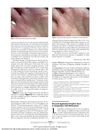
May 2013 in “JAMA Dermatology” This report documents two cases of eruptive nevi occurring in the skin folds of children with Langerhans cell histiocytosis.

In this study, researchers found that melanoma risk factors and characteristics vary with age, noting distinct differences in younger, middle-aged, and older patients, with strong correlations in the oldest group.
 1 citations
,
January 2018 in “Methods in molecular biology”
1 citations
,
January 2018 in “Methods in molecular biology” This research describes methods to activate melanocyte stem cells during hair follicle regeneration and to isolate melanocytes from neonatal mouse skin, with the aim of studying melanogenesis for potential clinical applications.
 6 citations
,
April 2013 in “International Journal of Dermatology”
6 citations
,
April 2013 in “International Journal of Dermatology” This correspondence describes the dermoscopic features of an osteonevus of Nanta but does not report new clinical findings.
5 citations
,
July 2009 in “Clinical and experimental dermatology” This abstract reports no new research findings on the association between acquired hair pigment loss and a flexural dermatosis; it serves as an article access notice.
 January 2024 in “Clinical, cosmetic and investigational dermatology”
 This review suggests that dermatological cosmetic procedures can be safely performed on dark-complexioned skin with appropriate treatment adjustments, highlighting the need for careful consideration to prevent adverse effects.
20 citations
,
December 1995 in “Veterinary Dermatology” This study identified a marked reduction in melanin in the hair of Yorkshire Terriers with Colour Dilution Alopecia and proposed a new pathogenetic mechanism based on these observations.
56 citations
,
November 1958 in “The Journal of Cell Biology” This study used electron microscopy to identify a distinct dendritic cell in the human epidermis, similar to the melanocyte, with unique structural features and variable melanin content.
27 citations
,
May 2024 in “Clinical and Translational Medicine” This review discusses the origin, characteristics, and therapeutic potential of melanocyte stem cells in skin pigmentation disorders and reports no clinical results.
 January 2018 in “Springer eBooks”
 Different races and genders have unique skin and hair issues, requiring specialized care and more research for effective treatment.
3 citations
,
June 2025 in “Stem Cell Research & Therapy” Hair follicle-derived melanocyte transplant could effectively treat vitiligo by restoring skin color.
62 citations
,
December 1966 in “Endocrinology” This study observed that injecting mice with α-MSH resulted in black hair regrowth in shaved and plucked areas, suggesting a potential link to the agent darkening hair in animals with a specific pituitary tumor.
3 citations
,
September 2023 in “Stem Cell Research & Therapy” In this study, researchers successfully generated functional and long-lived melanocytes from human embryonic stem cells, demonstrating their biocompatibility and high engraftability in mice, which may aid in developing treatments for pigmentary skin disorders.
26 citations
,
February 2022 in “Journal of pineal research” This review examines melatonin's potential effects on human skin and hair follicle pigmentation, highlighting the need to confirm findings from cell cultures in physiological tissue contexts.
32 citations
,
May 2023 in “Preprints.org” This review discusses the types, causes, and treatments for skin pigmentation disorders, examining clinically tested options including 25 plants, four marine species, and 17 medications.
 3 citations
,
May 2010 in “Archives of dermatology”
3 citations
,
May 2010 in “Archives of dermatology” This excerpt discusses website navigation and access details for JAMA Dermatology and reports no new research findings.
January 2005 in “Enlighten: Publications (The University of Glasgow)” In this transgenic mouse study, preliminary findings suggest that overt melanocyte hyperplasia may require prior keratinocyte hyperplasia, indicating a potential role for keratinocyte mutation in early melanoma development.
 15 citations
,
January 2000 in “Dermatology”
15 citations
,
January 2000 in “Dermatology” This case report describes two patients who developed leucoderma on the scalp after using 2% minoxidil lotion, with repigmentation occurring after discontinuation.
7 citations
,
January 2020 in “Dermatology online journal” In this case report, adult-onset porokeratotic eccrine ostial and dermal duct nevus improved with topical tazarotene treatment, as evidenced by dermatoscopic images.
40 citations
,
November 2005 in “The journal of investigative dermatology/Journal of investigative dermatology” This study suggests that different melanocyte subpopulations in hair follicles have varying patterns of apoptosis and survival during the catagen phase, which may inform models for modulating melanocyte behavior in vivo.
 47 citations
,
March 2017 in “Clinical, cosmetic and investigational dermatology”
47 citations
,
March 2017 in “Clinical, cosmetic and investigational dermatology” This review discusses the link between Parkinson's disease and dermatological disorders, highlighting that skin biomarkers may aid in the diagnosis of Parkinson's, but it reports no new clinical results.
 1 citations
,
March 2015 in “Journal of the European Academy of Dermatology and Venereology”
1 citations
,
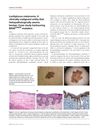
March 2015 in “Journal of the European Academy of Dermatology and Venereology” This letter to the editor shares a case study of lentiginous melanoma that appears clinically malignant but histopathologically benign, involving the BRAFV600R mutation.
January 2003 in “Linchuang pifuke zazhi” This study used atomic force microscopy to image surface structures of human epidermal melanocytes, hair follicle amelanotic melanocytes, and mouse melanoma cells, revealing differences in branch structure and granule distribution.
 51 citations
,
January 2004 in “Skin Pharmacology and Physiology”
51 citations
,
January 2004 in “Skin Pharmacology and Physiology” This review discusses various techniques for evaluating hair shedding and alopecia but reports no new clinical results. The authors emphasize the value of specific clinical and instrumental methods in assessing hair growth.