 May 2026 in “International Journal of Drug Delivery Technology”
 This case study highlights Erythromelanosis follicularis faciei et colli as an easily overlooked pigmentary disorder characterized by a distinctive triad requiring precise diagnosis for effective patient counseling and cosmetic management.
77 citations
,
August 1986 in “Archives of Dermatology” This report describes a case in which intramuscular cyanocobalamin treatment reversed skin and nail pigmentation changes and premature gray hair caused by vitamin B12 deficiency due to pernicious anemia.
 46 citations
,
April 2014 in “PLOS ONE”
46 citations
,
April 2014 in “PLOS ONE” This study found that compromised antioxidant activity in gray hair follicles affects both mature melanocytes and their immature precursors, linked to down-regulation of melanogenesis-related genes.
April 2019 in “Institutional Repositories DataBase (IRDB)” This study demonstrated that human iPSC-derived melanocytes, when transplanted into mice, can reconstitute pigmented hair follicles and integrate into normal tissue, suggesting their potential as a cellular therapy for depigmentation.
 August 2024 in “Journal of Dermatology & Cosmetology”
 This case study reports a patient with Rothmund-Thomson syndrome manifesting later in life, who was treated with acitretin to prevent non-melanoma skin cancer associated with the condition.
 532 citations
,
August 2011 in “Journal of the American Academy of Dermatology”
532 citations
,
August 2011 in “Journal of the American Academy of Dermatology” This article discusses the clinical presentation, histopathologic findings, and pathogenesis hypotheses of vitiligo without reporting new clinical results.
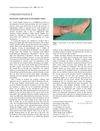 May 2002 in “British Journal of Dermatology”
 A pregnant woman's skin condition improved after giving birth, possibly due to high estrogen levels during pregnancy.
 31 citations
,
April 2019 in “Cell reports”
31 citations
,
April 2019 in “Cell reports” This study found that human iPSC-derived melanocytes from vitiligo patients successfully integrated into mouse hair follicles and epidermis, demonstrating potential for personalized therapy for depigmentation.
10 citations
,
June 1999 in “Veterinary Dermatology” This report documents follicular dysplasia with pigmentary changes in two adult cows, contributing to the understanding of this rare condition in cattle.
This study identified ALDH1A1 as a regulator of melanogenesis and suggests its inhibition, through agents like cyanamide, may be a promising therapeutic approach for treating hyperpigmentation disorders such as melasma.
 January 2006 in “Yearbook of Dermatology and Dermatologic Surgery”
 Hair graying is caused by the loss of pigment cells due to poor maintenance of stem cells in the hair follicle.
 June 2021 in “Asian Journal of Medical Sciences”
 This case study highlights that vitamin B12 deficiency can cause reversible hyperpigmentation, illustrated by a vegetarian female patient whose skin lesions improved after treatment.
 February 2008 in “Experimental dermatology”
 This article reviews potential pathomechanisms of vitiligo, emphasizing membrane alterations involving cholesterol and cardiolipin, but reports no new clinical findings.
34 citations
,
December 1988 in “Pigment Cell Research” This article explores the use of monoclonal antibodies to study the presence and distribution patterns of melanocytes in developing human skin, but reports no new clinical results.
 15 citations
,
December 2016 in “Obstetrics & Gynecology”
15 citations
,
December 2016 in “Obstetrics & Gynecology” This review discusses the effects of pregnancy on melanocytic nevi and reports no new clinical results; it suggests that changing nevi during pregnancy should be evaluated similarly to those in nonpregnant patients.
 January 2026 in “Figshare”
 This paper reports two cases of finasteride-induced melasma, expanding the limited literature on this side effect, and underscores the importance of considering 5-ARI exposure in patients with new or persistent hyperpigmentation, especially among those with darker skin.
1 citations
,
August 2024 in “Heliyon” This study reports that hair follicle neural crest stem cells in mice can be differentiated into melanocytes, potentially aiding repigmentation in vitiligo-affected areas.
 71 citations
,
March 1995 in “Journal of The American Academy of Dermatology”
71 citations
,
March 1995 in “Journal of The American Academy of Dermatology” This study concluded that combining vertical and transverse sections of scalp biopsy specimens improves diagnostic yield for certain hair disorders without increasing costs.
 32 citations
,
August 2015 in “Anais Brasileiros de Dermatologia”
32 citations
,
August 2015 in “Anais Brasileiros de Dermatologia” This review discusses the side effects and diseases related to hairstyles and hair treatments among black women, highlighting the need for thorough examination by dermatologists, but reports no new clinical results.
 7 citations
,
January 2015 in “Case reports in endocrinology”
7 citations
,
January 2015 in “Case reports in endocrinology” This case report indicates that HAIR-AN syndrome can lead to severe hyperandrogenism with virilisation signs in women after excluding tumoral causes and identifying signs of insulin resistance.
 1 citations
,
January 2019 in “Elsevier eBooks”
1 citations
,
January 2019 in “Elsevier eBooks” This review discusses scaffold materials and properties used in epidermal tissue engineering to promote skin regeneration and reports no new research findings.
 April 2018 in “The journal of investigative dermatology/Journal of investigative dermatology”
 This study found that treating human skin explants with TPA increased the number of certain melanocyte phenotypes in the interfollicular epidermis, suggesting that this ex vivo model can effectively replicate human skin's pharmacologic responses for studying potential treatments.
 May 2011 in “Dermatología argentina”
 In this case report, a female patient with frontal fibrosing alopecia and lichen scleroatrophicus vulvae experienced excellent results from hair microtransplants combined with finasteride and topical minoxidil, maintained over six years.
 January 2011 in “Elsevier eBooks”
 Alopecia in animals can be hereditary, congenital, or acquired, with treatments and outcomes varying widely.
 10 citations
,
November 2010 in “Pigment Cell & Melanoma Research”
10 citations
,
November 2010 in “Pigment Cell & Melanoma Research” This study found that epidermal melanocytes can regenerate hair follicles, whereas non-cutaneous or dermal melanocytes cannot, suggesting two distinct melanocyte lineages with potential implications for melanocyte-related diseases.
 109 citations
,
July 1993 in “The journal of investigative dermatology/Journal of investigative dermatology”
109 citations
,
July 1993 in “The journal of investigative dermatology/Journal of investigative dermatology” Hair color production is closely linked to the active growth phase of hair in mice and may also influence hair growth itself.
 December 2023 in “Clinical, cosmetic and investigational dermatology”
 This study found that specific dermoscopic signs, such as diameter diversity of leukotrichia and Pohl-Pinkus constrictions, were associated with progressive vitiligo, and early-stage melanin synthesis was impaired in vitiligo-associated leukotrichia.
 October 2021 in “Nepal journal of dermatology, venereology & leprology”
 This review discusses the diverse roles and potential skin health benefits of melatonin, highlighting its anti-inflammatory, antioxidant, and protective effects but reports no new clinical results.
2 citations
,
March 1997 in “Veterinary Dermatology” This case report describes multiple skin tumors in an 11-year-old Doberman Pinscher with color dilution alopecia, but it remains unclear if the condition increases risk for such tumors.
 2 citations
,
September 2022
2 citations
,
September 2022 In this study, researchers found that a PER3 gene SNP may be pathogenic for a new subtype of dyschromatosis universalis hereditaria, especially when combined with a SASH1 mutation.