 54 citations
,
October 2024 in “Nature Communications”
54 citations
,
October 2024 in “Nature Communications” In this study, researchers developed a method to control the valence states of Mo in nanozymes, optimizing their activity for ROS-related therapies, particularly acute kidney injury treatment, and enabling real-time monitoring with photoacoustic imaging.
 19 citations
,
May 2012 in “The journal of investigative dermatology/Journal of investigative dermatology”
19 citations
,
May 2012 in “The journal of investigative dermatology/Journal of investigative dermatology” This study found that mice lacking the type 3 IP(3) receptor in their hair follicles experienced repetitive hair loss and regrowth, indicating disrupted hair-cycle regulation potentially linked to specific signaling pathways.
 6 citations
,
October 2012 in “Journal of Heredity”
6 citations
,
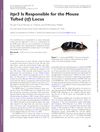
October 2012 in “Journal of Heredity” This study identified the Itpr3 gene as responsible for the tufted hair loss phenotype in the BTBR mouse strain.
1 citations
,
July 2024 in “British Journal of Dermatology” This study found that inhibiting EGFR and MEK in hair follicles may lead to a partial collapse of the immune privilege in the follicles and increased secretion of IL-33.
2 citations
,
April 2019 in “Journal of Investigative Dermatology” This study found that overexpression of Gasdermin A3 in mice disrupts the hair follicle stem cell niche and causes hair loss through cell necrosis and abnormal hair cycle progression, without involving immune-mediated mechanisms.
35 citations
,
July 2010 in “The FEBS journal” In this study, researchers identified a highly reactive, isozyme-specific sequence for TGase 3, contributing to understanding its distinct functional role and activity distribution in the mouse epidermis.
January 2012 in “DigtalCommons @ Texas Medical Center Library (Texas Medical Center)” This study found that Stat3 deletion in certain skin cells led to increased differentiation and altered stem cell behavior, suggesting its significant role in skin tumor development and keratinocyte migration.
 April 2023 in “Journal of Investigative Dermatology”
 This study found that human TMEM2 does not function as a hyaluronidase but is involved in regulating hyaluronan metabolism.
23 citations
,
September 2013 in “Molecular Carcinogenesis” This study found that constitutively active Stat3 in transgenic mice led to reduced keratinocyte stem cell populations in hair follicles, altering stem/progenitor cell dynamics and homeostasis.
28 citations
,
June 2023 in “Tissue Engineering and Regenerative Medicine”  July 2022 in “The journal of investigative dermatology/Journal of investigative dermatology”
 This study demonstrated that Tet2 and Tet3 enzymes are crucial for controlling gene expression related to hair differentiation in mice, suggesting DNA demethylation could be a new method for managing hair growth.
1 citations
,
August 2025 in “Epigenetics & Chromatin” This study explored the role of the histone modification H3K4me3 in cashmere goat dermal papilla cells, finding that increased levels enhanced cell proliferation and activated Wnt signaling genes, suggesting H3K4me3's involvement in hair follicle development through regulation of the gene RSPO3.
6 citations
,
August 2016 in “Journal of Visualized Experiments” This article describes a method using the CUBIC protocol to clarify and visualize molecular and cellular interactions in mouse skin biopsies at single cell resolution, but does not provide new biological findings.
 December 2022 in “KSBB Journal”
 This study suggests that autophagy is essential for regulating TLR3-mediated regenerative processes in human keratinocytes.
 55 citations
,
June 2014 in “Nature Communications”
55 citations
,
June 2014 in “Nature Communications” This study found that overexpression of the transcription factor Tcf3 accelerates keratinocyte migration and skin wound healing in mice, highlighting its potential as a therapeutic target for wound repair.
1 citations
,
April 2017 in “Journal of Investigative Dermatology” ZNF750 and MPZL3 are important in causing seborrheic dermatitis.
323 citations
,
November 2017 in “Bioanalysis” This commentary discusses the challenges of matrix effects in LC–MS analysis and introduces the concept of a matrix effect factor using stable isotopically labeled internal standards to improve analysis reliability.
2 citations
,
May 2008 in “Journal of Clinical Oncology” This study found that patients with unresectable melanoma treated with AZD6244 experienced skin reactions, including depigmentation and papulopustular rashes, in patterns similar to those caused by EGFR inhibitors.
 January 2023 in “Research Square (Research Square)”
 This study identified m6A-related genes, particularly IGF2BP3, as significantly up-regulated in keloid patients, potentially implicating them in the condition's molecular mechanisms and suggesting targets for therapy.
 105 citations
,
February 1996 in “Journal of biological chemistry/The Journal of biological chemistry”
105 citations
,
February 1996 in “Journal of biological chemistry/The Journal of biological chemistry” In this study, sequences upstream of the TGM3 gene were found to regulate epithelial-specific gene expression in keratinocytes, suggesting potential applications in gene therapy.
14 citations
,
March 2022 in “Plant Cell & Environment” In this study, the authors reported that AtRXR3, a phosphorus-inducible DUF506 protein, modulates root hair growth under phosphorus stress by interacting with calmodulin and influencing calcium oscillations.
54 citations
,
December 2011 in “American Journal Of Pathology” This study found that immune-mediated destruction of bulge stem cells is a key factor in the alopecia observed in AE mice, suggesting it as a model for studying primary cicatricial alopecias, particularly lichen planopilaris.
1 citations
,
June 2015 in “Journal of anatomy” This study reported that novel kainate derivatives, especially ZCZ90, maintained potency in affecting proprioceptive sensory organ firing, aiding future receptor studies for potential treatment innovations.
46 citations
,
August 2006 in “PubMed” In this study, researchers identified and examined males with 17 beta-HSD3 deficiency in a highly inbred Arab population, noting genetic findings and the progression of male characteristics despite being raised as females initially.
79 citations
,
October 1998 in “Genomics” This study found that the mK6alpha and mK6beta genes in mice are regulated differently at the mRNA level, with implications for understanding K6 gene evolution and function in mammals.
3 citations
,
April 2010 in “The FASEB Journal” This study found that estrogen, through estrogen receptors, can regulate the expression of the HOXC13 gene involved in hair follicle development, with MLL3 histone methylase playing a collaborative role.
19 citations
,
October 2022 in “The Ocular Surface” 28 citations
,
October 2014 in “Development” This study revealed that frizzled 3 can fully rescue polarity defects in frizzled 6-null mice, while frizzled 6 can partially rescue defects in frizzled 3-null mice, highlighting conserved signaling roles in these proteins.
This study introduces a new type of tissue micromodule, the micro tissue precursor (μTP), which can form complex 3D tissues, including lung stroma and skin models supporting hair viability.
 3 citations
,
June 2023 in “Nano today”
3 citations
,
June 2023 in “Nano today” This study reported that bioinks containing calcium molybdate nanoparticles and dermal papilla cells can promote hair regrowth in vivo by creating an anti-inflammatory environment and activating the mTOR signaling pathway in macrophages.