110 citations
,
September 2017 in “Molecules” This review discusses the phytochemistry, pharmacology, pharmacokinetics, and standardization of Forsythiae Fructus, detailing both unripe and ripe forms, but reports no new clinical results.
 January 2025 in “Annals of Dermatology”
 This study reports that patients with primary cicatricial alopecia have distinct bacterial colonization and higher antibiotic resistance compared to those with non-inflammatory scalp conditions, indicating the importance of bacterial culture and susceptibility testing for targeted therapies.
Nutrition plays a key role in managing skin disorders, with specific dietary changes helping improve conditions like acne, dermatitis, psoriasis, alopecia, and skin cancer.
 20 citations
,
March 1990 in “JAMA”
20 citations
,
March 1990 in “JAMA” This report from the National Registry of Drug-Induced Ocular Side Effects identifies 56 cases of alopecia associated with the use of topical ophthalmic β-blockers.
 19 citations
,
September 2019 in “EMBO molecular medicine”
19 citations
,
September 2019 in “EMBO molecular medicine” This study found that deletion of c-Jun and JunB in mouse bulge hair follicle stem cells was sufficient to trigger psoriasis-like skin disease through thymic stromal lymphopoietin signaling.
 20 citations
,
December 2019 in “The journal of allergy and clinical immunology/Journal of allergy and clinical immunology/The journal of allergy and clinical immunology”
20 citations
,
December 2019 in “The journal of allergy and clinical immunology/Journal of allergy and clinical immunology/The journal of allergy and clinical immunology” In this study, ustekinumab did not promote hair regrowth in human patients with alopecia areata or prevent disease development in an AA mouse model, suggesting limited efficacy for this treatment.
 1 citations
,
June 2012 in “Springer eBooks”
1 citations
,
June 2012 in “Springer eBooks” This article discusses the potential of acupuncture as a complementary or alternative therapy for PCOS, highlighting experimental evidence of its positive effects on reproductive and metabolic function, but reports no new clinical results.
 November 2025 in “Journal of Disease and Public Health”
 This systematic review found that 5%–10% of COVID-19 cases develop long-term sequelae like neurocognitive impairment and cardiovascular damage, with higher risks in women and severe cases. Vaccination may reduce these risks, but further evidence is needed to confirm its efficacy.
 November 2020 in “Elsevier eBooks”
 This source outlines various antiandrogen and androgen inhibitor drugs used to treat cutaneous disorders of hyperandrogenism, detailing their mechanisms, uses, dosages, and side effects, with emphasis on spironolactone, finasteride, dutasteride, and oral contraceptives.
 135 citations
,
December 2015 in “Expert Opinion on Biological Therapy”
135 citations
,
December 2015 in “Expert Opinion on Biological Therapy” This review synthesizes recent research on exosomes, highlighting their role as key modulators in regenerative outcomes and suggesting they may offer advantages over stem cell-based therapies in process and regulation.
 127 citations
,
June 2008 in “British Journal of Clinical Pharmacology”
127 citations
,
June 2008 in “British Journal of Clinical Pharmacology” This study supports the conclusion that the hormetic dose-response model is the most prevalent and fundamental model in biological and biomedical sciences, applicable to a wide range of clinical conditions.
 41 citations
,
July 2020 in “Colloids and surfaces. B, Biointerfaces”
41 citations
,
July 2020 in “Colloids and surfaces. B, Biointerfaces” This study suggests that adjusting the ratios of keratin-associated proteins to keratin intermediate filaments can create keratin/chitosan hydrogels with more consistent gel properties for tissue engineering.
 35 citations
,
June 2017 in “Pharmaceutical research”
35 citations
,
June 2017 in “Pharmaceutical research” This study presented a new two-dimensional model that successfully predicts transdermal permeation of caffeine, highlighting the significant role of the follicular pathway in increasing systemic bioavailability.
 29 citations
,
January 1996 in “Journal of Pharmaceutical Sciences”
29 citations
,
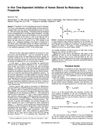
January 1996 in “Journal of Pharmaceutical Sciences” This study developed a theoretical model that suggests finasteride may completely inhibit 5AR type 2, but not sufficiently suppress type 1, leading to only partial reduction of dihydrotestosterone at clinical doses.
 20 citations
,
August 2019 in “Expert Opinion on Drug Safety”
20 citations
,
August 2019 in “Expert Opinion on Drug Safety” This review examines the cognitive effects of medications for lower urinary tract symptoms and indicates that muscarinic antagonists, particularly oral oxybutynin, pose the highest risk for cognitive impairment.
 10 citations
,
January 1985 in “Elsevier eBooks”
10 citations
,
January 1985 in “Elsevier eBooks” Active oxygen species might be involved in skin tumor growth, but their exact role is unclear.
 7 citations
,
March 2017 in “International Journal of Environmental Research and Public Health”
7 citations
,
March 2017 in “International Journal of Environmental Research and Public Health” This study found that short-term exposure to PM2.5 and Asian dust particles did not increase skin symptoms in schoolchildren.
 4 citations
,
November 2017 in “Scientific Reports”
4 citations
,
November 2017 in “Scientific Reports” This study compiled an archive of 684 genes associated with monogenic hair disorders, identifying previously unrecognized components of Hippo signaling and proposing a new biologically-grounded disease taxonomy.
 1 citations
,
April 2022 in “Cell Death Discovery”
1 citations
,
April 2022 in “Cell Death Discovery” This study found that SMAD2 overexpression in human hair follicle stem cells promoted differentiation and apoptosis while inhibiting proliferation, and Smurf2 upregulation limited mouse wound healing by suppressing the SMAD2/NANOG/DNMT1 axis.
 1 citations
,
November 2017 in “Expert opinion on orphan drugs”
1 citations
,
November 2017 in “Expert opinion on orphan drugs” This review discusses the genetic basis of ectodermal dysplasia, highlighting that identification of gene pathologies enhances diagnosis and supports prenatal DNA testing, but it reports no new clinical results.
 April 2020 in “Journal of the Endocrine Society”
 This case report describes a rare occurrence of giant bilateral adrenal myelolipomas in a 28-year-old female with CAH, emphasizing that large, hormonally active, or painful myelolipomas should be surgically removed.
 December 2010 in “Jurnal Natural (Faculty of Mathematics and Natural Science, Syiah Kuala University)”
 This thesis explores both environmental and genetic factors in prostate cancer, focusing on surrogate hormone markers, medical radiation, family history, and genetic polymorphisms related to DNA repair and hormone marker genes, but reports no new clinical findings.
 March 2026 in “Frontiers in Oncology”
 This study concluded that dermatologists are integral to the care of cancer survivors by shifting focus from symptomatic skin treatment to preventive and rehabilitative strategies that enhance long-term skin health and quality of life post-oncology therapy.

This review reports that hair follicles are dynamic neuro-immuno-endocrine organs with intrinsic signaling pathways, which play a crucial role in hair disorders like alopecia. It highlights emerging regenerative approaches targeting these pathways for hair restoration.
 November 2025 in “Frontiers in Pharmacology”
 This mini-review examines ethnopharmacological approaches to manage hair loss in postmenopausal women, highlighting promising botanical remedies like saw palmetto, rosemary oil, and ginseng. The authors underscore a need for more interdisciplinary trials and focus on traditional remedies' multifaceted benefits, while noting gaps in menopausal-specific evidence.

In this study, researchers found that CD4 T cells from the skin draining lymph nodes of mice with alopecia areata can transfer the disease to recipient mice, highlighting the key role of these cells and their interaction with CD8 T cells in the disease's development.
 193 citations
,
August 2005 in “Journal of Investigative Dermatology Symposium Proceedings”
193 citations
,
August 2005 in “Journal of Investigative Dermatology Symposium Proceedings” This study found that the prevalence of androgenetic alopecia increases with age among both men and women in Maryborough, Australia, with 57% of women and 73.5% of men aged 80 and over affected.
 160 citations
,
January 2017 in “Development”
160 citations
,
January 2017 in “Development” This study found that hypertrophic chondrocytes at the fracture callus border may convert to osteoblasts, influenced by vasculature and pluripotency gene expression.
 137 citations
,
June 2005 in “Climacteric”
137 citations
,
June 2005 in “Climacteric” This review indicates that estrogen loss during menopause significantly impacts skin health, while estrogen treatment may increase skin collagen, thickness, and elasticity, though effects on other skin characteristics are inconsistent.
 120 citations
,
July 2005 in “Dermatologic surgery”
120 citations
,
July 2005 in “Dermatologic surgery” This study found that topical niacinamide significantly improved the appearance of wrinkles, skin yellowing, and elasticity in aging facial skin over 12 weeks.