October 2024 in “Journal of the Endocrine Society” This study highlights a rare case of vitamin D-dependent rickets type 2A caused by a heterozygous mutation in the vitamin D receptor gene, emphasizing the complexity of managing this condition with high-dose calcium and vitamin D therapy.
 9 citations
,
November 2021 in “Frontiers in Cell and Developmental Biology”
9 citations
,
November 2021 in “Frontiers in Cell and Developmental Biology” This study found that PBX1 overexpression reduces hair follicle-derived mesenchymal stem cell senescence and apoptosis by alleviating ROS-mediated DNA damage, rather than enhancing DNA repair.
September 2023 in “Journal of the American Academy of Dermatology” Bullous pemphigoid can look like erythema multiforme, so awareness is needed for proper treatment.
33 citations
,
May 2015 in “JAMA Dermatology” This study identifies comedonal or cystic fibrofolliculomas as novel diagnostic clues for earlier recognition of Birt-Hogg-Dube syndrome, potentially facilitating timely surveillance of associated systemic complications.
 12 citations
,
August 2022 in “Stem cell reviews and reports”
12 citations
,
August 2022 in “Stem cell reviews and reports” This study found that PBX1 overexpression reduces hair follicle-derived mesenchymal stem cell senescence and apoptosis by interacting with SIRT1 and PARP1, highlighting a potential mechanism for addressing aging-related diseases.
8 citations
,
March 2011 in “Endocrine” In this study, researchers identified a novel p.R50X mutation in the vitamin D receptor gene, linked to hereditary vitamin D-resistant rickets in two siblings.
 59 citations
,
April 2016 in “Cell Reports”
59 citations
,
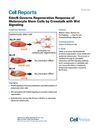
April 2016 in “Cell Reports” This study demonstrated that EdnrB signaling promotes melanocyte stem cell proliferation and differentiation, enhancing hair and epidermal melanocyte regeneration, especially under conditions of active Wnt signaling.
 42 citations
,
December 2016 in “Cell Death & Differentiation”
42 citations
,
December 2016 in “Cell Death & Differentiation” This study found that transient mtDNA double strand breaks in mice accelerated aging in certain tissues through increased reactive oxygen species, independent of p21/p53 pathway mediation.
1 citations
,
July 2020 in “The Egyptian Journal of Hospital Medicine” This study found no significant association between the MDR1 C3435T polymorphism and methotrexate responsiveness in rheumatoid arthritis patients.
 10 citations
,
January 2016 in “Dermatology”
10 citations
,
January 2016 in “Dermatology” This study found that patients with myotonic dystrophy type 1 developed basal cell carcinomas at a younger age than the general population, suggesting a possible predisposition in this group.
 December 2024 in “Livers”
 This case report highlights a female patient with familial partial lipodystrophy who showed significant improvement in liver stiffness after starting leptin replacement therapy.
 April 2016 in “Journal of Investigative Dermatology”
 This study found that in mutant NRAS melanoma, MEK inhibitors led to increased AKT signaling and reduced MIG6, a change that may enhance cell migration and invasiveness.
18 citations
,
March 2015 in “Journal of Investigative Dermatology” In this study, silencing BMAL1 and PER1 genes increased melanogenic activity in follicular and epidermal melanocytes, suggesting that peripheral circadian clocks may regulate melanin pigmentation.
 April 2017 in “Journal of Dermatological Science”
 This study found that B cells have dual roles in tumor immunity, with regulatory B cells potentially hindering immune responses against tumors in the melanoma mouse model.
50 citations
,
September 2009 in “Molecular Genetics and Metabolism” This study identified a novel V26M mutation in the vitamin D receptor as the cause of hereditary vitamin D resistant rickets in a patient, characterized by severe rickets and an unusual pattern of alopecia.
January 2026 in “Animal Genetics” This study investigated a Labrador Retriever with paw pad hyperkeratosis and identified a unique de novo heterozygous missense variant in the GJB6 gene, suggesting its potential role in the condition, analogous to Clouston syndrome in humans, although differences between species may provide further insights.
1 citations
,
December 2022 in “Plants” This study suggests that CSLD1 is key to nitrogen-dependent root hair elongation and regulation of AMT1;2 expression in rice roots.
This study reports that a specific transporter protein in Staphylococcus hominis is responsible for transporting a malodour precursor, thereby playing a key role in human body odor production.
39 citations
,
April 2019 in “The journal of immunology/The Journal of immunology” This study found that Malt1, particularly its protease activity, plays a crucial role in maintaining Treg cell function and homeostasis, with its inactivation leading to autoimmune diseases and altered immune responses in mice.
47 citations
,
September 2012 in “Human molecular genetics online/Human molecular genetics” This study suggests that the interaction between folliculin and plakophilin-4 (p0071) may play a role in folliculin's tumor suppressor function by regulating RhoA signaling, impacting cell migration and junction formation.

This study found that the FER/MLO signaling module plays a crucial role in calcium oscillations and ROS production in root hair tip growth, with the MLO15 protein regulating these processes and restoring disrupted growth and signaling in fer mutant root hairs.
 29 citations
,
October 2011 in “British Journal of Dermatology”
29 citations
,
October 2011 in “British Journal of Dermatology” This study found that four microRNAs, which were significantly upregulated in balding hair follicle papilla cells, could play a role in the development of male pattern baldness.
33 citations
,
July 2007 in “Journal of cell science” This study found that knocking out the transactivation domain of Miz1 in mouse keratinocytes disrupted hair follicle orientation, caused irregular pigmentation, and increased keratinocyte proliferation, indicating Miz1's role in hair follicle development and morphogenesis.
 5 citations
,
January 2012 in “PubMed”
5 citations
,
January 2012 in “PubMed” This study observed that anti-multiple nuclear dots antibodies, typically markers for primary biliary cirrhosis, were also present in patients with various autoimmune and connective tissue diseases, without correlating to disease activity or specific skin features.
1 citations
,
May 2024 in “Communications Biology” This study found that Dab2 conditional knockout mice experienced delayed hair follicle cycles and reduced hair follicle stem cell activity, suggesting Dab2's crucial role in regulating stem cell activation and anti-aging process in hair follicles.
September 2013 in “Helda (University of Helsinki)” This study explored the genetics of inherited developmental defects in dogs and identified novel mutations affecting traits like caudal dysplasia, ectodermal dysplasia, and mucopolysaccharidosis VII, suggesting dogs as models to study human diseases.
 October 2024 in “Journal of the Endocrine Society”
 This case study reports on a rare form of vitamin D resistant rickets in a 37-year-old male, highlighting the condition's clinical features and the necessity for a thorough understanding of calcium and vitamin D metabolism in the diagnosis and management of metabolic bone diseases.
 182 citations
,
August 2016 in “Development”
182 citations
,
August 2016 in “Development” This review discusses the roles and mechanisms of chromatin remodelers and their subunits in mammalian development, but reports no new experimental results.
26 citations
,
April 2011 in “British Journal of Dermatology” This study identified novel mutations in the DSG4 gene in a Japanese patient with monilethrix, affecting protein interactions that may disrupt hair shaft structure.
 August 2012 in “Nature Cell Biology”
 In this study, researchers found that β-catenin directly promotes TERT expression in stem and cancer cells by interacting with the Tert promoter, illustrating a mechanistic link between tumorigenesis and pluripotency.