561 citations
,
April 2003 in “Journal of Investigative Dermatology” CD34 is a marker for isolating stem-like cells in mouse hair follicles.
503 citations
,
May 2009 in “Cell stem cell” This study suggests that Lrig1-positive cells form a previously unknown reservoir of interfollicular epidermal stem cells in adult mouse skin, influencing epidermal proliferation and hair follicle development.
425 citations
,
June 2020 in “Nature” Scientists created human skin with hair from stem cells, which could help treat hair loss and skin conditions.
 356 citations
,
March 2012 in “Trends in Plant Science”
356 citations
,
March 2012 in “Trends in Plant Science” This review discusses the crosstalk between auxin and ethylene in seedling growth and development, emphasizing how ethylene modulates auxin's effects across different tissues.
289 citations
,
May 2003 in “Journal of Investigative Dermatology” This study demonstrates that human skin is capable of steroid hormone synthesis, but its role in androgenic skin disorders like acne and alopecia is yet to be clarified.
 219 citations
,
September 2009 in “European journal of epidemiology”
219 citations
,
September 2009 in “European journal of epidemiology” This article discusses the rationale, design, major findings, and updated objectives and methods of the ongoing Rotterdam Study on various diseases, without reporting new research results.
215 citations
,
September 2003 in “Journal of Biological Chemistry” This study found that the hairless gene product (Hr) suppresses VDR-mediated gene activation by directly interacting with the vitamin D receptor, potentially affecting hair follicle function.
 197 citations
,
June 2009 in “American journal of human genetics”
197 citations
,
June 2009 in “American journal of human genetics” This study found that previously undescribed WNT10A mutations are a prominent cause of various forms of ectodermal dysplasia, including OODD and Schöpf-Schulz-Passarge syndrome, with gender-specific phenotypic effects noted.
 178 citations
,
October 2001 in “Genes & Development”
178 citations
,
October 2001 in “Genes & Development” This study found that the mammalian hairless gene encodes a corepressor protein that interacts with thyroid hormone receptors, providing insights into hair loss syndromes in humans and mice.
 160 citations
,
April 2012 in “Journal of Cellular and Molecular Medicine”
160 citations
,
April 2012 in “Journal of Cellular and Molecular Medicine” This study found that telocytes are present in the human dermis, suggesting a potential role in skin homeostasis, remodeling, regeneration, and repair.
 159 citations
,
October 2015 in “Science Advances”
159 citations
,
October 2015 in “Science Advances” This study observed that applying JAK-STAT pathway inhibitors to mouse and human skin led to rapid hair growth by inducing the anagen phase of hair follicles.
 153 citations
,
October 2007 in “Cell Stem Cell”
153 citations
,
October 2007 in “Cell Stem Cell” New research suggests that skin cell renewal may not require a special type of cell previously thought to be essential.
 149 citations
,
December 2007 in “The Journal of Clinical Endocrinology and Metabolism”
149 citations
,
December 2007 in “The Journal of Clinical Endocrinology and Metabolism” Women with PCOS have overall higher body fat, not abnormal fat placement, and more insulin resistance.
144 citations
,
December 2004 in “Molecular Endocrinology” This study found that the effects of the vitamin D receptor on hair follicle cycling in mice are independent of its ability to bind a hormone, with specific domain mutations influencing hair regrowth outcomes.
 142 citations
,
December 1991 in “Antimicrobial Agents and Chemotherapy”
142 citations
,
December 1991 in “Antimicrobial Agents and Chemotherapy” This study reported that continuous intravenous dextran sulfate was toxic and ineffective as a treatment for symptomatic HIV infection, as it did not improve surrogate markers and caused significant side effects.
140 citations
,
October 2008 in “Nature Genetics” 139 citations
,
September 2001 in “The journal of investigative dermatology/Journal of investigative dermatology” This case report describes a patient with mutations in both alleles of the vitamin D receptor who exhibited hair loss clinically indistinguishable from generalized atrichia with papules, suggesting a potential genetic pathway shared with the hairless gene.
 137 citations
,
September 2005 in “Proceedings of the National Academy of Sciences of the United States of America”
137 citations
,
September 2005 in “Proceedings of the National Academy of Sciences of the United States of America” In this study, researchers found that transgenic expression of the Hairless gene in keratinocytes can restore hair follicle regeneration in Hr-deficient mice by repressing Wise, a modulator of Wnt signaling.
135 citations
,
March 2000 in “Journal of Biological Chemistry” This review discusses the roles of the Agouti and Agouti-related proteins in pigmentation and energy regulation and reports no new experimental findings.
 133 citations
,
May 2016 in “Cell Host & Microbe”
133 citations
,
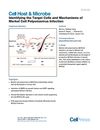
May 2016 in “Cell Host & Microbe” In this study, human dermal fibroblasts were identified as natural host cells that support productive Merkel cell polyomavirus infection, and the MEK antagonist trametinib was introduced as an effective inhibitor to control the virus.
130 citations
,
March 2014 in “Proceedings of the National Academy of Sciences of the United States of America” This study found that in mice, epidermal Wnt/β-catenin signaling influences adipocyte differentiation and hair growth, suggesting its critical role in synchronizing adipogenesis with the hair growth cycle.
 129 citations
,
May 2015 in “Cell Stem Cell”
129 citations
,
May 2015 in “Cell Stem Cell” This review discusses recent findings on the plasticity and regulation of epithelial stem cells and reports no new experimental results.
124 citations
,
July 1997 in “Journal of Biological Chemistry” This study found that overexpression of an enzyme in transgenic mice led to distorted polyamine levels, resulting in permanent hair loss and female infertility.
 124 citations
,
August 1994 in “Journal of Investigative Dermatology”
124 citations
,
August 1994 in “Journal of Investigative Dermatology” This study found that applying dexamethasone to mice induced catagen-like follicle changes significantly earlier and more consistently than a vehicle, such changes being useful for studying hair follicle regression.
 121 citations
,
April 2008 in “The Journal of Clinical Endocrinology & Metabolism”
121 citations
,
April 2008 in “The Journal of Clinical Endocrinology & Metabolism” Insulin sensitizers may slightly reduce hirsutism but are less effective than other treatments.
 115 citations
,
February 2016 in “Nature Communications”
115 citations
,
February 2016 in “Nature Communications” The authors concluded that the dermal response to epidermal Wnt/β-catenin signaling depends on distinct fibroblast lineages, with each responding to different paracrine signals such as Hedgehog and TGF-β.
100 citations
,
August 2011 in “Journal of Investigative Dermatology” Lack of vitamin D receptor increases skin tumor risk by boosting hedgehog signaling.
98 citations
,
December 2015 in “The Journal of Cell Biology” In this study, researchers found that the absence of type I or type II keratins in mice leads to severe skin barrier defects, highlighting keratins' crucial role in epidermal structure and function.
 96 citations
,
June 2017 in “Nature Communications”
96 citations
,
June 2017 in “Nature Communications” This study identified WNT10A as crucial for adult epithelial cell proliferation and differentiation, suggesting β-catenin pathway activation may help address regenerative defects in WNT10A mutation patients.
 96 citations
,
October 1981 in “Drugs”
96 citations
,
October 1981 in “Drugs” Minoxidil effectively treats severe hypertension but may cause side effects, so careful monitoring is needed.