 April 2026 in “Cosmetics”
 In this randomized, double-blind, placebo-controlled trial, researchers found that a multi-targeted cosmetic formulation containing TrinogeniX™ significantly increased hair density and thickness in individuals with androgenetic alopecia without adverse effects, suggesting it as a potential safe and effective treatment option.

This study found that melatonin upregulates LncRNA16913.1, which sequesters chi-miR-195-5p to release FZD6 and enhance fibroblast proliferation in cashmere goat skin, suggesting a regulatory mechanism within the lncRNA-miRNA-mRNA cascade in vitro.
December 1990 in “PubMed” This study found that topical application of 17 alpha-propylmesterolone significantly increased proliferative activity in hair matrix cells in men with androgenetic alopecia.
7 citations
,
April 1996 in “British Journal of Dermatology” This study found that intermediate filaments and matrix proteins in presumptive hair shaft cells are synthesized sequentially, identifying a new polypeptide component that changes during hair cell differentiation.
 July 2025 in “Dermatologica Sinica”
 In this study, compound glycyrrhizin promoted hair regrowth in a testosterone-induced alopecia mouse model and increased human hair dermal papilla cell proliferation, likely through activating the Wnt/β-catenin pathway.
 97 citations
,
December 2010 in “Journal of Neuroscience”
97 citations
,
December 2010 in “Journal of Neuroscience” This study found that midazolam, unlike clonazepam, increased neurosteroid levels and affected synaptic inhibition and plasticity in rat hippocampal neurons, suggesting unique actions via dual receptor activation.
 32 citations
,
April 2016 in “Aaps Pharmscitech”
32 citations
,
April 2016 in “Aaps Pharmscitech” This study found that nanostructured lipid carriers enhanced the skin penetration and retention of minoxidil compared to solid lipid nanoparticles, suggesting they could be a promising method for topical delivery.
April 2026 in “International Journal of Biological Macromolecules” February 2026 in “Toxicology Letters” This study used an in silico/in vitro approach to identify potential inhibitors of the enzyme SRD5A2, finding that the androgen receptor modulator MK-0773 is a moderate inhibitor, although it does not act as a covalent inhibitor like finasteride.
 10 citations
,
June 2005 in “Small ruminant research”
10 citations
,
June 2005 in “Small ruminant research” This study found that melatonin combined with bromocryptine treatment in Spanish goats increased secondary hair follicle numbers and extended the cashmere growth phase during spring.
 August 2016 in “The journal of investigative dermatology/Journal of investigative dermatology”
 This article discusses how activating the hexosamine pathway may enhance skin homeostasis by increasing hyaluronic acid secretion and supporting hair follicle stem cell self-renewal, but reports no new results.
23 citations
,
January 2018 in “Biological and Pharmaceutical Bulletin” In this study, YK11 was found to promote osteoblast cell proliferation and differentiation through activation of non-genomic signaling pathways in mouse osteoblast cells.
 June 2025 in “Mağallaẗ ʻulūm al-rāfidayn”
 This study found that certain pyrazole derivatives may serve as effective 5α-reductase inhibitors with potential use in the treatment of androgenetic alopecia, based on molecular docking analyses.
3 citations
,
September 2021 in “Bulletin of the Korean Chemical Society” In this study, dimeric peptide derivatives were shown to enhance the proliferation of human follicle dermal papilla cells in vitro, particularly promoting the ERK1/2 pathway, suggesting potential for developing peptide-based treatments for hair regeneration.
 May 2024 in “Journal of biomaterials science. Polymer ed.”
 This study found that three-layer dissolving microneedles for delivering Minoxidil showed improved skin drug penetration and reduced irritation risk compared to traditional Minoxidil cream, suggesting a promising alternative for alopecia areata treatment.
4 citations
,
May 2014 in “Daehan hanbang so'a'gwa haghoeji/Daehan hanbang soagwa hakoeji” In this study, Ganoderma lucidum extract combined with microneedle therapy promoted hair growth more effectively than microneedle therapy alone in a mouse model of alopecia.
324 citations
,
May 2002 in “Oncogene” August 2023 in “Fermentation” This review discusses the potential of metabolic engineering to enable sustainable industrial-scale production of L-aspartate and its derivatives, detailing current microbial production progress, limiting factors, and future prospects with emerging technologies in synthetic biology.
 34 citations
,
December 2012 in “Indian Journal of Dermatology, Venereology and Leprology”
34 citations
,
December 2012 in “Indian Journal of Dermatology, Venereology and Leprology” Mesotherapy shows promise for cellulite and facial rejuvenation but has mixed results for body sculpting and hair loss, with more research needed for safety and effectiveness.
66 citations
,
March 2016 in “Nucleic Acids Research” This study found that Musashi-2 regulates mRNA targets to restrict epithelial cell migration, revealing a key function of Msi2 beyond its known role in promoting cell growth.
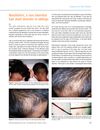
January 2015 in “Nasza Dermatologia Online” This case report describes an eight-year-old Kashmiri boy diagnosed with monilethrix, a rare genetic hair disorder, characterized by a beaded appearance and fragility of the hair shaft.
 2 citations
,
February 2016 in “Vestnik dermatologii i venerologii”
2 citations
,
February 2016 in “Vestnik dermatologii i venerologii” This study found that complex therapy including biomimetic peptides was effective in treating alopecia compared to a similar treatment without the peptides.
 4 citations
,
January 2014 in “Indian dermatology online journal”
4 citations
,
January 2014 in “Indian dermatology online journal” This article discusses the genetic hair disorder monilethrix, characterized by beaded, fragile hair due to defective keratin genes, and reports no effective treatment currently available; variability in severity was noted among affected siblings.
 12 citations
,
February 2022 in “Acta Biomaterialia”
12 citations
,
February 2022 in “Acta Biomaterialia” In this study, researchers found that dissolving microneedles made with hyaluronic acid enhanced the effectiveness of minoxidil in reducing hair loss and promoting hair growth in alopecia-affected mice more effectively than topical minoxidil alone, while using only 10% of the drug amount.
 109 citations
,
October 2007 in “Journal of pineal research”
109 citations
,
October 2007 in “Journal of pineal research” This study suggests that melatonin plays a role in hair follicle function by modulating growth and pigmentation, and it may act as a protective agent in active hair growth phases.
In this study, chitosan hydrogels and delivery systems showed promise in supporting skin recovery post-laser procedures, enhancing topical treatments for acne and melasma, and improving hair density in scalp applications, but limited study sizes and formulation variability restrict generalizability.
 January 2025 in “Research”
 This study developed a PEGylated black phosphorus nanosheet system loaded with metformin, which enhanced hair growth more effectively than topical minoxidil while reducing side effects in treating androgenetic alopecia.
 2 citations
,
October 1999 in “Annals of the New York Academy of Sciences”
2 citations
,
October 1999 in “Annals of the New York Academy of Sciences” This article discusses plasma β-endorphin concentrations during natural and artificially induced winter hair growth in mink but reports no new clinical findings.
December 2022 in “Nature Communications” This study found that a new "bead-jet" printing system for mesenchymal stem cells in Matrigel beads improved skeletal muscle regeneration and skin healing in a high-density, sparse pattern.
 2 citations
,
August 2019 in “PubMed”
2 citations
,
August 2019 in “PubMed” This abstract reports that topical minoxidil is currently the only FDA-approved treatment for pattern hair loss in both men and women.