70 citations
,
May 2008 in “The journal of investigative dermatology/Journal of investigative dermatology” This study found that Notch signaling is crucial for maintaining proper melanocyte distribution and preventing premature differentiation in the melanocyte lineage within hair follicles.
 2 citations
,
January 2019 in “Dermatology Review”
2 citations
,
January 2019 in “Dermatology Review” This study found that pigmented vellus and upright regrowing hairs are the only predictive trichoscopic markers of hair regrowth in patients with alopecia totalis and universalis.
 157 citations
,
December 2015 in “Journal of the American Academy of Dermatology”
157 citations
,
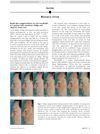
December 2015 in “Journal of the American Academy of Dermatology” This case study reported significant but temporary hair regrowth and skin repigmentation in a patient with vitiligo and alopecia areata during treatment with oral ruxolitinib.
20 citations
,
November 2004 in “Archives of Pathology & Laboratory Medicine” This case report describes a rare instance of melanocytic matricoma, a benign pigmented papule found in sun-damaged skin of an elderly individual, highlighting its distinct clinical and pathological features.
 6 citations
,
July 2011 in “Journal of Plastic Reconstructive and Aesthetic Surgery”
6 citations
,
July 2011 in “Journal of Plastic Reconstructive and Aesthetic Surgery” This case report describes a successful eyebrow reconstruction using hair follicle micrografts in a patient with dormant keratosis pilaris atrophicans, demonstrating potential for this technique in similar conditions.
 11 citations
,
May 2021 in “Journal of Cosmetic Dermatology”
11 citations
,
May 2021 in “Journal of Cosmetic Dermatology” This review discusses the potential use of platelet-rich plasma for treating melasma, suggesting its effectiveness but noting the need for more extensive studies to confirm these findings.
 4 citations
,
February 2018 in “Journal of Investigative Dermatology”
4 citations
,
February 2018 in “Journal of Investigative Dermatology” This study suggests that thermal imaging may aid in diagnosing cellulitis, potentially improving patient care, although its applicability to certain cases requires further investigation.
 January 2023 in “Journal of Cutaneous and Aesthetic Surgery”
 In this case report, follicular unit extraction successfully treated stable segmental vitiligo in the inguinoscrotal region.
January 2024 in “Journal of Scleroderma and Related Disorders” This study concluded that autologous platelet-rich plasma is a safe and effective technique for improving aesthetic concerns such as contour defects, pigmentation issues, and indurated lesions.
October 2025 in “Our Dermatology Online” This study suggests that combining tranexamic acid with low-dose oral retinoids may offer moderate to good improvements for lichen plan pigmentosus, although larger trials are needed for confirmation.
April 2026 in “The FASEB Journal” In this study, researchers identified exosomal miR-199a-3p as a key factor in the regulation of melanogenesis by dermal papilla cells, finding that it enhances melanocyte proliferation and melanin production, suggesting potential therapeutic targets for pigmentation disorders.
 3 citations
,
January 2019 in “Advances in stem cells and their niches”
3 citations
,
January 2019 in “Advances in stem cells and their niches” This review discusses the role of dermal papilla cells in hair follicle morphogenesis and regeneration and reports no new results; the authors emphasize the importance of these cells in hair growth and pigmentation regulation.
35 citations
,
February 1993 in “International Journal of Dermatology” This report describes two cases where pemphigus lesions developed at sites of cosmetic procedures, suggesting these treatments might trigger the disease and should be distinguished from other post-surgery complications.
 August 2023 in “Skin Research and Technology”
 This study found that platelet-rich plasma is effective and safe for treating chronic wounds, particularly diabetic and venous ulcers, and vitiligo, without increasing the risk of infection.
 59 citations
,
April 2016 in “Cell Reports”
59 citations
,
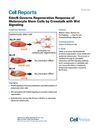
April 2016 in “Cell Reports” This study demonstrated that EdnrB signaling promotes melanocyte stem cell proliferation and differentiation, enhancing hair and epidermal melanocyte regeneration, especially under conditions of active Wnt signaling.
 October 2025 in “Clinical Case Reports”
 This case report challenges the traditional view by documenting reversible vision loss following scalp injections of platelet-rich plasma, attributed to an inflammatory or microvascular event, treatable with corticosteroids.
August 1993 in “Journal of Dermatological Science”  7 citations
,
September 2024 in “BMC Genomics”
7 citations
,
September 2024 in “BMC Genomics” In this study, whole-genome sequencing of Lanping black-boned sheep identified ERBB4 and ROR1 genes as potentially important in their distinctive hyperpigmentation, enhancing understanding of their genetic evolution from Lanping normal sheep.
 January 2024 in “Dermatologic therapy”
 This study reported that fire needle therapy improved skin lesions, increased melanocyte numbers, and boosted melanin levels in a vitiligo mouse model by upregulating the Wnt/β-catenin signalling pathway, suggesting its potential role in treating vitiligo through promoting pigmentation.
25 citations
,
October 1985 in “Archives of Ophthalmology” This study suggests that systemic exposure to black eyeliner pigment may occur, potentially leading to permanent eyelash loss following the procedure.
 14 citations
,
January 2005 in “Pediatric Dermatology”
14 citations
,
January 2005 in “Pediatric Dermatology” This case report describes a child with hypopigmented mycosis fungoides successfully treated with UVA1 light therapy.
This article discusses various surgical options for treating leukotrichia in vitiligo patients and reports that hair transplantation shows more promising results, particularly for eyebrows and eyelashes, compared to previous methods.
12 citations
,
January 2021 in “Dermatology Research and Practice” This study found that using a nonablative 1927 nm wavelength laser followed by hydroquinone cream is safe and effective for treating postinflammatory hyperpigmentation in patients with dark skin types.
 11 citations
,
January 2012 in “Journal of cell science”
11 citations
,
January 2012 in “Journal of cell science” This study demonstrates that Rac1 activity is essential for normal hair follicle formation but influences hair structure and pigmentation, in terminal differentiation, through alterations in hair shaft, cuticle, and pigmentation organization.
April 2012 in “Development” This study found that Rac1 activity in specific skin compartments is sufficient for hair formation, but results in hair with altered structure and pigmentation compared to normal.
September 2024 in “Pigment International” Results are not reported in this abstract; it discusses recent advancements in understanding vitiligo's pathogenesis, treatment, and comorbidities, emphasizing emerging areas like gut microbiome involvement and highlighting the disease's reclassification as a systemic condition with evolving therapies.
12 citations
,
October 2023 in “Tissue Engineering and Regenerative Medicine” June 2023 in “International Journal of Dermatology”  51 citations
,
January 2006 in “Wound Repair and Regeneration”
51 citations
,
January 2006 in “Wound Repair and Regeneration” This study found that MRL/MpJ mouse dorsal skin wounds heal with similar scar formation and collagen deposition as C57bl/6 and Balb/c mice.
 April 2018 in “Dermatologic Surgery”
 A new surgical technique using vellus hair grafts effectively treated vitiligo without causing unwanted hair growth.