 10 citations
,
January 2010 in “Journal of cosmetic and laser therapy”
10 citations
,
January 2010 in “Journal of cosmetic and laser therapy” This article describes a non-blinded study investigating low level laser therapy for seven patients but reports no new clinical findings.
44 citations
,
September 2011 in “Journal of Pediatric Gastroenterology and Nutrition” This study reported four new cases of NISCH syndrome in a Moroccan family, confirming genetic variability in liver disease severity and suggesting potential benefits from early UDCA therapy.
 August 2018 in “Journal of Investigative Dermatology”
 This study found that combining optical clearing methods with light-sheet fluorescence microscopy allows detailed 3D visualization of normal and pathological human skin biopsies, revealing differences in epidermal thickness and volume.
September 2025 in “Indian Journal of Dermatology” In this case report, researchers detailed a 22-year-old Turkish woman diagnosed with autosomal recessive woolly hair/hypotrichosis (ARWH/H), linked to a mutation in the LIPH gene, resulting in sparse, poorly growing, curly hair, highlighting the need for genetic consideration in similar hair conditions.
January 2025 in “Indian Journal of Dermatopathology and Diagnostic Dermatology” In this case report, a rare instance of Graham–Little–Piccardi–Lassueur syndrome coexisting with linear lichen planus was identified in a 35-year-old male, highlighting the condition's rarity in males, with dermoscopy aiding diagnosis through distinctive scalp and trunk lesion features.
 June 2026 in “Frontiers in Cell and Developmental Biology”
 This review synthesizes the diverse roles of the transcription factor LHX2 in development, tissue maintenance, and injury repair across various organ systems, highlighting its potential therapeutic applications and significance in regenerative medicine, particularly in developmental disorders and tissue regeneration.
18 citations
,
May 2006 in “Journal of Cutaneous Medicine and Surgery” This study reports the first known case of linear lichen planopilaris following Blaschko's lines in a nonfacial region.
 155 citations
,
June 2009 in “International Journal of Dermatology”
155 citations
,
June 2009 in “International Journal of Dermatology” This extensive review discusses the clinical manifestations, potential associations, and treatment approaches for lichen planus, but reports no new clinical results, highlighting gaps in evidence for therapeutic strategies.
2 citations
,
November 2023 in “Skin Appendage Disorders” This case report documents the rare occurrence of lipedematous scalp in two black Caribbean female siblings, suggesting a potential genetic factor and noting psychiatric co-morbidities as novel associations.
July 2025 in “Journal of Investigative Dermatology” Scarring alopecia involves increased immune cells and specific gene changes near damaged hair follicles.
 December 2022 in “The Journal of Cosmetic Medicine”
 This study reports on a 46-year-old female with a high hairline who underwent hairline-lowering surgery using bone-tunneling suture fixation, achieving an average of 2 cm reduction, equivalent to transplanting up to 3,000 hair grafts, with satisfactory results for both patient and surgeons.
1 citations
,
March 2010 in “International Journal of Cosmetic Science” This study introduces a new device for measuring changes in hair stiffness and lubricity, which can help predict the effects of various hair treatments.
42 citations
,
January 2003 in “International Journal of Gynecological Pathology” This research observed that multifocal pseudoepitheliomatous hyperplasia may explain some cases of squamous nests in vulvar lichen sclerosus with lichen simplex chronicus, potentially as a reaction to tissue damage rather than squamous cell carcinoma.
 April 2024 in “Oral Surgery Oral Medicine Oral Pathology and Oral Radiology”
 In this case report, the patient was diagnosed with oral lichen sclerosus following a detailed clinical and histological examination and referral to dermatology, and it underscores the importance of interdisciplinary collaboration in managing this rare condition and its associated risks.
 June 2023 in “British journal of dermatology/British journal of dermatology, Supplement”
 This study reports a rare case of two siblings with lipoedematous scalp, suggesting a possible genetic link that warrants further investigation.
January 2025 in “Dermatology Research and Practice” In this research, RNA expression analysis of scalp biopsies from lichen planopilaris patients revealed changes in specific genes after treatments with hydroxychloroquine, narrow band UVB, or low level laser light therapy, suggesting potential biomarkers and implicating M2 macrophages in the disease's immunopathogenesis.
 14 citations
,
January 2020 in “Korean Journal of Family Medicine”
14 citations
,
January 2020 in “Korean Journal of Family Medicine” This case study reported a rare occurrence of lepromatous leprosy with Lucio phenomenon in a 50-year-old Indonesian living in Malaysia, highlighting the necessity for primary care practitioners, even in non-endemic areas, to recognize this serious leprosy reaction to prevent complications and transmission.
 March 2026 in “SKIN The Journal of Cutaneous Medicine”
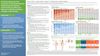
 This study demonstrated that litifilimab significantly reduced disease activity in cutaneous lupus erythematosus by Week 16, with improvements most notable in sunlight-exposed skin areas.

This review discusses Limbal Mesenchymal Stem Cell Secretome therapy for ocular chemical injuries, noting its potential in reducing inflammation and corneal opacity, but reports no new clinical results.
 October 2014 in “Journal of the Portuguese Society of Dermatology and Venereology”
 This paper presents a therapeutic approach with excellent results in a case of lichen planopilaris overlapping with dermatomyositis and scleroderma, although broader applicability is not discussed.
16 citations
,
August 2000 in “British Journal of Dermatology” In this case report, lichen myxedematosus associated with hepatocellular carcinoma showed progressive improvement in skin lesions without further treatment following tumor resection.
 13 citations
,
January 2016 in “Journal of Ophthalmology”
13 citations
,
January 2016 in “Journal of Ophthalmology” This study found that using the novel eyelid shampoo ESL improved eyelid hygiene, reduced dry eye symptoms in meibomian gland dysfunction patients, and increased eyelash length over 8 weeks.
 1 citations
,
January 2023 in “Journal of Drugs in Dermatology”
1 citations
,
January 2023 in “Journal of Drugs in Dermatology” This review discusses Graham-Little Piccardi-Lasseur syndrome, a rare dermatosis with limited treatment options, emphasizing the importance of early diagnosis through physical exam and dermoscopy, but reports no new results.
 10 citations
,
June 2018 in “Journal of visualized experiments”
10 citations
,
June 2018 in “Journal of visualized experiments” This study demonstrated that lactate dehydrogenase activity is notably high in quiescent hair follicle stem cells within mouse skin using a specific enzymatic activity assay.
 May 2024 in “Frontiers in medicine”
 In this study, a 3-year-old Japanese child with autosomal recessive woolly hair was found to have a distinctive irregular and rough cuticle on the hair shaft, along with a homozygous pathogenic LIPH variant, suggesting a critical role for genetic analysis in understanding rare hair conditions.
 5 citations
,
January 2018 in “Indian Dermatology Online Journal”
5 citations
,
January 2018 in “Indian Dermatology Online Journal” This case report describes a strong dermoscopic and histopathological correlation in lichen nitidus, helping differentiate it from other similar conditions.
July 2026 in “Clinical Cosmetic and Investigational Dermatology” In this case report, a 9-year-old boy with Sjogren-Larsson syndrome was also diagnosed with central precocious puberty, showing genetic mutations and increased hormone levels; he was treated with triptorelin acetate for CPP but experienced growth delay during follow-up.
July 2021 in “Authorea (Authorea)” This article discusses Graham-Little Piccardi Lassueur Syndrome, a rare variant of Lichen planopilaris, but reports no clinical findings or results.
February 2026 in “JEADV Clinical Practice” This report describes a rare case of scarring alopecia, diagnosed as lichen planopilaris (LPP), affecting solely the limbs, highlighting the necessity for thorough evaluation of LPP beyond the scalp.
15 citations
,
February 2014 in “PloS one” This study identified two prevalent and one newly proposed founder LIPH mutations in Japanese patients with autosomal recessive woolly hair/hypotrichosis and associated these mutations with different severities of hair loss.