
Low level laser or LED therapy combined with infiltrations may help hair growth.
 1 citations
,
July 2025 in “Scientific Reports”
1 citations
,
July 2025 in “Scientific Reports” This study found that combining diagonal earlobe crease with lipoprotein(a) provides strong diagnostic value for coronary heart disease.
 April 2016 in “Journal of The American Academy of Dermatology”
 Lichen planus may be associated with a higher risk of metabolic syndrome.
 28 citations
,
August 2018 in “Dermatologic Surgery”
28 citations
,
August 2018 in “Dermatologic Surgery” This abstract is a listing of affiliations and funding, with no new study or results reported.

In this study, baseline neutrophil-to-lymphocyte ratio (NLR) was associated with predicting early trichoscopic response in patients undergoing PRP-based treatment for non-scarring alopecia.
 November 2020 in “Journal of The American Academy of Dermatology”
 This study reported that using plain bottles instead of commercial kits for extracting platelet-rich plasma may be an effective method for treating hair loss.
 128 citations
,
March 2006 in “American Journal of Pathology”
128 citations
,
March 2006 in “American Journal of Pathology” The study found that prolactin expressed in human scalp hair follicles acts as an autocrine modulator, inhibiting hair growth and promoting hair follicle regression, which may contribute to hair loss in hyper-prolactinemia patients.
 8 citations
,
April 2022 in “The journal of investigative dermatology/Journal of investigative dermatology”
8 citations
,
April 2022 in “The journal of investigative dermatology/Journal of investigative dermatology” This study identified biallelic variants in the LSS gene as a possible genetic cause of palmoplantar keratoderma-congenital alopecia syndrome type 2, highlighting the role of cholesterol synthesis in skin cornification.
26 citations
,
January 2016 in “Journal of cutaneous and aesthetic surgery” Hair transplant combining scalp and beard hair with PRP was successful for scarring alopecia.
October 2013 in “CRC Press eBooks” This review outlines current and potential cosmetic and dermatological applications of low-level light therapy, like photorejuvenation and hair regrowth, and reports no new clinical findings.
4 citations
,
December 2016 in “Blood” This study describes a case of cyclic thrombocytopenia where a novel MPL gene mutation may contribute to the disease, with gene expression changes in platelet and neutrophil genes preceding platelet count fluctuations.
 March 2026 in “Revista Ibero-Americana de Humanidades, Ciências e Educação”
 In this study, L-PRF was associated with successful osseointegration and tissue healing when used with biomaterial for dental implants in a patient with an atretic bone ridge.
20 citations
,
November 2020 in “Stem Cell Research & Therapy” This study found that placenta-derived mesenchymal stem cells overexpressing PRL-1 inhibited adipogenesis in orbital fibroblasts from Graves’ ophthalmopathy patients by modulating specific signaling pathways, suggesting a potential therapeutic strategy.
10 citations
,
October 2009 in “Photomedicine and laser surgery” This study found that intense pulsed light treatment achieved a mean of 85% hair reduction in two patients with faun tail, although local anesthesia may be needed due to severe pain associated with neurological abnormalities.
August 2025 in “Texila international journal of management” This research explores the commercial potential of Platelet Rich Plasma in the cosmetic industry, indicating market growth driven by consumer interest in non-surgical procedures and personalized beauty solutions, despite regulatory challenges.
58 citations
,
January 2015 in “Journal of the American Academy of Dermatology” Pioglitazone may help treat lichen planopilaris, but more research is needed.
 January 2018 in “Skin appendage disorders”
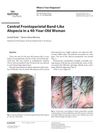
 A woman's hair loss was correctly diagnosed as Lichen planopilaris after initial misdiagnosis, highlighting the usefulness of trichoscopy in diagnosing hair disorders.
March 2026 in “Anais Brasileiros de Dermatologia” Lichen planopilaris and frontal fibrosing alopecia are likely distinct diseases with different tissue involvement.
 May 2025 in “Frontiers in Genetics”
 This study reported discovering a novel missense variant in a case of autosomal recessive woolly hair in a 31-year-old Chinese woman, which significantly reduced secretion of the encoded protein, likely leading to disease by impairing its hydrolytic function.
9 citations
,
October 2012 Tumescent local anesthesia is a safe, cost-effective method for outpatient liposuction.
 September 2017 in “Springer eBooks”
 Low-level laser therapy seems to promote hair growth but requires more research to confirm its effectiveness.
 49 citations
,
January 2003 in “Clinical and Experimental Dermatology”
49 citations
,
January 2003 in “Clinical and Experimental Dermatology” This report from the UK reviews the literature on post-menopausal frontal fibrosing alopecia and highlights its under-recognition and distinctive characteristics compared to lichen planopilaris, but does not provide new results.
 July 2022 in “JEADV Clinical Practice”
 This review discusses the classification of lichen planopilaris and its subtypes under the proposed term "lichenoid alopecias," suggesting they exist along a clinical and histological spectrum.
14 citations
,
August 2015 in “Endocrinology” This study describes the development of a monoclonal antibody, 005-C04, which blocks PRLR-mediated signaling, suggesting its potential for furthering understanding of PRLR's role in health and disease.
 May 2022 in “Acta scientific dental sciences”
 This article discusses the use of platelet concentrates in regenerative surgeries for periodontal and bone defects but presents no new clinical results, emphasizing their potential benefits over traditional methods.
 6 citations
,
January 2016 in “Journal of lasers in medical sciences”
6 citations
,
January 2016 in “Journal of lasers in medical sciences” This study found that a single session of low level laser irradiation did not significantly affect hair growth outcomes in transplanted follicles for patients with androgenic alopecia.
This study provides evidence that intralesional platelet-rich plasma therapy leads to significant hair regrowth and increased patient satisfaction in individuals with scalp alopecia areata over 24 weeks, without notable adverse effects.
July 2025 in “Journal of Investigative Dermatology” Scarring alopecia involves increased immune cells and specific gene changes near damaged hair follicles.
2 citations
,
July 2025 in “Cells” This study reports that human adipose-derived stem cells cultured with platelet lysate instead of fetal bovine serum demonstrate enhanced stress resistance, reduced cellular aging, and faster wound healing in mice, due in part to upregulated stress response and proliferation genes.

The project developed and tested a method using plasma rich platelets to treat hair loss.