
This study by Arthritis Ireland highlights that individuals living with lupus in Ireland face widespread impacts on daily life, work, and mental health, with 70% experiencing frequent flares despite 93% being on medication; 45% also reported significant medication side effects.
 October 2023 in “International Journal of Science and Research (IJSR)”
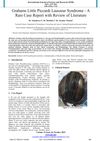
 This paper describes Grahams Little Piccardi Lassueur Syndrome, a rare type of Lichen Planopilaris that causes different types of alopecia and distinctive skin papules, primarily affecting females aged 40 to 70, and notes the current challenges in treatment options, particularly once scarring occurs.
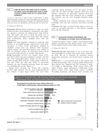
This study suggests that fatigue, joint pain, and light sensitivity are significant impacts for systemic lupus erythematosus patients, highlighting areas of unmet need in current treatment options.
7 citations
,
October 2023 in “Journal of Intelligent & Fuzzy Systems” This study proposed and tested an Ensemble Pre-Learned Deep Learning and Optimized Long Short-Term Memory (EPL-OLSTM) model for classifying Alopecia Areata, achieving a 93.1% accuracy in differentiating healthy from varying severity levels of AA scalp hair using specific datasets.
 28 citations
,
January 2007 in “Journal of dermatology”
28 citations
,
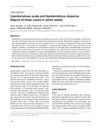
January 2007 in “Journal of dermatology” This case report describes instances of lipedematous scalp and lipedematous alopecia in white adults, indicating these rare conditions may be more widespread and frequent in this population than previously thought.
 April 2023 in “Research Square (Research Square)”
 This study found that melatonin-mediated lncRNA018392 accelerated cell proliferation and inhibited apoptosis in cashmere goat skin fibroblasts by upregulating the expression of the nearby gene CSF1R.
 February 2016 in “Acta Medica Marisiensis”
 This case study presents what is reportedly the first association of Graham Little-Lassueur Syndrome with chronic hepatitis C, observed in a 47-year-old female patient.
March 2026 in “Oral Presentations” This abstract reports pooled safety data from the WILLOW study for participants with cutaneous lupus erythematosus and systemic lupus erythematosus but does not provide new findings.
 1 citations
,
October 2022 in “Sci”
1 citations
,
October 2022 in “Sci” This review discusses the use of helmet designs in integrative medicine and transcranial photobiomodulation, highlighting new developments and potential future advancements in sensor-controlled therapy helmets, but reports no new clinical results.
 May 2025 in “The Journal of Rheumatology”
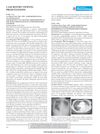
 In this case report, two patients with coexisting systemic lupus erythematous and neuromyelitis optica spectrum disorder achieved remission of SLE activity using an anti-CD19 monoclonal antibody.
 1 citations
,
January 2019 in “Journal of Nuclear Technologyin Applied Science (JNTAS) (Print)”
1 citations
,
January 2019 in “Journal of Nuclear Technologyin Applied Science (JNTAS) (Print)” This study found that low-level laser therapy accelerates skin regeneration in gamma-irradiated mice and enhances the biostimulatory effect on hair follicles.
106 citations
,
February 2014 in “eLife” This study concluded that terminal Schwann cells are essential for the maintenance and regeneration of mechanosensory lanceolate complexes at hair follicles in adult mice.
January 2013 in “프로그램북(구 초록집)” This study found that the Hair660™ low-level light therapy device significantly improved hair density and was safe for men with androgenetic alopecia over 24 weeks.
 October 2024 in “Reumatizam”
 This paper describes that approximately 80% of patients with systemic lupus erythematosus develop skin changes over time, highlighting the prevalence of skin involvement in this autoimmune condition.
 3 citations
,
August 2021 in “Uro”
3 citations
,
August 2021 in “Uro” This review concludes that global literature supports the lipidosterolic extract of Serenoa repens as efficacious and safe for treating lower urinary tract symptoms, with some studies showing equivalence to common pharmacologic agents.
 2 citations
,
July 2021 in “Uro”
2 citations
,
July 2021 in “Uro” This review discusses the efficacy of the lipidosterolic extract of Serenoa repens for treating lower urinary tract symptoms and reports no new clinical results; the authors propose further examination of the existing literature and guidelines.
19 citations
,
September 2010 in “Journal of the European Academy of Dermatology and Venereology” This study found that while the CLASI is generally useful for assessing disease activity and damage in cutaneous lupus erythematosus, it may not accurately reflect all subtypes, indicating a need for revision.
August 2023 in “Annales de Dermatologie et de Vénéréologie” This study provides an updated overview of non-scarring alopecia in lupus erythematosus patients, revealing that diffuse/patchy NSA and lupus hair are strongly associated with systemic activity and respond well to SLE therapy, while progression to scarring alopecia was rare.
This case report highlights that Tjalma Syndrome may present as a main symptom of systemic lupus erythematosus and should be considered in patients with ascites, pleural effusions, and elevated CA-125 levels.

This study explored the structure and function of lipocalin prostaglandin D synthase, revealing its dual role in substrate catalysis and as a lipophilic ligand carrier, potentially informing future drug delivery design.
 May 2025 in “Cermin Dunia Kedokteran”
 This study highlights that early detection and tailored treatment based on kidney biopsy classification are crucial in managing lupus nephritis to prevent progression to end-stage kidney disease, with a focus on saving nephron cells.
 1 citations
,
July 2022 in “BMJ Case Reports”
1 citations
,
July 2022 in “BMJ Case Reports” This case report describes a woman in her 30s diagnosed with systemic lupus erythematosus, characterized by alopecia, arthritis, photosensitivity, and skin rashes, confirmed through positive serology.
1 citations
,
May 2024 in “Pediatric Blood & Cancer” In this case study, a transition to the MEK inhibitor trametinib successfully stabilized disease and reduced toxicity in a patient with refractory kaposiform lymphangiomatosis after prolonged sirolimus and steroid treatment.
October 2025 in “Our Dermatology Online” This study suggests that combining tranexamic acid with low-dose oral retinoids may offer moderate to good improvements for lichen plan pigmentosus, although larger trials are needed for confirmation.
165 citations
,
May 2023 in “Science Advances” In this study, the researchers developed a living microecological hydrogel containing Chlorella and Bacillus subtilis that showed potential in promoting the healing of infected diabetic wounds by providing continuous oxygen delivery and anti-infective properties.
This case report illustrates that prompt diagnosis and management of myositis, a rare manifestation of Systemic Lupus Erythematosus, can lead to favorable patient outcomes, as demonstrated by symptom resolution and normal electromyocardiography findings.
September 2012 in “Turkish Journal of Dermatology” In this case report, a 17-year-old with systemic lupus erythematosus showed improvement in erythema multiforme-like lesions after treatment with methylprednisolone.
 May 2025 in “The Journal of Rheumatology”
 This case report highlights the importance of trans-esophageal echocardiography in distinguishing Libman-Sacks endocarditis from infective endocarditis in systemic lupus erythematosus patients, guiding appropriate treatment for associated cerebrovascular disease.
This study found that home use of low-level light therapy reduced inflammation and symptoms like itching and burning in women with frontal fibrosing alopecia over six months.
 6 citations
,
November 2018 in “Photodiagnosis and Photodynamic Therapy”
6 citations
,
November 2018 in “Photodiagnosis and Photodynamic Therapy” This study found that using a wearable low-level light therapy device for photodynamic therapy significantly reduced actinic keratosis lesions and improved quality of life in patients with AK of the scalp.