 January 2007 in “Dermatologic Surgery”
 This study presents a new surgical technique that frequently results in minimal scars visible to the naked eye, marking a significant improvement over traditional methods.
 January 2016 in “International journal of advanced research in chemical sciences”
 This study developed a new spectrophotometric method to accurately measure finasteride levels in pharmaceutical formulations using a reaction with NBD-CL.
 13 citations
,
October 2002 in “Journal of Biochemical and Biophysical Methods”
13 citations
,
October 2002 in “Journal of Biochemical and Biophysical Methods” This study found that men with androgenic alopecia had significantly higher levels of certain urinary steroid metabolites, suggesting increased 5 alpha-reductase activity and possible mild hyperadrenal activity.
 4 citations
,
February 2024 in “Dermatology and Therapy”
4 citations
,
February 2024 in “Dermatology and Therapy” The study found that a single autologous micrografting treatment using Rigenera® technology significantly improved the appearance of stretch marks in healthy women after three months, showing greater enhancements in skin properties compared to microneedling alone.
 April 2026 in “Frontiers in Veterinary Science”
 This study observed that in privately owned, intact cats, male cats exhibited significantly higher long-term hair cortisol concentrations compared to females, while environmental and behavioral factors did not significantly impact cortisol levels, suggesting individual traits may influence stress markers more than external factors.
 19 citations
,
November 1971 in “Clinica Chimica Acta”
19 citations
,
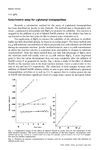
November 1971 in “Clinica Chimica Acta” In this study, the researchers found that the absence of the NFI-C transcription factor delayed the hair growth cycle in mice by affecting key gene expressions and signaling pathways.
 17 citations
,
January 1999 in “Journal of Molecular Structure”
17 citations
,
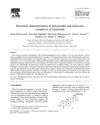
January 1999 in “Journal of Molecular Structure” This study determined the molecular structure of finasteride and its related crystalline forms, highlighting different hydrogen-bond interactions and structural configurations in various crystalline complexes.
 2 citations
,
March 2014 in “Veterinary World”
2 citations
,
March 2014 in “Veterinary World” This study characterized the hair follicle patterns of Indian bison, Black buck, and Nilgai, providing valuable data to help identify these endangered species' skins, commonly targeted by poachers.
 211 citations
,
June 2012
211 citations
,
June 2012 This review discusses recent advances in skin penetration mechanisms, specifically focusing on the enhanced understanding of the follicular pathway and its implications for transdermal therapies, immune system targeting, and nanoparticle safety.
 189 citations
,
March 2018 in “Human Reproduction Update”
189 citations
,
March 2018 in “Human Reproduction Update” This study reported that women with polycystic ovary syndrome had a higher prevalence of impaired glucose tolerance and type 2 diabetes, with variations influenced by ethnicity and obesity.
 140 citations
,
August 2011 in “Biomaterials”
140 citations
,
August 2011 in “Biomaterials” This study observed that keratose, derived from human hair, integrated well in mouse tissue and remodeled with collagen, suggesting potential as a non-toxic biomaterial for regenerative applications.
 76 citations
,
February 2015 in “Industrial Crops and Products”
76 citations
,
February 2015 in “Industrial Crops and Products” This study identified over 40 phytochemical compounds in the leaves and flowers of Bituminaria bituminosa, predominantly glycosylated flavonoids from apigenin, using advanced chromatographic techniques.
 59 citations
,
July 2015 in “Journal of Immunology”
59 citations
,
July 2015 in “Journal of Immunology” This study found that disrupting inflammasome signaling by eliminating caspase-1 and -11 in mice reduced skin inflammation and delayed the onset of disease, highlighting their role in skin disease pathogenesis.
 58 citations
,
January 2013 in “The Journal of Clinical Endocrinology and Metabolism”
58 citations
,
January 2013 in “The Journal of Clinical Endocrinology and Metabolism” This study suggests that sexual dimorphism in adipose tissue functions may be linked to androgen levels, as women with PCOS demonstrated a more masculine adipokine expression pattern.
 57 citations
,
February 1983 in “The Journal of clinical endocrinology and metabolism/Journal of clinical endocrinology & metabolism”
57 citations
,
February 1983 in “The Journal of clinical endocrinology and metabolism/Journal of clinical endocrinology & metabolism” This study found that pubic skin fibroblasts respond to androgens, increasing 5α-reductase activity via an androgen receptor-mediated mechanism, suggesting its potential as a marker of androgen action in vitro.
 54 citations
,
September 2019 in “Journal of the European Academy of Dermatology and Venereology”
54 citations
,
September 2019 in “Journal of the European Academy of Dermatology and Venereology” This study found that tofacitinib shows reasonable effectiveness for treating alopecia areata with mild adverse effects, although more large-scale randomized trials are needed to fully assess its safety and efficacy.
 53 citations
,
January 2006 in “The Journal of clinical endocrinology and metabolism/Journal of clinical endocrinology & metabolism”
53 citations
,
January 2006 in “The Journal of clinical endocrinology and metabolism/Journal of clinical endocrinology & metabolism” In this study, reduced androgen receptor gene methylation and shorter CAG repeats in children with premature pubarche may lead to increased hair follicle sensitivity to steroid hormones, potentially causing early pubic hair development.
 50 citations
,
December 2011 in “Skin Research and Technology”
50 citations
,
December 2011 in “Skin Research and Technology” In this study, the researchers reported that their novel algorithm for hair restoration in dermoscopy images achieved high accuracy and texture preservation, outperforming other techniques in diagnostic accuracy and texture quality measures.
 45 citations
,
June 2008 in “Journal of pharmaceutical and biomedical analysis”
45 citations
,
June 2008 in “Journal of pharmaceutical and biomedical analysis” This study developed a new HPLC method for detecting prohibited substances like minoxidil and hydrocortisone in cosmetic products, achieving high sensitivity and successful application to real-world samples.
 41 citations
,
July 2020 in “Colloids and surfaces. B, Biointerfaces”
41 citations
,
July 2020 in “Colloids and surfaces. B, Biointerfaces” This study suggests that adjusting the ratios of keratin-associated proteins to keratin intermediate filaments can create keratin/chitosan hydrogels with more consistent gel properties for tissue engineering.
 40 citations
,
January 2013 in “Journal of Korean Medical Science”
40 citations
,
January 2013 in “Journal of Korean Medical Science” This study found that serum ferritin levels were lower in premenopausal women with female pattern hair loss compared to healthy controls, suggesting a potential role for iron in hair loss.
 36 citations
,
July 2019 in “Journal of Materials Science Materials in Medicine”
36 citations
,
July 2019 in “Journal of Materials Science Materials in Medicine” This study demonstrated that keratin derived from human hair can improve axon extension and alleviate motor deficits from sciatic nerve injuries, highlighting its potential as a promising biomaterial for peripheral nerve regeneration.
 34 citations
,
October 2014 in “European journal of pharmaceutics and biopharmaceutics”
34 citations
,
October 2014 in “European journal of pharmaceutics and biopharmaceutics” This study found that adapalene-loaded solid lipid microparticles may enhance targeted drug delivery into sebum due to their similarity to sebum components, although both this formulation and a standard cream showed equivalent follicular penetration.
 27 citations
,
April 2018 in “Scientific Reports”
27 citations
,
April 2018 in “Scientific Reports” This study found that in psoriasis patients, the K17 protein probably functions as an autoantigen, with the HLA-Cw*06:02 risk genotype strongly linked to the T cell response size.
 26 citations
,
September 1990 in “Ophthalmology”
26 citations
,
September 1990 in “Ophthalmology” This case study found that a 7-year-old girl's crystalline cataract had sulfur-containing amino acids likely cystine, and was associated with abnormal hair conditions.
 24 citations
,
April 2017 in “Journal of Investigative Dermatology”
24 citations
,
April 2017 in “Journal of Investigative Dermatology” This study identified sex-specific determinants for facial wrinkles, finding that age is the strongest factor and that lifestyle influences like smoking, alcohol use, and skin color differentially affect wrinkling in men and women.
 23 citations
,
June 2018 in “Facial Plastic Surgery”
23 citations
,
June 2018 in “Facial Plastic Surgery” This review suggests that platelet-rich plasma is a low-risk treatment for androgenic alopecia with good patient satisfaction and positive objective outcomes, but further research is needed to refine methods and standardize outcome measurements.
 22 citations
,
August 2011 in “Journal of Supercritical Fluids”
22 citations
,
August 2011 in “Journal of Supercritical Fluids” In this study, fraction No. 3 of Oryza sativa bran extract demonstrated high unsaturated fatty acid content and significant 5α-reductase inhibition, suggesting potential for developing anti-androgenic alopecia products.
 22 citations
,
September 2006 in “Spectrochimica Acta Part A: Molecular and Biomolecular Spectroscopy”
22 citations
,
September 2006 in “Spectrochimica Acta Part A: Molecular and Biomolecular Spectroscopy” This study describes a new colorimetric method for accurately and precisely measuring finasteride in tablets, with results comparable to the standard HPLC method.
 21 citations
,
September 2001 in “Graefes Archive for Clinical and Experimental Ophthalmology”
21 citations
,
September 2001 in “Graefes Archive for Clinical and Experimental Ophthalmology” This study found that minoxidil inhibited lens epithelial cell migration, proliferation, and collagen secretion in vitro, suggesting it may help prevent postoperative capsular opacification.