 4 citations
,
August 2010 in “Journal of the American Academy of Dermatology”
4 citations
,
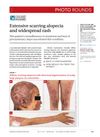
August 2010 in “Journal of the American Academy of Dermatology” This case report involves a 56-year-old woman with idiopathic thrombocytopenic purpura and scarring alopecia, suggesting diagnoses including discoid lupus erythematosus and lichen planopilaris without presenting new clinical findings.
 2 citations
,
January 2014 in “Springer eBooks”
2 citations
,
January 2014 in “Springer eBooks” The book details skin conditions in older adults, their link to mental health, cancer treatment importance, hair loss remedies, and managing autoimmune and itchy skin.
 2 citations
,
January 2013 in “International Journal of Dermatology”
2 citations
,
January 2013 in “International Journal of Dermatology” ALDOA levels drop in hair cells during hair loss.
 1 citations
,
June 2024 in “BMC Oral Health”
1 citations
,
June 2024 in “BMC Oral Health” In this study, autologous platelet concentrates and topical steroids similarly reduced lesion size, Thongprasom scale, and pain in oral lichen planus patients, suggesting autologous platelet concentrates as a potential alternative treatment.
 1 citations
,
July 2021 in “Curēus”
1 citations
,
July 2021 in “Curēus” This case report describes a rare occurrence of lichen planopilaris in a nine-year-old child, emphasizing the need for awareness of this condition in the pediatric population.
 1 citations
,
December 2019 in “Acta Medica Medianae”
1 citations
,
December 2019 in “Acta Medica Medianae” This article discusses connubial contact dermatitis, emphasizing its frequent misrecognition and the importance of identifying and eliminating the underlying causes for effective treatment.
 1 citations
,
August 2012
1 citations
,
August 2012 The document discusses various diseases of the outer ear, categorized by symptoms like redness, crusts, bumps, pus-filled lesions, lumps, ulcers, and hair loss.
 1 citations
,
July 2012 in “Springer eBooks”
1 citations
,
July 2012 in “Springer eBooks” The document concludes that more research is needed to better understand and treat scarring hair loss conditions.
 1 citations
,
February 2004 in “Journal of The European Academy of Dermatology and Venereology”
1 citations
,
February 2004 in “Journal of The European Academy of Dermatology and Venereology” This paper reports a case of alopecia triangularis congenita in a 22-year-old woman, combined with androgenetic alopecia, and highlights successful treatment with internal and topical antiandrogens.
 1 citations
,
February 2004
1 citations
,
February 2004 This chapter discusses various skin diseases and the adaptation of clinical trial methods to different dermatological conditions, without providing new research findings.
 March 2026 in “Frontiers in Oncology”
 This study concluded that dermatologists are integral to the care of cancer survivors by shifting focus from symptomatic skin treatment to preventive and rehabilitative strategies that enhance long-term skin health and quality of life post-oncology therapy.
 February 2026 in “International Research Journal of Modernization in Engineering Technology and Science”
 The researchers emphasize the limited scope of existing studies on lip aging, highlighting issues that include collagen loss and the deepening of lip lines with age, and suggesting a need for further research to guide cosmetic and clinical interventions.
 November 2024 in “IP Indian Journal of Clinical and Experimental Dermatology”
 In this study, researchers found that cutaneous hyperpigmentation is a primary dermatological manifestation in patients with Graves' disease, with certain treatments like carbimazole and propranolol being statistically associated with skin symptoms.
 July 2024 in “Plastic and Aesthetic Research”
 This review outlines diagnostic strategies and a thorough checklist for evaluating patients before they undergo hair restoration surgery, addressing non-scarring and scarring alopecia, to improve surgical outcomes and avoid errors, according to this source.

This study found that mesotherapy combined with minoxidil for androgenetic alopecia shows promise with high patient satisfaction and manageable risks, though some uncommon side effects may occur.

This article reports a rare case of a postmenopausal woman with coexisting lichen planus pigmentosus and classic lichen planopilaris, alongside a review of related literature.
 October 2023 in “International Journal of Science and Research (IJSR)”
 This paper describes Grahams Little Piccardi Lassueur Syndrome, a rare type of Lichen Planopilaris that causes different types of alopecia and distinctive skin papules, primarily affecting females aged 40 to 70, and notes the current challenges in treatment options, particularly once scarring occurs.
 August 2023 in “JOJ dermatology & cosmetics”
 This literature review found that antibiotics are a major cause of cutaneous adverse drug reactions, which represent up to 60% of all adverse drug reactions, and emphasized the need for clinicians to better understand and manage these reactions.
 March 2022 in “The Journal of Family Practice”
 Following treatment plans is crucial to prevent worsening skin and hair conditions.
 November 2021 in “Chattagram Maa-O-Shishu Hospital Medical College Journal”
 This descriptive study reported that Chronic Cutaneous Lupus Erythematosus was the most prevalent subtype, highlighting distinct clinical and pathological features among Cutaneous Lupus Erythematosus subtypes.
 May 2021 in “Dermatopathology”
 This review discusses the adnexotropic presentations of interface dermatitides and highlights the importance of recognizing adnexal involvement to aid in accurate diagnosis and avoid misinterpretation.
 March 2021 in “Clin-Alert”
 This abstract lists a range of drugs and treatment agents like Abatacept, Amiodarone, and Remdesivir, but does not report any study results or findings.
 January 2020 in “PARIPEX INDIAN JOURNAL OF RESEARCH”
 This study found that the most common skin manifestation among diabetes patients was cutaneous infections.
 March 2019 in “Journal of medical science and clinical research”
 This study found that cutaneous manifestations, including specific skin lesions and oral ulceration, are common early indicators of SLE and may aid in its diagnosis and management.
 July 2018 in “Elsevier eBooks”
 This review discusses the evolving understanding of frontal fibrosing alopecia as a generalized skin condition with diverse manifestations, and reports no new clinical results.
 October 2017 in “Journal of Investigative Dermatology Symposium Proceedings”
 This study suggests that PGD2 may increase testosterone production in keratinocytes through oxidative stress pathways, with n-acetyl-cysteine blocking this effect.
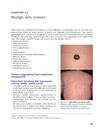
This chapter classifies various benign skin tumors and discusses their characteristics, treatment indications, and potential for recurrence, but reports no new clinical findings.
 March 2013 in “Actas Dermo-Sifiliográficas”
 This review discusses recent advancements in dermatopathology, including molecular biology techniques and diagnostic innovations, and reports no new experimental findings.
 December 2012 in “Drugs & Therapy Perspectives”
 Doctors use their experience to choose treatments for scarring hair loss because it's hard to diagnose and treat.
 January 2009 in “Springer eBooks”
 The document concludes that treating skin conditions should include psychological care and a multidisciplinary approach is essential for effective management.