 160 citations
,
March 2009 in “Seminars in Cutaneous Medicine and Surgery”
160 citations
,
March 2009 in “Seminars in Cutaneous Medicine and Surgery” This article reviews lichen planopilaris, its presentation, and treatment challenges, and emphasizes the need for more research into its pathogenesis and therapy efficacy; it reports no new findings.
 99 citations
,
June 2005 in “Journal of Cosmetic Dermatology”
99 citations
,
June 2005 in “Journal of Cosmetic Dermatology” This article reviews factors influencing hair aging and available treatments like minoxidil and finasteride for androgenetic alopecia but reports no new clinical results.
 18 citations
,
January 1999 in “CNS Drugs”
18 citations
,
January 1999 in “CNS Drugs” This review discusses challenges in managing cutaneous drug reactions to anticonvulsants and reports no new clinical findings; the authors emphasize the complexity of discontinuing or rechallenging suspected agents.
 13 citations
,
June 2010 in “Journal of The American Academy of Dermatology”
13 citations
,
June 2010 in “Journal of The American Academy of Dermatology” This study reports previously unreported nail features in Cronkhite-Canada syndrome, specifically recurrent onychomadesis of all 20 nails linked to systemic illness.
 3 citations
,
October 2019 in “JAAD Case Reports”
3 citations
,
October 2019 in “JAAD Case Reports” This review discusses different forms and patterns of alopecia associated with lupus erythematosus and reports no new clinical results; the authors highlight distinct features of these conditions.
 3 citations
,
October 2007 in “Expert Review of Dermatology”
3 citations
,
October 2007 in “Expert Review of Dermatology” This review discusses the biological and cosmetic aspects of hair aging and reports no new clinical results; it highlights current treatments and future research directions to address both aging factors.

This study reports the case of a 12-year-old girl who developed psoriatic alopecia after increasing her dose of the TNF-α inhibitor adalimumab for Crohn's disease, emphasizing psoriatic alopecia as a phenomenon associated with these medications.
 August 2021 in “Case Reports”
 This report describes a case where a woman with frontal fibrosing alopecia initially presented with symptoms resembling rosacea, but further investigation led to a diagnosis of FFA, resulting in a treatment change to oral finasteride and hydroxychloroquine.
 36 citations
,
May 2015 in “Australasian Journal of Dermatology”
36 citations
,
May 2015 in “Australasian Journal of Dermatology” This case report described cosmetically significant hair regrowth in a 39-year-old woman with permanent chemotherapy-induced alopecia after continuous oral minoxidil use.
 329 citations
,
January 1997 in “Journal of the American Academy of Dermatology”
329 citations
,
January 1997 in “Journal of the American Academy of Dermatology” This study reports that progressive frontal fibrosing alopecia, a distinct and gradually stabilizing form of lichen planopilaris affecting elderly women and often involving eyebrow hair loss, lacks effective treatments.
82 citations
,
March 2013 in “PLoS ONE” In this study, vemurafenib was associated with a wide range of cutaneous side effects in patients with advanced melanoma, including photosensitivity and various skin and hair changes, necessitating regular dermatological management.
 32 citations
,
September 2017 in “Journal of the American Academy of Dermatology”
32 citations
,
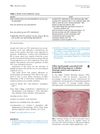
September 2017 in “Journal of the American Academy of Dermatology” In this study, researchers reported that oral isotretinoin effectively treated facial papules in frontal fibrosing alopecia, with histopathologic findings suggesting the involvement of elastic fibers and sebaceous glands in papule formation beyond perifollicular inflammation.
 22 citations
,
April 1985 in “Australasian Journal of Dermatology”
22 citations
,
April 1985 in “Australasian Journal of Dermatology” This review discusses the uncommon but potentially serious cutaneous reactions to beta-adrenergic blockers and the uncertain pathogenesis, with no new clinical results reported.
 14 citations
,
January 2006 in “Australasian journal of dermatology”
14 citations
,
January 2006 in “Australasian journal of dermatology” This case report describes an atypical presentation of alopecia areata in a 53-year-old postmenopausal woman, which may resemble frontal fibrosing alopecia and complicate diagnosis.
 13 citations
,
February 2015 in “Actas Dermo-Sifiliográficas”
13 citations
,
February 2015 in “Actas Dermo-Sifiliográficas” This review discusses the histologic features of nonscarring alopecia and highlights the importance of clinical-pathological correlation for accurate diagnosis, but reports no new clinical results.
 11 citations
,
February 2021 in “Biomedicines”
11 citations
,
February 2021 in “Biomedicines” This review discusses the role of hair follicle bacterial colonization in immune responses and the pathogenesis of alopecia but reports no new clinical results.
 9 citations
,
January 1987 in “Journal of The American Academy of Dermatology”
9 citations
,
January 1987 in “Journal of The American Academy of Dermatology” This study supports the idea that angiolymphoid hyperplasia with eosinophilia is an inflammatory process linked to immunologic injuries rather than a proliferative condition.
 4 citations
,
May 2002 in “Therapeutische Umschau”
4 citations
,
May 2002 in “Therapeutische Umschau” AGA treated with finasteride, minoxidil, and hair transplantation.
3 citations
,
November 2022 in “Clinical Cosmetic and Investigational Dermatology” This study found that while the number of dermatology outpatient visits in eastern China remained stable post-pandemic, the distribution of diagnoses, such as acne and allergic dermatitis, significantly changed.
 1 citations
,
May 2015 in “Journal of The American Academy of Dermatology”
1 citations
,
May 2015 in “Journal of The American Academy of Dermatology” Lichen planus pigmentosus and fibrosing frontal alopecia in Colombia are likely different stages of the same disease.
 March 2026 in “American Journal of Clinical Dermatology”
 This narrative review provides an overview of the persistent dermatological side effects experienced by cancer survivors due to treatments, highlighting their impact on quality of life and the need for structured dermatological care during survivorship.
 July 2021 in “British Journal of Dermatology”
 This case report describes a novel instance of scarring alopecia with features of frontal fibrosing alopecia in a patient with systemic sclerosis, suggesting a potential link between the two conditions not previously reported.
 March 2021 in “Actas Dermo-Sifiliográficas”
 This review discusses the scalp microbiome's unique features and its potential role in hair disorders, suggesting that microbiome-targeted treatments could offer new therapeutic options, though no clinical results are reported.
 1 citations
,
April 1976 in “Archives of Dermatology”
1 citations
,
April 1976 in “Archives of Dermatology” Sudden weight loss can cause significant hair loss, and using colchicine on the skin for psoriasis may be unsafe.
 155 citations
,
September 2008 in “British journal of dermatology/British journal of dermatology, Supplement”
155 citations
,
September 2008 in “British journal of dermatology/British journal of dermatology, Supplement” This study observed that frontal fibrosing alopecia predominantly affects postmenopausal women, can be associated with lichen planus, and may lead to progressive hairline recession, though this progression is not consistent in all cases.
 83 citations
,
May 1999 in “International Journal of Dermatology”
83 citations
,
May 1999 in “International Journal of Dermatology” Hair loss that spreads out can often fix itself or be treated by finding and handling the cause.
 72 citations
,
February 2011 in “The American Journal of Dermatopathology”
72 citations
,
February 2011 in “The American Journal of Dermatopathology” This study found that anti-TNF therapy-induced alopecia exhibits distinct clinical and histopathological features and can mimic psoriatic alopecia and alopecia areata, with some patients improving with topical treatment.
 64 citations
,
February 1995 in “Journal of The American Academy of Dermatology”
64 citations
,
February 1995 in “Journal of The American Academy of Dermatology” This report describes a case where hidradenitis suppurativa developed in a patient receiving lithium, adding to the recognized cutaneous side effects like psoriasis, acneiform lesions, and alopecia.
 60 citations
,
June 1997 in “Journal of The American Academy of Dermatology”
60 citations
,
June 1997 in “Journal of The American Academy of Dermatology” This review discusses the basic biology of apoptosis and its relevance to skin diseases, without presenting new research findings.
 44 citations
,
August 2010 in “Lupus”
44 citations
,
August 2010 in “Lupus” This article reviews the characteristics and classification criteria of cutaneous lupus erythematosus and reports no new clinical findings.