 July 2015 in “Journal of the Dermatology Nurses’ Association”
 This review covers the clinical presentation and challenges in treating frontal fibrosing alopecia in postmenopausal women and concludes that more research is needed to understand its etiology and develop effective treatments.
6 citations
,
January 2015 in “Indian Dermatology Online Journal” This case report describes a unique presentation of porokeratotic eccrine ostial and dermal duct nevus with lesions on the dorsum of the hand and a focal lichenoid infiltrate, differing from typical palm and sole involvement.

This article reviews the cutaneous side effects of immune checkpoint inhibitors and targeted therapies for skin cancers, noting that while generally mild, these effects can influence treatment decisions and quality of life, underscoring the need for physicians to be aware of these adverse reactions.
 1 citations
,
October 2023 in “Skin research and technology”
1 citations
,
October 2023 in “Skin research and technology” This study found that line-field confocal optical coherence tomography effectively visualized key diagnostic features of classic lichen planopilaris in real time, suggesting its potential as a valuable diagnostic tool.
March 2026 in “Anais Brasileiros de Dermatologia” Lichen planopilaris and frontal fibrosing alopecia are likely distinct diseases with different tissue involvement.
 January 2025 in “Indian Journal of Dermatology”
 This review discusses the various factors implicated in the etiology of frontal fibrosing alopecia and notes the need for effective treatments, reporting no new clinical findings.
January 2022 in “Clinical Cases in Dermatology” This case report describes a 47-year-old man diagnosed with fibrosing alopecia in a pattern distribution, treated with clobetasol propionate and oral minoxidil while advised to avoid hair transplantation.
1 citations
,
March 2013 in “Journal of Dermatological Case Reports” This case report describes an atypical presentation of lichen planopilaris affecting only facial vellus hair, without scalp involvement, in a 46-year-old man.
January 2026 in “Clinical & Translational Oncology” This expert consensus statement highlights that while targeted cancer therapies significantly improve patient survival, they often result in various skin toxicities, underscoring the need for early diagnosis, management, and multidisciplinary care to maintain patients' quality of life and ensure treatment continuity.
 11 citations
,
June 2017 in “Anais Brasileiros de Dermatologia”
11 citations
,
June 2017 in “Anais Brasileiros de Dermatologia” This study observed changes in dermatological disease incidence in a Brazilian town, with increases in conditions like sexually transmitted diseases and leprosy and decreases in others such as urticaria and superficial mycoses between 2003 and 2014.
 291 citations
,
January 2014 in “The Scientific World Journal”
291 citations
,
January 2014 in “The Scientific World Journal” Lichen Planus is a less common condition affecting skin and mucous membranes, with various types and associated risk factors, challenging to diagnose, significantly impacts life quality, and may have a risk of cancerous changes in oral lesions.
 53 citations
,
May 2001 in “The American journal of the medical sciences”
53 citations
,
May 2001 in “The American journal of the medical sciences” This article reviews common skin eruptions in chemotherapy patients and discusses how recognizing these patterns can help avoid unnecessary changes to cancer treatment; it reports no new clinical results.
 19 citations
,
October 2011 in “Clinics in Dermatology”
19 citations
,
October 2011 in “Clinics in Dermatology” This review discusses the cutaneous side effects of chemotherapy, noting that they frequently involve changes to skin, hair, and nails, and reports no new results.
 2 citations
,
October 2018 in “Springer eBooks”
2 citations
,
October 2018 in “Springer eBooks” Cancer treatments can cause skin-related side effects that may affect patient quality of life and require changes in treatment.
 January 2026 in “Dermatology Practical & Conceptual”
 This study reported that diffuse lichen planopilaris significantly impairs quality of life in Moroccan patients, with trichodynia and hair quality changes most affecting daily functioning and leisure activities.
 January 2025 in “Universidad de Córdoba Insitutional Repository (Universidad de Córdoba)”
 In this study, researchers observed that individuals with alopecia areata exhibited significant changes in scalp microbiota diversity and composition, which were linked to disease severity and inflammation markers, though it remains unclear if these microbial shifts are a cause or a result of hair loss.
 214 citations
,
March 1993 in “Archives of Dermatology”
214 citations
,
March 1993 in “Archives of Dermatology” This article proposes five different mechanisms for telogen effluvium, supported by clinical findings, based on changes in different phases of the hair cycle.
 94 citations
,
January 2007 in “Cutaneous and Ocular Toxicology”
94 citations
,
January 2007 in “Cutaneous and Ocular Toxicology” This review discusses the long-term cutaneous and ocular complications from sulfur mustard exposure in the Iranian population, identifying pruritus and malignant changes as significant issues and highlighting eye surface damage leading to visual decline.
 3 citations
,
August 2017 in “Journal of evolution of medical and dental sciences”
3 citations
,
August 2017 in “Journal of evolution of medical and dental sciences” In this descriptive study, elderly patients most commonly presented with skin wrinkling, xerosis, and eczematous conditions, highlighting the difficulty in distinguishing normal age-related from pathological skin changes.
 1 citations
,
May 2024 in “Cureus”
1 citations
,
May 2024 in “Cureus” This case series describes five patients with rare facial lichen planopilaris, detailing the clinical presentation and treatment of their pigmentary changes and scarring alopecia.
 1 citations
,
June 2021 in “Curēus”
1 citations
,
June 2021 in “Curēus” This study discusses incidental findings of syringomas and syringomatous proliferations in areas of scalp alopecia, suggesting they may be secondary to reactive changes from subclinical alopecia.
 1 citations
,
January 2013 in “Elsevier eBooks”
1 citations
,
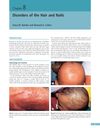
January 2013 in “Elsevier eBooks” The document reviews various hair and nail disorders, their causes, and treatments, emphasizing the need for proper diagnosis and the link between nail changes and systemic diseases.
 1 citations
,
April 2012 in “Informa Healthcare eBooks”
1 citations
,
April 2012 in “Informa Healthcare eBooks” Some medications for inflammation can cause a condition with scalp rashes and hair loss, often linked to Crohn's disease, and may require treatment changes to prevent permanent hair loss.
 June 2017 in “Journal of evolution of medical and dental sciences”
 This study observed that 21.6% of oncology patients experienced dermatological side effects from anti-cancer drugs, with hair loss and skin pigmentation changes being the most common.
 November 2016 in “Journal of Evolution of Medical and Dental Sciences”
 This study observed that among elderly patients, the most common systemic disease associated with skin conditions was diabetes, while wrinkling and xerosis were prevalent skin changes.
2 citations
,
January 2021 in “Journal of The American Academy of Dermatology” This pilot study found that examining changes in scalp scales after scraping may effectively distinguish seborrheic dermatitis associated with androgenetic alopecia from fibrosing alopecia in a pattern distribution.
 12 citations
,
March 2022 in “Frontiers in Nutrition”
12 citations
,
March 2022 in “Frontiers in Nutrition” This review discusses the complex skin changes associated with obesity and the potential benefits of nutritional interventions for inflammatory skin diseases, without reporting new clinical results.
 2 citations
,
March 2017 in “TURKDERM”
2 citations
,
March 2017 in “TURKDERM” This study observed that pediatric bone marrow transplantation patients frequently experience various dermatological issues; mucositis and xeroderma were the most common.
2 citations
,
February 2021 in “Indian Dermatology Online Journal” This case report describes the first instance of classical lichen planopilaris with atrophic lichenoid plaques developing in a Blaschko-linear pattern due to imatinib treatment in a patient with chronic myeloid leukemia.
 December 2024 in “Nutrients”
 In this review, skin changes like hair loss and brittle nails linked to nutritional deficiencies common in eating disorders are examined as critical diagnostic tools, highlighting the need for integrated care involving dermatologists, psychiatrists, and nutritionists for effective management.