 1 citations
,
December 2022 in “Pediatric dermatology”
1 citations
,
December 2022 in “Pediatric dermatology” This case report highlighted an instance of lichen spinulosus emerging as a new cutaneous sequela in a boy following toxic epidermal necrolysis, responding to treatment with ammonium lactate.
 44 citations
,
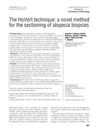
January 2011 in “Journal of Cutaneous Pathology”
44 citations
,
January 2011 in “Journal of Cutaneous Pathology” This study introduces the "HoVert" technique, which generates both vertical and horizontal sections from a single biopsy to effectively differentiate lichen planopilaris from discoid lupus erythematosus in alopecia cases.
July 2025 in “Journal of Investigative Dermatology” Laser treatment boosts hair growth by activating a key growth factor.
 2 citations
,
March 2021 in “Dermatologic Therapy”
2 citations
,
March 2021 in “Dermatologic Therapy” This study found that low-level laser therapy significantly increased hair counts in women with female pattern hair loss but not in those with telogen effluvium, without serious adverse events.
November 2024 in “JAAD Case Reports” In this study, researchers identified a rare form of hereditary hypotrichosis linked to mutations in the LSS gene, which affects cholesterol biosynthesis and is inherited in an autosomal recessive manner.
 23 citations
,
February 2020 in “PLOS genetics”
23 citations
,
February 2020 in “PLOS genetics” This study found that biallelic LSS mutations lead to congenital hypotrichosis and cataracts, with each tissue-specific loss of function observed in mouse models.
 3 citations
,
May 2020 in “bioRxiv (Cold Spring Harbor Laboratory)”
3 citations
,
May 2020 in “bioRxiv (Cold Spring Harbor Laboratory)” In this study, researchers identified loss of function variants in the HR gene as likely causes of the distinct roaning hair coat seen in lykoi cats.
 April 2020 in “Journal of the Endocrine Society”
 This case report highlights Leydig cell hyperplasia as a rare cause of increased testosterone and postmenopausal hirsutism, resolved after bilateral salpingo-oophorectomy in a 64-year-old woman.
29 citations
,
August 1999 in “Journal of Investigative Dermatology” New mutations in hair keratin genes cause the rare hair disorder monilethrix.
 21 citations
,
August 2013 in “Journal of Dermatological Treatment”
21 citations
,
August 2013 in “Journal of Dermatological Treatment” This review discusses the mixed evidence and high risk of bias in studies on low-level light therapy for treating androgenetic alopecia and calls for rigorous randomized controlled trials to assess its efficacy.
January 2016 in “Indian journal of drugs in dermatology” This case report describes a 48-year-old male with severe, itchy hypertrophic lichen planus who showed a 90% improvement in lesions following 4 months of treatment with oral acitretin, with no recurrence 6 months posttreatment.
 8 citations
,
September 2021 in “Facial plastic surgery & aesthetic medicine”
8 citations
,
September 2021 in “Facial plastic surgery & aesthetic medicine” This systematic review found that low-level light/laser therapy showed a positive effect in treating male and female pattern hair loss without side effects, as reported by all analyzed randomized controlled trials.
This study identified a novel E413K mutation in the hHb6 gene in a Chinese Han family with monilethrix, potentially linked to the characteristic moniliform hair structure.
 2 citations
,
May 2017 in “International journal of pharmacy and pharmaceutical sciences/International Journal of Pharmacy and Pharmaceutical Sciences”
2 citations
,
May 2017 in “International journal of pharmacy and pharmaceutical sciences/International Journal of Pharmacy and Pharmaceutical Sciences” This review discusses genetic mutations associated with Hutchinson-Gilford progeria syndrome and reports no clinical results; the authors emphasize the importance of cardiovascular monitoring in management.
5 citations
,
May 2022 in “Diagnostics” This study found that certain lncRNA gene polymorphisms in HOTAIR and MALAT1 are associated with increased susceptibility to systemic lupus erythematosus, potentially informing clinical applications.
 4 citations
,
April 2016 in “Journal of The American Academy of Dermatology”
4 citations
,
April 2016 in “Journal of The American Academy of Dermatology” This case report details the first known instance of interferon-induced lichen planus in a seronegative HCV patient with metastatic renal cell carcinoma.
 6 citations
,
December 2017 in “Journal of Cosmetic and Laser Therapy”
6 citations
,
December 2017 in “Journal of Cosmetic and Laser Therapy” This study evaluated low-level laser therapy for treating Androgenic alopecia and suggested it may effectively stimulate hair growth and improve patient satisfaction, although more efficient treatments are needed.
January 2026 in “Dermatologic Therapy” In this prospective study, individuals with androgenetic alopecia using a home-use low-level laser therapy helmet for 48 weeks experienced significant increases in hair density and thickness, with reported improvements consistent across sexes and no device-related adverse events.
1 citations
,
February 2019 in “bioRxiv (Cold Spring Harbor Laboratory)” This study identified lymphatic vessels as crucial components of the hair follicle stem cell niche, coordinating connections and contributing to hair follicle regeneration in mice.
33 citations
,
October 2005 in “Journal of Investigative Dermatology” A specific gene mutation causes sparse, brittle hair in a family.
4 citations
,
January 2011 in “European journal of dermatology/EJD. European journal of dermatology” This article provides an overview of lipedematous scalp, a rare condition characterized by a thickened scalp without hair loss, and emphasizes the need for further research due to limited case reports.
1 citations
,
July 2023 in “International Journal of Pharmaceutical Sciences and Drug Research” This study developed an effective and reliable HPTLC method for the simultaneous measurement of linoleic acid and oleanolic acid in Eclipta alba.
16 citations
,
July 2014 in “Cell Biology International” This study found that the Wnt pathway activator lithium chloride promotes proliferation and odontoblast differentiation of hair follicle neural crest cells.
433 citations
,
April 2015 in “Photomedicine and laser surgery” This editorial discusses the terminology and distinctions between Low-Level Light/Laser Therapy and Photobiomodulation Therapy but reports no new clinical findings.
February 2024 in “Asian Journal of Pharmaceutical and Clinical Research” This study found that human platelet lysate, prepared from expired platelet concentrate, maintained stable growth factor levels for up to six months and improved healing in second-degree burn wounds compared to standard silver sulfadiazine treatment at three weeks.
 26 citations
,
April 1999 in “Dermatologic Clinics”
26 citations
,
April 1999 in “Dermatologic Clinics” This article reviews the basics of hair follicle biology, laser/tissue interactions, and hirsutism and hypertrichosis causes, discussing the long-pulsed alexandrite laser's role in hair reduction without reporting new clinical results.
 January 2024 in “Brazilian Journal of Hair Health”
 Combining low-level laser therapy with topical corticosteroids effectively improved Lichen Planopilaris symptoms.
 1 citations
,
October 2023 in “Skin research and technology”
1 citations
,
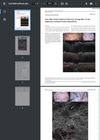
October 2023 in “Skin research and technology” This study found that line-field confocal optical coherence tomography effectively visualized key diagnostic features of classic lichen planopilaris in real time, suggesting its potential as a valuable diagnostic tool.
In this study, PDLLA treatment in middle-aged mice was observed to enhance hair growth by increasing macrophage M2 polarization and hair follicle stem cell proliferation, potentially rejuvenating the skin's microenvironment and offering a novel approach for age-related hair loss.
 1 citations
,
June 2023 in “The FASEB journal”
1 citations
,
June 2023 in “The FASEB journal” This study found that in mice, LSD1 interacting with HSP90 accelerates skin wound healing by enhancing HFSC glycolytic metabolism, proliferation, and differentiation via the c-MYC/LDHA axis.