 7 citations
,
January 2018 in “International Journal of Trichology”
7 citations
,
January 2018 in “International Journal of Trichology” This case report documents the first instance of frontal fibrosing alopecia where lichen planopilaris developed at wig attachment sites, suggesting wigs may trigger the Koebner phenomenon in affected patients.
3 citations
,
January 2018 in “International Journal of Trichology” The authors concluded that their new grading system can effectively classify early female pattern hair loss and evaluate treatment progress.
 August 2023 in “JAAD Case Reports”
 This report describes a 57-year-old woman with fibrosing alopecia in a pattern distribution, who experienced hair regrowth with combined treatment including hydroxychloroquine and other topical and oral therapies.
 2 citations
,
September 2007 in “International Journal of Impotence Research”
2 citations
,
September 2007 in “International Journal of Impotence Research” This case study reports that low-dose testosterone therapy improved libido and sexual functions in a 36-year-old fragile X carrier female with hypoactive sexual desire disorder when monitored regularly for lab parameters.
2 citations
,
January 2009 in “Human cell culture” 2 citations
,
December 2013 in “Journal of dermatology” This letter reports a homozygous missense mutation in the LIPH gene causing autosomal recessive hypotrichosis simplex in a Chinese patient.
7 citations
,
August 2019 in “American Journal of Dermatopathology” This study found that limb hair loss in frontal fibrosing alopecia is inflammatory and permanent, but lacks the classic scarring features seen in scalp alopecia, prompting potential misdiagnosis as alopecia areata.
 15 citations
,
July 2020 in “Dermatologic Therapy”
15 citations
,
July 2020 in “Dermatologic Therapy” This review discusses the pathophysiology, diagnosis, systemic associations, and treatments for female pattern hair loss and reports no new clinical findings.
January 2022 in “SSRN Electronic Journal” This study found that lncRNA RP11-818024.3 transfection promoted hair growth in AGA mice and increased cellular proliferation in vitro, potentially involving the FGF2 and PI3K-Akt pathways.
 22 citations
,
April 2011 in “Anais Brasileiros de Dermatologia”
22 citations
,
April 2011 in “Anais Brasileiros de Dermatologia” This report describes two cases where lichen planopilaris may have compromised the hair follicles in both donor and recipient areas following follicular unit transplantation.
12 citations
,
November 2023 in “Skin Appendage Disorders” This study suggests that although data on JAK inhibitors for treating LPP and FFA is mainly from retrospective studies and case reports, these inhibitors may offer a new treatment option, particularly for challenging cases.
 May 2015 in “Journal of The American Academy of Dermatology”
 Mycophenolate mofetil may improve symptoms and stop hair loss in Lichen planopilaris, but more research is needed.
 September 2022 in “Journal of the American Academy of Dermatology”
 This study compares the prevalence of vitamin D deficiency in patients with lichen planopilaris/frontal fibrosing alopecia to the general US population, highlighting an area not well-explored in existing research.
 April 2023 in “Journal of Investigative Dermatology”
 This study reports distinctive clinical, trichoscopic, and histopathological features of fibrosing alopecia in a pattern distribution among Chinese patients, suggesting possible racial differences compared to previous studies primarily involving Caucasians.
 September 2025 in “Clinical Case Reports”
 In this study, researchers suggested that adipose-derived exosomes could be a promising treatment option for lichen planopilaris, particularly in cases resistant to standard therapies, by potentially aiding in symptom management and hair preservation.
 November 2023 in “International Journal of Pharmaceutics”
 This study reported that a novel ionic liquid delivery system combining ferulic acid and finasteride enhanced the solubility, skin permeation, and effectiveness in promoting hair regrowth in androgenetic alopecia mice, suggesting an improved topical treatment approach.
7 citations
,
August 2017 in “Genetic testing and molecular biomarkers” This report suggests that patients with primary spontaneous pneumothorax should be evaluated for FLCN mutations, as they may indicate Birt-Hogg-Dube syndrome and associated cancer risks.
January 2026 in “Biomacromolecules” This study reports that a novel nanolipogel with moderate rigidity (NLG-2.5) enhances transdermal delivery of fucosterol, displaying superior permeability, targeting hair follicles, and promoting hair growth in androgenetic alopecia model mice by inhibiting inflammation and androgen pathways and promoting angiogenesis.
 May 2024 in “Journal of the Egyptian Women's Dermatologic Society /Journal of the Egyptian Women's Dermatologic Society”
 In this split-scalp study, researchers observed that combining fractional CO2 laser and PRP treatment was significantly more effective in improving hair parameters in women with female pattern hair loss than using each intervention alone or placebo.
April 2023 in “Journal of Investigative Dermatology” In this study, low-dose spironolactone reduced the severity of female pattern hair loss in a small group of women without causing significant side effects, suggesting it may be an effective and well-tolerated treatment option.
 4 citations
,
January 2016 in “International journal of reproduction, contraception, obstetrics and gynecology”
4 citations
,
January 2016 in “International journal of reproduction, contraception, obstetrics and gynecology” This study found that the FSHR Ser680Asn (rs6166) gene polymorphism is associated with an increased risk of PCOS in the examined population and could serve as a molecular biomarker for identifying risk.
2 citations
,
July 2025 in “Journal of the European Academy of Dermatology and Venereology” This study involved 69 hair experts using a Delphi process to achieve consensus on treating frontal fibrosing alopecia, finding strong agreement on disease monitoring but less on physical and systemic therapies, indicating the need for more research.
 1 citations
,
January 2023 in “Journal of the European Academy of Dermatology and Venereology”
1 citations
,
January 2023 in “Journal of the European Academy of Dermatology and Venereology” This review examines current diagnosis and management strategies for hair loss in women with polycystic ovarian syndrome, reporting no new clinical findings and emphasizing the need for more targeted research in this area.
5 citations
,
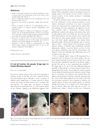
July 2018 in “Skin appendage disorders” This case report describes a woman with lichen planopilaris in the hair part line, with a history of long-term use of spray-on sunscreen on that area.
 39 citations
,
July 2015 in “British Journal of Dermatology”
39 citations
,
July 2015 in “British Journal of Dermatology” This article discusses the pseudo 'fringe sign' in frontal fibrosing alopecia, highlighting that it is not solely related to traction, and it reports no new clinical results.
January 2013 in “Refubium (Universitätsbibliothek der Freien Universität Berlin)” This study observed that hormone replacement therapy and autoimmune diseases may be more common among women with frontal fibrosing alopecia compared to those with androgenetic alopecia.
 15 citations
,
December 2017 in “Journal of The European Academy of Dermatology and Venereology”
15 citations
,
December 2017 in “Journal of The European Academy of Dermatology and Venereology” This letter discusses potential pathogenetic links among frontal fibrosing alopecia, androgenetic alopecia, and fibrosing alopecia in a pattern distribution and reports no new clinical findings.
7 citations
,
July 2021 in “The Journal of Dermatology” This study in Asian females found that higher use of moisturizers and sunscreen among FFA patients may reflect appearance concerns rather than indicating a direct link to the disease mechanism.
 August 2022 in “IntechOpen eBooks”
 This review discusses treatments for frontal fibrosing alopecia and lichen planopilaris, noting that systemic 5-alpha reductase inhibitors are most effective for stabilization and potential hair regrowth, but reports no new clinical results.
5 citations
,
June 2024 in “Pharmacological Research” This study identified neuropilin-1 as the receptor for FOL-026 and showed that it stimulates angiogenesis and cell growth, suggesting potential for vascular repair and enhanced angiogenesis therapies.