 January 2025 in “Journal of Case Reports and Scientific Images”
 In this case report, a 65-year-old woman was diagnosed with folliculotropic mycosis fungoides after experiencing scarring alopecia and intense pruritus, highlighting the importance of early diagnosis due to its aggressive nature.
 July 2026 in “Pharmacological Reports”
 In this pilot study, topical latanoprost acid was observed to increase hair count and improve hair follicle structure in women with androgenetic alopecia, with no serious adverse events, suggesting potential for further investigation to confirm its efficacy and safety.
 September 2023 in “bioRxiv (Cold Spring Harbor Laboratory)”
 In this study, FOL-026, a peptide based on osteopontin, was shown to promote angiogenesis and stimulate vascular cell proliferation and migration through neuropilin-1, similar to VEGF, suggesting potential therapeutic applications in vascular repair and angiogenesis-related conditions.
 14 citations
,
August 2010 in “The Open Dermatology Journal”
14 citations
,
August 2010 in “The Open Dermatology Journal” This article highlights the absence of empirical research on the psychological impact of female pattern hair loss and treatment initiation in Australian women, reporting no new clinical findings.
December 2016 in “Anales del sistema sanitario de Navarra” This case study reports successful treatment of frontal fibrosing alopecia with daily 2.5mg finasteride in a 77-year-old woman.
 July 2022 in “JEADV Clinical Practice”
 This review discusses the classification of lichen planopilaris and its subtypes under the proposed term "lichenoid alopecias," suggesting they exist along a clinical and histological spectrum.
18 citations
,
May 2006 in “Journal of Cutaneous Medicine and Surgery” This study reports the first known case of linear lichen planopilaris following Blaschko's lines in a nonfacial region.
 7 citations
,
August 2021 in “Journal of the European Academy of Dermatology and Venereology”
7 citations
,
August 2021 in “Journal of the European Academy of Dermatology and Venereology” This study suggests that early initiation of treatment in fibrosing alopecia in a pattern distribution may lead to a more favorable outcome, as evident in some patients experiencing arrested disease progression and hair regrowth.
January 2026 in “Journal of Education Health and Sport” This review assesses whether using letrozole alongside physical activity and nutrition is clinically beneficial for enhancing ovulation outcomes in women with PCOS-related infertility, but it doesn't report specific results from the evaluation.
48 citations
,
November 2018 in “Journal of dermatological treatment” In a study reviewing 291 patients with lichen planopilaris, findings revealed that women were more commonly affected than men, cyclosporine and methotrexate were most effective in achieving remission, and 5-alpha reductase inhibitors and systemic retinoids were particularly beneficial for frontal fibrosing alopecia.
 April 2016 in “Journal of Investigative Dermatology”
 This study found that a newly developed peptide, FOL-005, significantly inhibited hair growth and counteracted minoxidil's effects in organ-cultured human male scalp skin and mouse models, without apparent toxicity.
 33 citations
,
January 2010 in “Case reports in dermatology”
33 citations
,
January 2010 in “Case reports in dermatology” This article presents a case study of a 50-year-old woman with frontal fibrosing alopecia and discusses the role of dermoscopy in differentiating it from other types of alopecia, reporting no new clinical results.
 January 2017 in “Springer eBooks”
 Over 40% of postmenopausal women experience hair loss, with treatments aiming to stop further loss and possibly thicken hair.
1 citations
,
March 2013 in “Journal of Dermatological Case Reports” This case report describes an atypical presentation of lichen planopilaris affecting only facial vellus hair, without scalp involvement, in a 46-year-old man.

In this study, topical latanoprost acid applied daily for 6 months increased hair count and improved trichoscopic markers among women with hair loss, suggesting its potential for treating female androgenetic alopecia, particularly at a 0.05% concentration.
 3 citations
,
February 2022 in “Dermatology practical & conceptual”
3 citations
,
February 2022 in “Dermatology practical & conceptual” This study found that trichoscopy is an effective noninvasive technique for diagnosing frontal fibrosing alopecia, confirming its valuable role alongside traditional histopathological examination.
 October 2023 in “Dermatology practical & conceptual”
 In this case report, folliculitis decalvans with frontal fibrosing alopecia was observed in a patient with a dark phototype, highlighting the phenotypic spectrum of folliculitis decalvans and lichen planopilaris.
 11 citations
,
January 2007 in “Veterinary dermatology”
11 citations
,
January 2007 in “Veterinary dermatology” This study found that administerating 10 mg/kg intramuscular fulvestrant did not stimulate hair regrowth in Pomeranian dogs with alopecia X, though higher doses may warrant further investigation.
14 citations
,
January 2014 in “Indian Journal of Dermatology Venereology and Leprology” Frontal fibrosing alopecia can affect men's beards and leads to permanent hair loss.
 August 2016 in “Journal of Investigative Dermatology”
 This case report identifies a novel LIPH gene mutation linked to autosomal recessive woolly hair/hypotrichosis in a Japanese boy, expanding the spectrum of known mutations associated with this condition.
October 2024 in “Benha Journal of Applied Sciences” This study of fifty female patients with frontal fibrosing alopecia in Egypt found that it is a complex condition with no definitive treatment, as it often co-occurs with lichen planus and thyroid issues.
17 citations
,
February 2001 in “Journal of the American Academy of Dermatology” This case report suggests that lithium, either alone or with haloperidol, may induce skin changes resembling follicular mycosis fungoides.
 3 citations
,
October 2021 in “Journal of Cosmetic Dermatology”
3 citations
,
October 2021 in “Journal of Cosmetic Dermatology” This review discusses the characteristic trichoscopy patterns useful in differentiating lichen planopilaris and frontal fibrosing alopecia from similar conditions but reports no new clinical results.
 March 2022 in “Más dermatología”
 This report discusses the potential overlap between chronic cutaneous lupus and frontal fibrosing alopecia, noting ongoing debate over the significance of their association without presenting new clinical results.
 13 citations
,
January 2018 in “International Journal of Dermatology”
13 citations
,
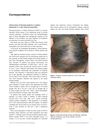
January 2018 in “International Journal of Dermatology” This clinical study on fibrosing alopecia in a pattern distribution among a Latin American population reports no new results but addresses this specific condition in its demographic context.
 2 citations
,
June 2011 in “Expert Review of Dermatology”
2 citations
,
June 2011 in “Expert Review of Dermatology” This review discusses the characteristics and management options for female pattern hair loss, highlighting the unclear role of androgens and the psychosocial impact, and reports no new clinical results.

This study found that the long non-coding RNA lnc056 promotes the proliferation of hair follicle stem cells by upregulating TRIP6 expression through interaction with the transcription factor HNRNPUL1, suggesting a potential target for hair loss treatment.
January 2023 in “Zenodo (CERN European Organization for Nuclear Research)” This abstract discusses the FitSpresso weight loss supplement's potential benefits and mechanisms but provides no clinical research findings; it reports on its ingredients and consumer ratings instead.
January 2022 in “Clinical Cases in Dermatology” This case report describes a 47-year-old man diagnosed with fibrosing alopecia in a pattern distribution, treated with clobetasol propionate and oral minoxidil while advised to avoid hair transplantation.
 October 2019 in “International journal of clinical & experimental dermatology”
 This study found that female pattern hair loss significantly reduces quality of life, particularly among younger patients, those with longer disease duration, and individuals with diagnosed mental health issues.