 5 citations
,
May 2011 in “Movement Disorders”
5 citations
,
May 2011 in “Movement Disorders” Finasteride may help reduce tic severity in male Tourette syndrome patients.
 19 citations
,
January 2008 in “The veterinary clinics of North America. Exotic animal practice”
19 citations
,
January 2008 in “The veterinary clinics of North America. Exotic animal practice” This review discusses adrenal gland disease in ferrets, exploring its signs, potential contributing factors, and current treatment options, but it reports no new clinical results.
 1 citations
,
December 2017 in “Research for Rural Development/Research for Rural Development (Online)”
1 citations
,
December 2017 in “Research for Rural Development/Research for Rural Development (Online)” This study found no correlation between clinical signs and sex steroid levels in ferrets with hyperadrenocorticism and noted that androstenedione was elevated in many cases.
 January 2001 in “Clinical and Experimental Dermatology”
 A test for nail fungus was most accurate with PAS stain, low-dose spironolactone helped two-thirds of acne patients, metformin reduced symptoms of HIV-related fat distribution changes with some side effects, and skin examination with dermoscopy was better at detecting abnormal moles, while temporary tattoos can cause skin reactions.
 4 citations
,
July 2015 in “Journal of Feline Medicine and Surgery Open Reports”
4 citations
,
July 2015 in “Journal of Feline Medicine and Surgery Open Reports” This case report describes a 10-year-old British Shorthair cat with lethargy, weight loss, alopecia, and spontaneous pruritus, revealing severe skin changes upon examination.
 1 citations
,
August 2022 in “International journal of biological and chemical sciences”
1 citations
,
August 2022 in “International journal of biological and chemical sciences” This study found that iodine deficiency, iodine excess, or the presence of antithyroid substances affected growth and behavior in Wistar rats, leading to various symptoms such as lethargy and alopecia.
 1 citations
,
May 2006 in “Thyroid Research and Practice”
1 citations
,
May 2006 in “Thyroid Research and Practice” In this study, 56% of patients with hypothyroidism had dry, coarse skin, while weight gain and lethargy were also common complaints.
 November 2024 in “Malaysian Journal of Microbiology”
 In this study, researchers found varying levels of multiple autoantibody types among thyroid disorder patients, with 84.84% of those with immunological hypothyroidism reporting symptoms like weight gain and lethargy, whereas 81.81% of those with immune hyperthyroidism experienced hair loss.
 May 2024 in “Academia Open”
 In this study, conducted on male Wistar rats, high doses of white turi flower extract significantly increased sodium and potassium kidney levels, causing symptoms like lethargy and hair loss without fatalities, suggesting potential acute toxicity that warrants further research for long-term safety assessment.
 February 2008 in “Vlaams dierengeneeskundig tijdschrift”
 In this case report, a pancreatic adenocarcinoma with liver and omentum metastases was found in a cat, whose clinical signs included anorexia, diarrhea, lethargy, and non-pruritic glistening alopecia.
 3 citations
,
January 2019 in “Bulgarian Journal of Veterinary Medicine”
3 citations
,
January 2019 in “Bulgarian Journal of Veterinary Medicine” This case study describes a cat co-infected with Demodex cati and feline immunodeficiency virus, showing initial treatment improvement followed by disease recurrence and eventual euthanasia.
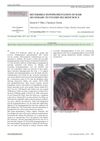 1 citations
,
January 2013 in “Nasza Dermatologia Online”
1 citations
,
January 2013 in “Nasza Dermatologia Online” This case report describes reversible hypopigmentation of hair in a child due to vitamin B12 deficiency, which improved after vitamin B12 supplementation.
 May 2023 in “Frontiers in veterinary science”
 This study describes the successful treatment of erythema multiforme in a young Central American tapir with a combination of wound care, silver sulfadiazine cream, and oral prednisolone, emphasizing the importance of diagnostic testing for vesicular dermatitis syndromes in tapirs.
20 citations
,
July 1998 in “Annals of Clinical Biochemistry International Journal of Laboratory Medicine” This case study details a 56-year-old man with initial misdiagnosed Addison's disease who was later found to have hypogonadotrophic hypogonadism and secondary hypothyroidism.
3 citations
,
June 2019 in “Veterinary record case reports” This case report describes a miniature dachshund with pustular dermatitis and other symptoms, developing pemphigus foliaceus after receiving afoxolaner, which was effectively managed with prednisone and cyclosporine.
 1 citations
,
February 2022 in “Veterinární Medicína”
1 citations
,
February 2022 in “Veterinární Medicína” This report presents the first successful management of minoxidil toxicosis in a cat, detailing the clinical progression and treatment plan used to resolve the condition.
 March 2026 in “Journal of Sustainable Veterinary and Allied Sciences”
 In this case report, a 5-year-old female German shepherd diagnosed with canine babesiosis and ehrlichiosis fully recovered after receiving parenteral treatment for these infections and topical therapy for dermatitis at the University of Ilorin's Veterinary Teaching Hospital.
 February 2025 in “Veterinary Clinical Pathology”
 In this study, a ferret with multiple health issues was diagnosed with a malignant apocrine gland adenocarcinoma on the prepuce, highlighting the aggressive nature of such tumors in this species and suggesting further investigation into cytologic features could provide insights into tumor behavior.
October 2021 in “Case Reports in Veterinary Medicine” This veterinary case study of a dog with myxedema coma found clinical and pathologic changes including severe thyroid atrophy and marked atherosclerosis consistent with the diagnosis.
 48 citations
,
March 1997 in “Veterinary Dermatology”
48 citations
,
March 1997 in “Veterinary Dermatology” This report describes a paraneoplastic alopecia in four cats associated with internal malignancy, confirming previous findings of a syndrome linking ventral alopecia and metastatic carcinomas.
40 citations
,
September 2003 in “Journal of the American Animal Hospital Association” This case report describes a Russian wolfhound's aggression being linked to hypothyroidism, which was successfully managed with levothyroxine therapy.
13 citations
,
January 2014 in “Journal of Veterinary Internal Medicine” This case study reports an instance of adult-onset primary hypothyroidism with goiter in a cat, suggesting potential causes such as dietary iodine imbalance, chronic exposure to thyrotoxic substances, or a congenital form with late manifestation.
12 citations
,
May 2005 in “Journal of the American Geriatrics Society” This case report describes successful treatment of valproate-induced hyperammonemia in a 79-year-old man using lactulose, marking the first such documented use for this condition.
 5 citations
,
January 2018 in “Javma-journal of The American Veterinary Medical Association”
5 citations
,
January 2018 in “Javma-journal of The American Veterinary Medical Association” This case report documents the first successful management of accidental minoxidil toxicosis in a dog, resulting in full recovery after treatment with supportive care, including medications for blood pressure and potential toxicity mitigation.
5 citations
,
November 2012 in “Journal of Clinical Psychopharmacology” This case report describes an 80-year-old man who developed valproate toxicity and functional decline after starting isoniazid, highlighting a potential drug interaction in elderly patients.
3 citations
,
March 2021 in “Indonesia Medicus Veterinus” This case report describes successful treatment of anaplasmosis in a Kintamani mix dog with doxycycline, ivermectin, vetadryl, and Livron b-plex, leading to improved activity, hair growth, appetite, and tick eradication.
 3 citations
,
January 2013
3 citations
,
January 2013 This chapter discusses hypothyroidism in dogs, highlighting that most cases are due to primary thyroid gland issues and that some breeds may have a hereditary predisposition; it reports no new clinical findings.
2 citations
,
August 2004 This study found that early diagnosis using gas chromatography/mass spectrometry and appropriate long-term treatment are crucial for improving outcomes in patients with methylmalonic acidemia.
1 citations
,
May 2025 in “BMC Veterinary Research” This research highlights the importance of considering hypothyroidism in dogs for early diagnosis and treatment to prevent potentially life-threatening complications, given its relative commonality compared to other diseases causing dermatological changes or obesity in these animals.
March 2026 in “Indian journal of veterinary and animal sciences research.” This case study found that treating a dog with primary hypothyroidism using oral levothyroxine sodium led to significant clinical improvement within six weeks.