29 citations
,
September 2020 in “Polymers” This study found that electrospun poly(ε-caprolactone)/poly(3-hydroxybutyrate) blend fibers demonstrated nanometric dimensions and promising properties for drug delivery, with curcumin release linked to fiber morphology and processing parameters.
49 citations
,
July 2007 in “Ophthalmic Plastic and Reconstructive Surgery” This report describes a case of granulomatous reaction to injectable poly-L-lactic acid in the periorbital area and suggests surgical excision as an effective treatment for persistent nodules.
July 2026 in “Theranostics” This study developed a novel ferritin-based delivery system (LR@Fn) that effectively co-delivers RG108 and LLY283 for hearing loss treatment in animal models, reducing hair cell loss and synaptic damage more effectively than dexamethasone.
This study found that encapsulating curcumin within specific polymers increased its oral bioavailability, photostability, and release in both mice and in vitro, compared to free curcumin.
 17 citations
,
October 2006 in “Molecular and Cellular Endocrinology”
17 citations
,
October 2006 in “Molecular and Cellular Endocrinology” This study found that the L457(3.43)R mutation in the human luteinizing hormone receptor increases phosphodiesterase activity, reducing hormonal response despite elevated basal cAMP levels.
October 2025 in “Journal of the Endocrine Society” This case report documented the management of a 46-year-old female with Marine-Lenhart syndrome, combining antithyroids with minimally invasive sclerotherapy to achieve euthyroidism and reduce thyroid nodule size by 58%.
 69 citations
,
December 2015 in “Journal of Controlled Release”
69 citations
,
December 2015 in “Journal of Controlled Release” This study found that nanocapsules formulated as a dispersion and applied with massage may enhance follicular uptake of clobetasol propionate while minimizing its skin penetration, offering a potential improvement over conventional treatments for scalp diseases.
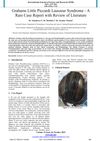 October 2023 in “International Journal of Science and Research (IJSR)”
 This paper describes Grahams Little Piccardi Lassueur Syndrome, a rare type of Lichen Planopilaris that causes different types of alopecia and distinctive skin papules, primarily affecting females aged 40 to 70, and notes the current challenges in treatment options, particularly once scarring occurs.
 3 citations
,
January 2010 in “Ghent University Academic Bibliography (Ghent University)”
3 citations
,
January 2010 in “Ghent University Academic Bibliography (Ghent University)” This article reviews the impact of the 2000 revision of the European Patent Convention on drug patent protection and raises concerns about its effects on generic substitution and healthcare professionals.
 October 2020 in “Journal of Aesthetic Nursing”
 This article discusses the need for changes in governance and regulation within the aesthetics industry, focusing on creating standards and competency frameworks to ensure safe practices. Results are not reported in this summary.
 16 citations
,
September 2018 in “Journal of Molecular Liquids”
16 citations
,
September 2018 in “Journal of Molecular Liquids” This study investigated a nanostructured system using PS-b-PAA diblock copolymer for incorporating the hydrophobic photosensitizer ClAlPc, finding it effective in causing cellular damage in Caco-2 cells under light while demonstrating no cytotoxicity without light, suggesting its potential use in photodynamic therapy.
 May 2014 in “Clinical and Experimental Dermatology”
 A 70-year-old woman with a rare skin condition improved after treatment with topical steroids and acitretin.
 January 2014 in “Sen i Gakkaishi”
 In this study, liposome-encapsulated thioglycolic acid improved hair perming by enhancing the penetration of perm solutions, resulting in a stronger S-shaped wave and higher cysteine content compared to the control.
19 citations
,
September 2010 in “Journal of the European Academy of Dermatology and Venereology” This study found that while the CLASI is generally useful for assessing disease activity and damage in cutaneous lupus erythematosus, it may not accurately reflect all subtypes, indicating a need for revision.

This study concluded that removing alopecia and mucous membrane components from the CLASI-A score limits the ability to capture crucial clinical information about cutaneous lupus erythematosus activity, recommending their retention.
 15 citations
,
April 2017 in “Cell Stem Cell”
15 citations
,
April 2017 in “Cell Stem Cell” This study found that glioblastoma cancer stem cells avoid immune suppression by downregulating TLR4, and restoring TLR4 signaling may reduce tumor growth and self-renewal.
 September 2024 in “Journal of the American Academy of Dermatology”
 In this case report, a 53-year-old woman with Little-Graham-Piccardi-Lassueur-Syndrome responded well to a treatment regimen of hydroxychloroquine, methotrexate, and other therapies, effectively halting the progression of this rare dermatosis characterized by alopecia and hyperkeratotic eruptions.
 January 2025 in “Dermatology Reports”
 This case report describes a 61-year-old Italian man with a rare, localized variant of junctional epidermolysis bullosa linked to the R795X mutation in the COL17A1 gene, highlighting the importance of precise diagnosis for effective management of rare genetic disorders.
12 citations
,
March 2022 in “Antioxidants” This study found that encapsulating tamarillo polyphenols in cubosome nanoparticles protected them during digestion and enhanced the nutritional and antioxidant properties of yoghurt when used as a delivery system.
 18 citations
,
April 2014 in “Stem cells”
18 citations
,
April 2014 in “Stem cells” The researchers reported that minor salivary gland stem cells exhibit stem cell characteristics and respond to tobacco-derived carcinogens, implicating the transforming growth factor beta pathway in their maintenance.
32 citations
,
August 1982 in “Journal of the American Academy of Dermatology” This study reports two cases of follicular lichen planus, suggesting that GLPLS and LPP may be variants of this condition based on clinical and immunofluorescent findings.
6 citations
,
February 2024 in “JAAD International” ChatGPT is preferred for creating dermatology patient handouts, but all models can be useful with oversight.
March 2026 in “Journal of Enzyme Inhibition and Medicinal Chemistry” This review examines the development and challenges of using PROTACs, a targeted protein degradation strategy, to treat cancer by degrading specific proteins like PARPs and GPX4, highlighting issues such as target diversification and bioavailability.
 August 2018 in “Journal of Investigative Dermatology”
 This study found that combining optical clearing methods with light-sheet fluorescence microscopy allows detailed 3D visualization of normal and pathological human skin biopsies, revealing differences in epidermal thickness and volume.
 June 2026 in “International Journal of Drug Delivery Technology”
 This study developed a Hyaluronic acid-Carbopol liposomal gel co-loaded with Adapalene and Clindamycin Phosphate, optimized to improve skin penetration and anti-acne efficacy, showing enhanced drug delivery, superior clinical effectiveness, and excellent skin tolerability compared to commercial formulations.
 25 citations
,
July 2019 in “Journal of drug delivery science and technology”
25 citations
,
July 2019 in “Journal of drug delivery science and technology” This study developed lipid-core nanocapsules for encapsulating menthol, improving its solubility and thermal stability, and demonstrated their safety and rapid skin absorption in ex vivo tests, highlighting potential applications for cosmeceuticals.
January 2019 in “Springer eBooks” PLGA nanospheres in cosmetics improve skin and hair treatment effectiveness.

This study found that CPA-loaded nanoparticles, particularly SLN formulations, increased CPA epidermal penetration compared to a conventional cream and may reduce side effects in treating androgen-dependent conditions.
1 citations
,
July 2021 in “Current nanomedicine” This study found that nanostructured lipid carriers could serve as a promising vehicle for topical Acitretin delivery in psoriasis treatment, potentially reducing oral side effects and enhancing patient compliance.
 27 citations
,
February 2009 in “Autoimmunity Reviews”
27 citations
,
February 2009 in “Autoimmunity Reviews” This study describes the development of the EUSCLE Core Set Questionnaire for cutaneous lupus erythematosus, designed to standardize data collection, facilitate epidemiological analysis, and guide diagnostic and therapeutic strategies across European centers.