This case report describes successful treatment of a 21-year-old patient with lichen planopilaris using keratolytic lotions, a combination of corticosteroids, salicylic acid, and tacrolimus cream, which stopped disease progression.
 4 citations
,
July 1996 in “Annals of Internal Medicine”
4 citations
,
July 1996 in “Annals of Internal Medicine” This article discusses a report on reversible alopecia associated with fluconazole therapy and mentions other possible causes of hair loss but presents no new findings.
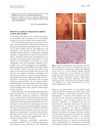
October 2010 in “EUR Research Repository (Erasmus University Rotterdam)” This case report describes the successful treatment of scedosporiosis-induced cellulitis with voriconazole and intermittent pneumatic compression in a 72-year-old Portuguese woman.
 7 citations
,
June 2010 in “Journal of The American Academy of Dermatology”
7 citations
,
June 2010 in “Journal of The American Academy of Dermatology” This paper reports a single case of lichenoid cutaneous sarcoidosis that was unresponsive to standard treatments but showed marked improvement with the administration of oral tranilast.
37 citations
,
October 2010 in “JDDG Journal der Deutschen Dermatologischen Gesellschaft” This review discusses the unique pharmacokinetic limitations of terbinafine in children with tinea capitis and reports no new clinical results, highlighting the need for consideration of these factors in future studies.
 50 citations
,
December 2009 in “Journal of The European Academy of Dermatology and Venereology”
50 citations
,
December 2009 in “Journal of The European Academy of Dermatology and Venereology” This study found that latanoprost may be effective for treating eyelash alopecia areata, achieving cosmetically acceptable regrowth in 45% of patients.

This report describes a rare case of kerion in a 6-year-old boy in Ireland, treated with oral Itraconazole and steroids, highlighting the condition's unusual occurrence in the region.
 July 2025 in “Pakistan Journal of Intensive Care Medicine”
 In this randomized controlled trial, researchers observed that topical clobetasol propionate 0.05% was significantly more effective than topical tacrolimus 0.1% for treating alopecia areata, with a higher treatment success rate of 74.2% versus 45.2%, suggesting clobetasol as a preferred first-line topical therapy.
December 2022 in “Molecular Pharmaceutics” This study found that encapsulating latanoprost in nanotransfersomes increased skin penetration and improved its cell proliferation effect in vitro, suggesting potential for treating hair growth disorders.
1 citations
,
November 2020 in “International journal of infectious diseases” This case report describes a 6-month-old girl in China who experienced complete remission of tinea capitis after 8 weeks of treatment with oral fluconazole and ketoconazole cream.
 September 2024 in “PubMed”
 This case reported that a 6-year-old patient with scalp lesions, diagnosed with tinea capitis and head lice, successfully responded to a new treatment regimen including griseofulvin, permethrin, and prednisolone, highlighting the need for better diagnosis and interprofessional communication.
 4 citations
,
October 2023 in “Dermatology”
4 citations
,
October 2023 in “Dermatology” In this study, a network meta-analysis found that treating lichen planopilaris with a combination of clobetasol, hydroxychloroquine, and N-acetylcysteine was the most effective approach, while cyclosporine, methotrexate, and some other treatments were less effective compared to hydroxychloroquine.
75 citations
,
September 1971 in “British Journal of Dermatology” This study found that both intralesional triamcinolone acetonide and triamcinolone hexacetonide promote continuous hair growth in alopecia areata, with effects lasting at least 9 months after a single injection.
 March 2005 in “Journal of The American Academy of Dermatology”
 The two lotions used day and night may be a good alternative to minoxidil for hair loss treatment with better cosmetic effects and tolerance.
 April 2025 in “Clinical and Translational Discovery”
 In this study, ketoconazole-loaded transferosomes were developed and demonstrated improved hair growth compared to a commercially available ketoconazole product, with the formulation showing enhanced drug penetration and minimal skin irritation in vivo.
November 2014 in “DOAJ (DOAJ: Directory of Open Access Journals)” This study suggests that nanostructured lipid carriers loaded with spironolactone might improve localized delivery to hair follicles for treating androgenic alopecia, potentially minimizing systemic side effects.
2 citations
,
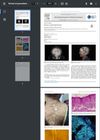
October 2015 in “Mikrobiyoloji bülteni” This case report describes a 20-year-old female with favus caused by T. schöenleinii, which initially improved with antifungal treatment but recurred due to poor adherence, underscoring favus as an ongoing health issue in Turkey.
 May 2022 in “International journal of infectious diseases”
 In this case study, a 70-year-old woman with generalized favus caused by Trichophyton schoenleinii achieved a clinical and mycological cure after a one-month terbinafine treatment.
2 citations
,
January 2020 in “Brazilian Journal of Veterinary Medicine/Revista Brasileira de Medicina Veterinária” In this study, sarolaner administered orally proved effective in treating demodectic mange in a naturally infested cat in Brazil, as no mites were observed and skin condition improved after 21 days.
 1 citations
,
January 2023 in “Mycopathologia”
1 citations
,
January 2023 in “Mycopathologia” In this case report, a 34-year-old woman with black dot tinea capitis did not respond to oral Itraconazole but was successfully treated with Terbinafine.
1 citations
,
March 2017 in “Semina Ciências Agrárias” This case report describes a Dogo Argentino dog with M. nanum infection, likely from hunting wild boar, that responded well to itraconazole and topical miconazole treatment.
 26 citations
,
March 2015 in “American journal of clinical dermatology”
26 citations
,
March 2015 in “American journal of clinical dermatology” This study found that systemic mycophenolate mofetil and topical clobetasol were equally effective at reducing lichen planopilaris activity over six months, but satisfaction differed between the treatments.
 1 citations
,
January 2021 in “Our Dermatology Online”
1 citations
,
January 2021 in “Our Dermatology Online” This case report describes an adult initially diagnosed with alopecia areata but was later found to have tinea capitis, successfully treated with terbinafine and ketoconazole shampoo.
 July 2024 in “International Journal of Medical Arts”
 In this study, both topical minoxidil and latanoprost were found to improve dermoscopic features of alopecia areata, with latanoprost showing superior effectiveness; minor side effects included erythema and itching.
3 citations
,
March 2024 in “Journal of the American Academy of Dermatology” Low-dose naltrexone helps improve symptoms and stabilize frontal fibrosing alopecia and lichen planopilaris.
 7 citations
,
January 2003 in “Nippon Ishinkin Gakkai Zasshi”
7 citations
,
January 2003 in “Nippon Ishinkin Gakkai Zasshi” This case report from Japan detailed a 10-year-old girl with alopecia successfully treated with daily terbinafine, identifying Trichophyton tonsurans as the causative fungus.
 22 citations
,
January 2009 in “Medical mycology”
22 citations
,
January 2009 in “Medical mycology” In this case report, researchers identified Arthroderma vanbreuseghemii as the cause of a familial fungal infection, which was successfully treated with itraconazole and topical terbinafine cream.

Flubendazole in a nanoemulsion can potentially treat lung cancer and cryptococcal meningitis effectively and safely.
January 2019 in “대한피부과학회지” This study found that patients with kerion responded well to antifungal treatments, with a lower dose of prednisolone effectively reducing inflammation when systemic corticosteroids were needed.
 9 citations
,
August 2024 in “Cureus”
9 citations
,
August 2024 in “Cureus” This study reviewed existing knowledge and research, observing that ketoconazole shampoo is a safe and effective treatment for scalp seborrheic dermatitis, significantly improving irritation and scaling while maintaining low relapse rates and minimal side effects.