January 2026 in “American Journal of Medical Genetics Part A” The researchers reported two brothers with a new variant of X-linked trichothiodystrophy associated with an RNF113A gene mutation, highlighting features such as intellectual disability and growth failure, but without previously reported endocrinological or genital abnormalities, underlining the importance of genetic counseling for such variants.
4 citations
,
January 1991 in “PubMed” The study examined cytokeratin expression in different bovine epithelial tissues, finding that hair follicles and nasolabial glands express both acidic and basic types, while other epithelia express only one type.
 1 citations
,
November 1995 in “Postgraduate medical journal”
1 citations
,
November 1995 in “Postgraduate medical journal” This article presents a case of 5-alpha-reductase deficiency in a Saudi individual, reporting no new research findings.
17 citations
,
June 2003 in “The journal of investigative dermatology. Symposium proceedings/The Journal of investigative dermatology symposium proceedings” This study found that genes in the human keratin-associated protein 1 family may have evolved mainly through gene duplication of cysteine-repeat motifs.
 November 2023 in “Advanced Science”
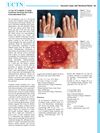
 A specific hair protein variant increases the spread of breast cancer and is linked to worse survival rates.
 4 citations
,
December 2001 in “Endoscopy”
4 citations
,
December 2001 in “Endoscopy” In this case study, administration of prednisolone and Bactrim for a woman with Cronkhite-Canada syndrome led to the cessation of diarrhea, increased serum protein, and improvement in hyperpigmentation and hair regrowth.
1 citations
,
February 2025 in “Journal of the Neurological Sciences” This study suggests that BTP levels in cerebrospinal fluid might help diagnose CIDP and predict therapy response but require validation in larger cohorts.
107 citations
,
March 2014 in “BoneKEy Reports” This abstract reviews hereditary vitamin D-resistant rickets, a rare genetic condition causing severe early childhood rickets, and reports no new results; effective treatment typically requires high doses of calcium to address hypocalcemia and secondary hyperparathyroidism.
14 citations
,
November 1979 in “Pediatric Research” 2 citations
,
October 2023 in “PubMed” This study reported the creation of isogenic immortalized COL7A1-deficient keratinocyte lines, providing a model for researching Recessive Dystrophic Epidermolysis Bullosa biology and potential therapies.
January 2009 in “Epsilon: Revista de la Sociedad Andaluza de Educación Matemática "Thales"” This report describes a Cronkhite-Canada syndrome patient with severe sepsis and disseminated intravascular coagulation successfully treated using combined therapies, including recombinant human soluble thrombomodulin.
 13 citations
,
March 2020 in “Genes”
13 citations
,
March 2020 in “Genes” This study found that FGF5-/- rabbits exhibited a significant long hair phenotype by prolonging the anagen phase, suggesting FGF5 acts as a negative regulator of hair growth.
12 citations
,
December 2022 in “Current Protein and Peptide Science” This review discusses the molecular mechanisms and clinical applications of thymosin β4, highlighting its potential benefits for inflammation, wound healing, tumor metastasis, and other medical conditions but reports no new experimental results.
January 1999 in “Journal of Investigative Dermatology” 25 citations
,
April 1985 in “Journal of Investigative Dermatology”  September 2023 in “Journal of the American Academy of Dermatology”
 This study discusses calcinosis cutis and alopecia totalis, highlighting the need for thyroid disease screening in children with alopecia areata, especially those with a history of Down syndrome or signs of potential thyroid dysfunction.
1 citations
,
September 2025 in “Frontiers in Immunology” This study found that FRβ knockout mice exhibited autoimmune symptoms and slower tumor growth compared to wild type mice, suggesting that the FRβ receptor may play a role in regulating immune responses in tumors and autoimmune conditions.
January 2026 in “Animal Genetics” This study investigated a Labrador Retriever with paw pad hyperkeratosis and identified a unique de novo heterozygous missense variant in the GJB6 gene, suggesting its potential role in the condition, analogous to Clouston syndrome in humans, although differences between species may provide further insights.
49 citations
,
October 1989 in “Genomics” Type I keratin genes are closely linked to the rex locus on mouse chromosome 11, affecting hair development.
29 citations
,
October 2010 in “Journal of Investigative Dermatology” This research found that activating a KrasG12D mutation in mice led to skin thickening, papillomas, and hair growth issues, suggesting that even rare KRAS mutations can mimic human RAS/MAPK syndrome symptoms.
 March 2018 in “Gazi medical journal”
 This study found that adults with β-thalassemia major had a significantly higher prevalence of skin, hair, and nail disorders compared to healthy controls, influenced by factors like age, gender, and ferritin levels.
26 citations
,
March 1995 in “Differentiation” This study isolated and sequenced the complete gene rKAP4L1, which encodes a cysteine-rich hair keratin-associated protein in rabbit hair follicles.
 7 citations
,
August 2022 in “Nature communications”
7 citations
,
August 2022 in “Nature communications” This study found that Thy1+ keratinocytes in the basal layer of the interfollicular epidermis play a crucial role in epidermal homeostasis and wound repair, with their ablation impairing these processes.
46 citations
,
May 1995 in “Proceedings of the National Academy of Sciences” This study demonstrated that a specific 9-kbp fragment of the bovine keratin 6 gene effectively directs tissue-specific and inducible expression in transgenic mice, suggesting potential applications for targeted gene therapy in hyperproliferative skin conditions.
September 2025 in “OPAL (Open@LaTrobe) (La Trobe University)” This study found that topical treatment with 7DHC and BM15766 reduced hair growth in mice compared to those treated with Ethanol/DMSO, and hair did not recover after treatment ceased, alongside increased apoptotic cells and decreased expression of specific genes.
 5 citations
,
August 2013 in “InTech eBooks”
5 citations
,
August 2013 in “InTech eBooks” This article reviews the role of KLF4, a transcription factor, in various cellular processes and its dual function as a tumor suppressor or oncogene depending on the context, but presents no new experimental results.
This study mapped the curly mutation in mice to a specific region on chromosome 11, identifying it as a candidate model for studying human genetic hair disorders.
January 2019 in “Advances in stem cells and their niches” Krox20 is important for cell differentiation in the brain and hair follicles.
77 citations
,
March 2000 in “Journal of Investigative Dermatology” The research identified six functional hair keratin genes and four pseudogenes, providing insights into hair formation and gene organization.
53 citations
,
March 2003 in “Journal of Investigative Dermatology” This study found that human keratinocytes express a sodium-dependent multivitamin transporter for biotin, pantothenic acid, and lipoic acid, including a highly specific biotin transport component.