 61 citations
,
April 2014 in “Radiation Research”
61 citations
,
April 2014 in “Radiation Research” This study observed that topically applied RTA 408 reduced the severity of radiation-induced dermatitis in mice, with the highest dose significantly reducing and alleviating skin damage and associated inflammation.
 23 citations
,
January 2005 in “Nihon Ishinkin Gakkai zasshi”
23 citations
,
January 2005 in “Nihon Ishinkin Gakkai zasshi” This case study identified Trichophyton rubrum as the cause of trichophytia profunda acuta in a patient using nested PCR, suggesting an alternative diagnostic approach when KOH tests and cultures fail.
 98 citations
,
June 2001 in “Journal of biological chemistry/The Journal of biological chemistry”
98 citations
,
June 2001 in “Journal of biological chemistry/The Journal of biological chemistry” This study identified a cluster of genes on chromosome 17 related to hair keratin-associated proteins, including 37 genes forming seven multigene families, localized in the hair shaft's upper cortex.
6 citations
,
January 2006 in “Journal of dermatological science” Runx1 helps control the KAP5 gene in human hair follicles.
9 citations
,
October 2025 in “MedComm” This review discusses the development and clinical progression of PROTAC technology for targeted protein degradation, highlighting its potential to address previously "undruggable" targets but reports no new clinical results.
December 2025 in “Zenodo (CERN European Organization for Nuclear Research)” This product description promotes Kerablak Calcium Pantothenate Tablets for improving hair strength and reducing hair fall, but it provides no new clinical study findings.

This study explored a mother and daughter with loose anagen hair syndrome linked to wooly hair, identifying an intronic variant in the KRT71 gene that affects hair keratin splicing, thus broadening the spectrum of KRT71-related disorders.
14 citations
,
November 2024 in “International Journal of Molecular Sciences” This review summarizes existing evidence on how YAP and TAZ proteins are activated in epidermal keratinocytes and their role in coordinating with other signaling molecules to control transcription and influence epidermal cell fate, highlighting their importance beyond the Hippo pathway.
52 citations
,
May 2006 in “Journal of Structural Biology” This study identified two key pentapeptide quasi-repeats in human keratin-associated proteins, which are similar to motifs found in sheep wool.
6 citations
,
January 2022 in “Gene” This study identified 53 keratins in the yak genome, predicting diverse phosphorylation sites and subcellular localizations, and highlighted strong gene expression correlations during the yak hair follicle development cycle.
13 citations
,
June 2023 in “Frontiers in Molecular Neuroscience” This review suggests that blocking the ATP-sensitive potassium (K ATP) channel, particularly the Kir6.1/SUR2B subtype, may prove effective in treating migraines, with preclinical data supporting this approach; however, human studies are absent, and potential side effects could complicate clinical use.
October 2014 in “Cancer research” This study found that targeting mTORC1 with rapamycin effectively inhibited skin tumor promotion in a mouse model, highlighting a potential target for cancer chemoprevention.
 September 2022 in “bioRxiv (Cold Spring Harbor Laboratory)”
 In this study, researchers using live mice observed that oncogenic Kras mutation disrupts hair follicle architecture by sustaining ERK signal activation, which affects stem cell behavior and tissue integrity.
April 2018 in “The journal of investigative dermatology/Journal of investigative dermatology” This commentary discusses the crucial role of the alternative splicing factor Esrp1 in maintaining skin barrier function and its association with skin diseases like atopic dermatitis and psoriasis, but reports no new clinical results.
 July 2025 in “Frontiers in Medicine”
 In this case study, an 8-year-old boy with alopecia totalis experienced significant hair regrowth after baricitinib treatment, suggesting KRT74 variants may influence immune dysregulation in this condition.
May 2006 in “The Journal of Cell Biology” In this study, researchers at Johns Hopkins University found that Keratin 17 plays a signaling role in cell growth during a wound response by aiding mTOR pathway activation, beyond its structural functions.
 1 citations
,
October 2012 in “The Journal of Dermatology”
1 citations
,
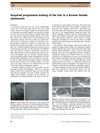
October 2012 in “The Journal of Dermatology” This letter to the editor describes a case of acquired progressive kinking of the hair in a Korean female adolescent, but no new research findings are reported.
2 citations
,
July 2021 in “Genes” This study identified a new genetic variant in the KRT71 gene responsible for a breed-specific form of hypotrichosis in Hereford cattle, potentially serving as a model for similar human conditions.
2 citations
,
January 2016 in “İzmir Dr.Behçet Uz çocuk hastanesi dergisi” This case report describes a ten-year-old boy with kerion celsi caused by Trichosporon asteroides, successfully treated with systemic fluconazole over eight weeks, marking the first documentation of this cause in the literature.

This study introduces Kalya Research, an AI-driven tool designed to identify and categorize literature on complementary and alternative medicines, showing its effectiveness compared to Medline in finding relevant alopecia research within the context of breast cancer patients.
4 citations
,
April 2025 in “Antioxidants” This study found that α-ketoglutarate protected dermal papilla cells from oxidative stress by enhancing the Nrf2 pathway and mitigating cell damage through the ERK/Nrf2 axis.
 124 citations
,
December 2016 in “Pharmaceuticals”
124 citations
,
December 2016 in “Pharmaceuticals” This review discusses the functions and potential therapeutic targeting of TRP ion channels in the skin, noting their involvement in both physiological processes and various pathological conditions, but reports no new experimental results.
 22 citations
,
January 2009 in “Medical mycology”
22 citations
,
January 2009 in “Medical mycology” In this case report, researchers identified Arthroderma vanbreuseghemii as the cause of a familial fungal infection, which was successfully treated with itraconazole and topical terbinafine cream.
13 citations
,
July 1994 in “PubMed” This study found that TPA treatment induced expression of keratins K6 and K16 in mouse epidermis, with K6 expressed across all cell layers and K16 only in post-mitotic cells.
December 2020 in “Faculty Opinions – Post-Publication Peer Review of the Biomedical Literature” The KDM1 gene helps Venus flytraps close by managing potassium ions.
5 citations
,
January 2002 in “European journal of pediatrics” "D-CHRAMPS syndrome" is a newly identified condition with multiple severe symptoms.
 January 2023 in “European journal of gynaecological oncology”
 This study found that depletion of KRT17 in endometrial cancer reduced cell growth, motility, and angiogenesis, suggesting KRT17 as a potential therapeutic target.
In this study, researchers created a mouse model using CRISPR/Cas9 technology to investigate hypotrichosis simplex and woolly hair, finding that Krt71-knockout mice exhibited curly hair and developed complete hair shedding without immune deficiencies, mimicking conditions seen in humans and potentially aiding future hair disorder research.
70 citations
,
September 2017 in “Expert opinion on therapeutic patents” This review examines the patent literature on AKR1C3 inhibitors and suggests that although numerous potent inhibitors exist, further preclinical optimization is necessary before assessing their therapeutic potential in human diseases.
April 2012 in “Cancer research” In this study, the authors found that targeting mTORC1 with rapamycin inhibited TPA-induced skin tumor promotion by affecting keratinocyte proliferation, including critical stem cell populations in the mouse epidermis.