61 citations
,
July 2022 in “Journal of Nanobiotechnology” This study found that carbon dots derived from fucoidan effectively inhibit Enterococcus faecalis and its biofilm, offering a promising approach for managing biofilm-associated persistent endodontic infections.
96 citations
,
March 2007 in “Developmental biology” This study found that the Wnt inhibitor Dkk4 may play a role in regulating hair follicle development through a feedback loop with canonical Wnt signaling pathways.
January 2026 in “Journal of Dermatological Science” This study suggests that DcR3 can reprogram macrophages towards a reparative state, enhancing wound healing and hair follicle regeneration, making it a potential target for treating chronic wounds and alopecia.
8 citations
,
August 2014 in “Biochemical and Biophysical Research Communications” The study found that over-expressing ornithine decarboxylase in the outer root sheath of the hair follicle in mice increases UVB-induced tumor growth and invasive squamous cell carcinoma compared to inter-follicular epidermal keratinocytes.
 1 citations
,
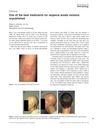
June 2018 in “International Journal of Dermatology”
1 citations
,
June 2018 in “International Journal of Dermatology” DNCB is highly effective for treating alopecia areata with minimal long-term side effects.
52 citations
,
May 1997 in “Journal of Biological Chemistry” This study suggests that polyamines regulate CK2 enzyme activity and its subcellular distribution, as demonstrated in mouse models and cell cultures with elevated levels of ornithine decarboxylase.
 13 citations
,
November 2010 in “Experimental Dermatology”
13 citations
,
November 2010 in “Experimental Dermatology” This study found that L-ascorbic acid 2-phosphate could reduce DHT-induced DKK-1 expression in balding scalp cells, suggesting potential for treating androgen-driven hair loss.
July 2024 in “Journal of Investigative Dermatology” In these two clinical trials, DS-2325a, a KLK5 inhibitor, was found to be generally safe and well tolerated in healthy volunteers, with mild and non-serious adverse events, suggesting its potential for further development as a treatment for Netherton Syndrome.
3 citations
,
April 2017 in “Journal of Investigative Dermatology” This study found that dermoscopy is valuable for diagnosing facial actinic keratosis in Chinese patients, with specific patterns like red pseudonetwork and follicular plugs suggesting its utility in differential diagnosis.
 98 citations
,
June 2001 in “Journal of biological chemistry/The Journal of biological chemistry”
98 citations
,
June 2001 in “Journal of biological chemistry/The Journal of biological chemistry” This study identified a cluster of genes on chromosome 17 related to hair keratin-associated proteins, including 37 genes forming seven multigene families, localized in the hair shaft's upper cortex.
January 2024 in “Wiadomości Lekarskie” This pilot clinical study introduces DEC cells as a novel therapy for Duchenne muscular dystrophy, confirming safety and efficacy in seven patients up to 24 months post-treatment.
1 citations
,
May 2024 in “Journal of Dermatological Science” In this study, KC-AD-MSCs were found to increase COL7 deposition and anchoring fibril formation at the dermal-epidermal junction in a RDEB mouse model, suggesting potential for improving skin integrity in recessive dystrophic epidermolysis bullosa patients.
 28 citations
,
March 2017 in “Endocrinology”
28 citations
,
March 2017 in “Endocrinology” In this study, the researchers found that vitamin D and calcium signaling in keratinocytes are essential for normal skin regeneration after wounding, with deficiencies significantly delaying wound closure and re-epithelialization in mice.
 4 citations
,
January 2021 in “Journal of Clinical Medical Research”
4 citations
,
January 2021 in “Journal of Clinical Medical Research” This review provides an in-depth analysis of the structure and function of c-kit activation, and its role in both normal physiological and pathological conditions, with no new research findings reported.
 April 2023 in “The journal of investigative dermatology/Journal of investigative dermatology”
 In this study, researchers found that the loss of SETDB1 in epidermal keratinocytes led to altered chromatin states, increased ERV expression, and activation of immune responses, while inhibiting these effects with certain antiviral drugs reduced skin inflammation and hair loss in a mouse model.
 27 citations
,
December 2015 in “Clinical and Experimental Dermatology”
27 citations
,
December 2015 in “Clinical and Experimental Dermatology” This study found that hair regrowth occurred in 72.2% of alopecia areata patients treated with diphencyprone, with disease extent at baseline and duration affecting outcomes.
 April 2023 in “Journal of Investigative Dermatology”
 In this study, the KPAI and KP-IGA scoring systems for assessing keratosis pilaris showed excellent interrater and intrarater reliability, offering standardized measures for clinical and research use.
30 citations
,
November 2020 in “Journal of Advanced Research” This study found that conditioned medium from keratinocytes improved the hair-inductive properties of cultured dermal papilla cells, suggesting potential for enhancing hair follicle regeneration.
 April 2026 in “Amino Acids”
 This study reviews prior research using transgenic K6/ODC mice and demonstrates that elevated polyamines in epithelial cells contribute significantly to skin tumor development and progression by stimulating proliferation, altering cell signaling and chromatin remodeling, and affecting immune functionality, amongst other mechanisms.
 November 2022 in “The journal of investigative dermatology/Journal of investigative dermatology”
 This study found that conditional deletion of CD271 in mouse epidermis led to significant disorganization and increased thickness, suggesting CD271's crucial role in regulating skin differentiation and structure.
11 citations
,
September 1996 in “Journal of applied polymer science” In this study, treatment with aqueous KCN selectively converted disulfide bonds to monosulfide crosslinks in hair, leading to changes in microstructural properties and rubberlike elasticity under specific laboratory conditions.
 8 citations
,
March 2020 in “Frontiers in Cell and Developmental Biology”
8 citations
,
March 2020 in “Frontiers in Cell and Developmental Biology” This study developed a DPC cell line by introducing mutant CDK4, Cyclin D1, and TERT, making it a promising tool to study downstream signaling pathways activated by testosterone in androgenetic alopecia.
March 2026 in “The Journal of Steroid Biochemistry and Molecular Biology” This study found that mice lacking both vitamin D and calcium-sensing receptors in epidermal keratinocytes are predisposed to developing squamous cell carcinoma as they age, due to impaired oxidative stress response and reduced DNA repair capabilities.
 27 citations
,
May 2007 in “Archives of dermatological research”
27 citations
,
May 2007 in “Archives of dermatological research” In this study, alopecia areata patients treated with diphencyprone showed a significant increase in CD8 lymphocytes around hair bulbs, which may be associated with hair regrowth.
January 2026 in “Human Mutation” This study reports that a clinical prognostic model based on immune-related genes improved survival prediction for patients with clear cell renal cell carcinoma, also identifying potential drugs targeting the gene DOCK8.
 May 2026 in “Theranostics”
 This study found that the DKK3-CKAP4 signaling axis is involved in fibroimmune remodeling in androgenetic alopecia and that targeting this pathway may restore a regenerative hair follicle environment, offering a potential therapeutic strategy to counteract hair follicle miniaturization.
 10 citations
,
January 2013 in “Journal of skin cancer”
10 citations
,
January 2013 in “Journal of skin cancer” In this study, PKC ε transgenic mice exposed to ultraviolet radiation showed increased hair follicle stem cell frequency and altered gene expression compared to wild-type mice, suggesting a potential role in skin cancer susceptibility.
November 2022 in “Journal of Investigative Dermatology” This study reported that an HS-associated NCSTN mutation in iPSC-derived skin organoids led to altered hair follicle stem cell differentiation and increased expression of proteins linked to HS inflammation.
12 citations
,
September 2015 in “Drug Design Development and Therapy” This study found that the DOX derivative AD198 more effectively inhibited cell viability and induced apoptosis in canine cancer cell lines K9TCC and K9OSA compared to DOX in vitro.
 4 citations
,
January 1994 in “Yakugaku zasshi”
4 citations
,
January 1994 in “Yakugaku zasshi” In this study, EPC-K, a compound with antioxidant and moisturizing effects, was found to decompose significantly under certain conditions, impacting its stability in quasi drug hair-growing products.