January 2002 in “中国人民解放军军医大学学报(英文版)” This study found that human hair keratin scaffold material implanted in damaged rabbit muscle tissue degrades via the ubiquitin system and is further processed by macrophagocytes and lysosomes.
 5 citations
,
October 2020 in “Experimental dermatology”
5 citations
,
October 2020 in “Experimental dermatology” This study reports that during late embryogenesis and early postnatal development, K79-expressing keratinocytes change and die independently of sebaceous glands to form the hair follicle opening, potentially influencing conditions like ingrown hairs or acne.
13 citations
,
July 1994 in “PubMed” This study found that TPA treatment induced expression of keratins K6 and K16 in mouse epidermis, with K6 expressed across all cell layers and K16 only in post-mitotic cells.
 January 1999 in “Journal of the European Academy of Dermatology and Venereology”
 RAPK is a rare skin disorder with pigmented spots, mainly on hands and feet, starting in youth.
January 2002 in “Academic Journal of Kunming Medical College” In this study, human-hair artificial tendon material showed good biocompatibility and variable degradation rates in rabbits, depending on treatment time, with minimal inflammatory reactions observed.
27 citations
,
April 2004 in “Biochemical and Biophysical Research Communications” In this study, two novel clusters of keratin-associated protein genes on human chromosome 11 were analyzed, suggesting their products are crucial for hair formation due to preferential expression in hair roots.
40 citations
,
December 2010 in “Human Genetics” 44 citations
,
August 1990 in “PubMed” This study provides evidence for K1 and K10 derivatives' presence in the inner root sheath and hair cuticle, suggesting that these hair follicle parts may follow familiar keratinization principles.
 1 citations
,
November 2023 in “Rice”
1 citations
,
November 2023 in “Rice” This study found that PRX102, a peroxidase with a unique polar localization pattern, plays a role in root hair growth by aiding the transport of materials to the tips of growing root hairs.
 December 2023 in “Curēus”
 In this case study, researchers reported the first instance of keratoacanthoma on the scalp of an elderly patient in Saudi Arabia, highlighting the diagnostic challenge due to its resemblance to squamous cell carcinoma.
May 2006 in “The Journal of Cell Biology” In this study, researchers at Johns Hopkins University found that Keratin 17 plays a signaling role in cell growth during a wound response by aiding mTOR pathway activation, beyond its structural functions.
1 citations
,
May 2004 in “Biochemical and Biophysical Research Communications” This study identified nine novel KRTAP5 family genes associated with human hair formation, demonstrating preferential expression in hair roots and suggesting their role in hair development.
1 citations
,
February 2021 in “Animal biotechnology” This study found that specific variants of the KAP6-1 gene in cashmere-producing goats were associated with changes in fiber diameter and length, suggesting potential as genetic markers for fiber improvement.
 5 citations
,
February 2010 in “Drug development and industrial pharmacy”
5 citations
,
February 2010 in “Drug development and industrial pharmacy” This study found that vesicles formed with behenyltrimethylammonium chloride, stearic acid, and hinokitiol significantly improved skin permeation of hinokitiol in vitro, which may aid in hair growth promotion.
 February 2023 in “Military Medical Science Letters”
 This study concluded that both pure-PRP and leukocyte-PRP injections significantly reduced serum CD 68 levels in knee osteoarthritis patients, with pure-PRP being more effective than leukocyte-PRP.
 January 2023 in “European journal of gynaecological oncology”
 This study found that depletion of KRT17 in endometrial cancer reduced cell growth, motility, and angiogenesis, suggesting KRT17 as a potential therapeutic target.
8 citations
,
August 1987 in “The Journal of Dermatology” This study reports that the monoclonal antibody BKN-1 specifically stained basal cell epithelioma cells and certain normal skin structures, indicating a similarity in keratin expression between the tumor and follicular epithelium below the isthmus portion.
2 citations
,
December 2021 in “Korean Journal of Clinical Pharmacy” June 2022 in “Mayo Clinic Proceedings” This case report describes a 69-year-old man diagnosed with stage 3 acute kidney injury secondary to new IgG kappa light chain multiple myeloma, where treatment with bortezomib-based therapy showed potential for kidney function salvage.
 13 citations
,
July 2017 in “Biopolymers”
13 citations
,
July 2017 in “Biopolymers” This study presents recombinant human hair keratins K31 and K81, observing novel nanostructures from their self-assembly and emphasizing disulfide crosslinking's role in this process.
 September 2025 in “Clinical Cosmetic and Investigational Dermatology”
 In this randomized, placebo-controlled study, Kūlaris supplementation significantly improved quality of life for participants with mild-to-severe acne over 12 weeks, though no significant changes in general skin health measures were observed compared to placebo.
 September 2022 in “Canadian journal of animal science”
 This study found that polymorphisms in KRTAP13.1, KRTAP27-1, and KRTAP24-1 were significantly associated with fiber diameter in Jiangnan cashmere goats, which may aid future breeding and conservation efforts.
 1 citations
,
October 2012 in “The Journal of Dermatology”
1 citations
,
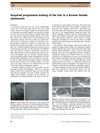
October 2012 in “The Journal of Dermatology” This letter to the editor describes a case of acquired progressive kinking of the hair in a Korean female adolescent, but no new research findings are reported.
 July 2025 in “Cermin Dunia Kedokteran”
 This study highlights nasopharyngeal carcinoma as the fourth most common cancer in Indonesia, noting that its etiology involves genetic and environmental factors, while early detection often utilizes serology and imaging, with diagnosis confirmed by biopsy and histopathology.
13 citations
,
March 1997 in “Research in Veterinary Science/Research in veterinary science” This study found that epithelial keratin K 6 is associated with hyperkeratotic and ulcerated changes in the gastric pars oesophagea of pigs, suggesting epithelial proliferation plays a role in ulcer development.
3 citations
,
August 2019 in “Medika Tadulako: Jurnal Ilmiah Kedokteran Fakultas Kedokteran dan Ilmu Kesehatan” In this study on New Zealand white rabbits, the researchers reported that a hair tonic formula combining bitter melon leaf and carrot extracts resulted in optimal hair growth, particularly at a 3:1 ratio and a concentration of 3%, without causing irritation.
175 citations
,
September 1998 in “British Journal of Dermatology” This study found that mutations in the K17 gene underlie both pachyonychia congenita type 2 and steatocystoma multiplex phenotypes, regardless of the specific mutation involved.
7 citations
,
April 2000 in “Mammalian Genome” This study identified a new mutation in SELH/Bc mice causing distinctive whisker and body hair abnormalities, mapped near the type I keratin cluster on chromosome 11.
50 citations
,
July 2008 in “British Journal of Dermatology”