 39 citations
,
January 2013 in “Indian Journal of Dermatology, Venereology and Leprology”
39 citations
,
January 2013 in “Indian Journal of Dermatology, Venereology and Leprology” This article discusses the role of growth hormone, insulin, and IGF-1 in acne development and highlights how diet and syndromic evidence support their involvement, but presents no new clinical findings.
 30 citations
,
December 2011 in “Journal of biological chemistry/The Journal of biological chemistry”
30 citations
,
December 2011 in “Journal of biological chemistry/The Journal of biological chemistry” This study found that serine 44 in the N-terminal head domain of keratin 17 is phosphorylated in response to various stimuli affecting skin keratinocyte growth, linking K17 up-regulation with growth and stress responses in skin epithelium.
 27 citations
,
September 2017 in “Journal of Medicinal Food”
27 citations
,
September 2017 in “Journal of Medicinal Food” In this study, researchers found that a polyphenolic extract from Annurca apples, high in procyanidin B2, increased hair growth, density, and keratin content in healthy subjects after 2 months of use, and stimulated keratin biosynthesis in vitro.
 21 citations
,
November 2011 in “The journal of investigative dermatology/Journal of investigative dermatology”
21 citations
,
November 2011 in “The journal of investigative dermatology/Journal of investigative dermatology” This study found that telogen, a resting phase of the hair follicle cycle, is characterized by dynamic gene expression, including enhanced cholesterol metabolism and immune signaling, suggesting it is an active regulatory phase despite its quiescent appearance.
 15 citations
,
January 1987 in “Electrophoresis”
15 citations
,
January 1987 in “Electrophoresis” This study found that electrophoretic keratin typing of head hair can identify specific polypeptide patterns, suggesting potential applications in genetic and forensic investigations.
 13 citations
,
December 2019 in “Nutrients”
13 citations
,
December 2019 in “Nutrients” In human follicular cells, this study found that an Annurca apple-based dietary supplement may stimulate the production of hair keratins, suggesting potential benefits for hair growth.
 11 citations
,
April 2020 in “Life sciences”
11 citations
,
April 2020 in “Life sciences” In this study, pantothenic acid at 20 μg/ml was observed to promote dermal papilla cell proliferation and migration, likely through up-regulation of ID3 and inhibition of Notch signaling.
 11 citations
,
January 1987 in “Electrophoresis”
11 citations
,
January 1987 in “Electrophoresis” This study found that keratin phenotypes were consistent across different types of hair from the same individual, allowing for successful keratin typing following ABH blood group determination.
 7 citations
,
April 2012 in “Biomolecular concepts”
7 citations
,
April 2012 in “Biomolecular concepts” This article reviews the role of keratins in epithelial function and structure, discussing their involvement in growth control, organelle functions, and pathomechanisms of disorders, but reports no new clinical results.
 6 citations
,
October 2012 in “Journal of Heredity”
6 citations
,
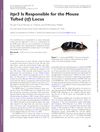
October 2012 in “Journal of Heredity” This study identified the Itpr3 gene as responsible for the tufted hair loss phenotype in the BTBR mouse strain.
 4 citations
,
October 2007 in “Dermatologic Clinics”
4 citations
,
October 2007 in “Dermatologic Clinics” This review discusses the roles of glucocorticoid and sex hormone receptors in the skin and their clinical importance, but reports no new research findings.
 2 citations
,
August 2013 in “British Journal of Dermatology”
2 citations
,
August 2013 in “British Journal of Dermatology” This case report observed a dramatic improvement in a 15-year-old girl's pachyonychia congenita symptoms during chemotherapy for Ewing sarcoma, suggesting chemotherapy's potential role in managing hyperkeratotic conditions.
 1 citations
,
November 2025 in “Clinical and Experimental Medicine”
1 citations
,
November 2025 in “Clinical and Experimental Medicine” This review highlights the emerging role of long non-coding RNAs (lncRNAs) in dermatology, suggesting that lncRNAs significantly impact signaling pathways involved in normal skin functions and skin diseases, offering potential as biomarkers and therapeutic targets.
 January 2025 in “Drug repurposing”
 This study reviewed 16 notable drug repurposing patent applications from 2025, highlighting potential new uses such as guanfacine for autonomic dysfunction and disulfiram for subarachnoid hemorrhage survival, though many disclosures lack peer-reviewed studies and no patents are granted.
 September 2023 in “Cureus”
 This study at B.J. Medical College and Civil Hospital highlighted an extensive range of nail disorders, with onychomycosis being the most common, and emphasized the importance of nails in diagnosing both dermatological and systemic conditions.
 June 2020 in “Nihon Ika Daigaku Igakkai Zasshi”
 This study found that aPKCλ, but not aPKCζ, plays a critical role in maintaining hair follicle stem cell populations and promoting wound healing in the epidermis.
 June 2020 in “Journal of Investigative Dermatology”
 This study observed that human primary adult hair matrix keratinocytes may have the potential to generate hair follicle organoids, suggesting possible applications in hair follicle neogenesis and preclinical hair growth agent screening.
 April 2017 in “Journal of Dermatological Science”
 In this study, both 2.5% benzoyl peroxide gel and 0.1% adapalene gel exhibited comedolytic effects on the spontaneous comedogenic rhino mouse model.
July 2021 in “Zurich Open Repository and Archive (University of Zurich)” This study provided new insights into the complex and heterogeneous architecture of keratin filaments, revealing their dynamic and flexible structure through cryo-electron microscopy analysis.
44 citations
,
August 1990 in “PubMed” This study provides evidence for K1 and K10 derivatives' presence in the inner root sheath and hair cuticle, suggesting that these hair follicle parts may follow familiar keratinization principles.
28 citations
,
March 1993 in “Journal of Cell Science” In this study, rabbit esophageal epithelial cells were found to produce K4 and K13 keratins in suprabasal cells, forming disulfide-crosslinked dimers that may support the physical stability of the esophageal lining.
 30 citations
,
April 2017 in “Journal of structural biology”
30 citations
,
April 2017 in “Journal of structural biology” This study suggests that human keratin fiber matrix has a well-defined nano-scale grainy structure rather than being amorphous, with grain size influenced by chemical treatments, temperature, humidity, and follicle-level factors.
24 citations
,
February 2002 in “The journal of investigative dermatology/Journal of investigative dermatology” In this study, researchers identified two new keratin-associated proteins, hKAP1.6 and hKAP1.7, in human hair follicles, contributing to understanding hair fiber differentiation.
November 2025 in “Journal of Clinical Practice and Medical Research” This study analyzed techniques to create the popular "sun-kissed" hair look on dark-to-medium blonde (Level 5–6) tones, concluding that a 2–3 level differential, targeted placement across three cranial zones, and acidic glossing are essential for optimal results.
 71 citations
,
August 2005 in “The journal of investigative dermatology. Symposium proceedings/The Journal of investigative dermatology symposium proceedings”
71 citations
,
August 2005 in “The journal of investigative dermatology. Symposium proceedings/The Journal of investigative dermatology symposium proceedings” This study revealed that human keratin-associated protein genes are expressed in specific patterns in hair fiber regions and vary in size, with some variations distinct across different populations.
 8 citations
,
January 2011 in “Organic and Biomolecular Chemistry”
8 citations
,
January 2011 in “Organic and Biomolecular Chemistry” Minoxidil reacts to nitrosation 7 times more than phenol, mainly due to its -NH₂ groups, leading to the creation of N-nitrosominoxidil.
 2 citations
,
February 2004 in “Biopolymers”
2 citations
,
February 2004 in “Biopolymers” This study found that 4-(4-Phenoxybenzoyl)benzoic acid derivatives may act as antioxidants by scavenging certain reactive oxygen species but exhibit prooxidant behavior under specific conditions.
 March 2016 in “National Repository of Dissertations in Serbia”
 This study found that dutasteride is more cost-effective compared to finasteride for treating benign prostatic hyperplasia in Montenegro, justifying its funding by the national health insurance fund.
35 citations
,
October 2002 in “Biochemical and Biophysical Research Communications” This study reports that K7 expression patterns observed in mice are similar to those in humans, revealing previously unreported expression in the gastrointestinal tract, tongue, and various "hard" epithelial tissues.
11 citations
,
May 2013 in “Journal of Investigative Dermatology” KRTAP10 proteins help form the hair shaft's tough outer layer by interacting with specific hair keratins.