 11 citations
,
July 2014 in “Gene”
11 citations
,
July 2014 in “Gene” This study reports a unique case of common variable immunodeficiency with autoimmunity linked to a heterozygous S250C variant in the autoimmune regulator gene, suggesting a potential molecular basis for this combination.
24 citations
,
October 2019 in “Genes” In this study, the identification of a novel KAP gene in sheep, named KRTAP36-1, was associated with increased prickle factor in wool, suggesting its potential as a genetic marker for breeding purposes.
June 2023 in “bioRxiv (Cold Spring Harbor Laboratory)” This study developed new immortalized keratinocyte cell lines lacking COL7A1 using CRISPR/Cas9 technology, providing a valuable model to explore the biology and treatment options for recessive dystrophic epidermolysis bullosa.
March 2026 in “Journal of Investigative Dermatology” 79 citations
,
June 1993 in “Molecular and Cellular Biology” This study found that as few as 90 base pairs of the K5 promoter directed keratinocyte-preferred expression in stratified epithelia, especially in epidermis, hair follicles, and tongue, showing cell type specificity.
3 citations
,
March 2019 in “European Journal of Dermatology” A specific gene mutation (Y449H in K10) was found in a patient with severe skin disorder.
24 citations
,
February 2011 in “The American journal of pathology” This study found that AIRE, a usually nuclear protein, is expressed in the cytoplasm of human epidermal and follicular keratinocytes and associates with the intermediate filament protein cytokeratin 17, potentially impacting ectodermal abnormalities in APECED syndrome.
3 citations
,
January 2005 in “Photochemistry and Photobiology” This study found that overexpression of PKCɛ in mouse epidermis increased sensitivity to metastatic squamous cell carcinoma, suggesting that a PKCɛ-mediated microenvironment may promote cancer development through specific cytokines like TNFα.
 March 2025 in “International Journal of Molecular Sciences”
 This study established a Krt24-CreERT2 mouse line targeting outer bulge hair follicle stem cells, finding these cells crucial for hair follicle development and repair, particularly following ionizing radiation exposure.
July 2024 in “Journal of Investigative Dermatology” 26 citations
,
February 1998 in “DNA and Cell Biology” This research identified that the constitutive and inducible expression of the Keratin 6 gene in transgenic mice skin is controlled by multiple regulatory elements spread throughout its 5' flanking region.
57 citations
,
July 2000 in “Toxicology Letters” This study found that the K6/ODC transgenic mouse model is highly sensitive to identifying genotoxic carcinogens, showing 100% concordance with traditional rodent bioassays.
28 citations
,
January 2005 in “Photochemistry and Photobiology” This study found that overexpression of PKCepsilon in mouse epidermis was associated with increased susceptibility to metastatic squamous cell carcinoma, potentially through a mechanism involving tumor necrosis factor-alpha.
 12 citations
,
June 2020 in “Frontiers in Cell and Developmental Biology”
12 citations
,
June 2020 in “Frontiers in Cell and Developmental Biology” This study found that the PP2A-B55α regulatory subunit is crucial for ectodermal development in mice, with knockout embryos displaying severe neural and epidermal defects and failing to survive to birth.
46 citations
,
November 1998 in “Experimental Cell Research” This study found that K15 is variably expressed in sheep and mouse hair follicles, with specific patterns suggesting a role in the early stages of keratinocyte differentiation.
51 citations
,
December 2006 in “Mammalian Genome”  April 2019 in “Journal of Investigative Dermatology”
 In this report, the potential connection between Merkel cell carcinoma and Curvularia lunata infection in an elderly patient is discussed, highlighting the need for precise diagnostic methods and suggesting that surgery combined with the antifungal voriconazole may be a viable treatment option.
 August 2025 in “BMC Pregnancy and Childbirth”
 In this study, prenatal ultrasonography was found to be a valuable tool for screening ectodermal dysplasia during pregnancy, and a new EDA gene variant associated with X-linked hypohidrotic ectodermal dysplasia was identified, aiding in more accurate diagnoses and reproductive decision-making.
April 1977 in “Pediatric Research” 11 citations
,
January 2021 in “British Journal of Dermatology” This report describes a new case of syndromic ichthyosis caused by compound heterozygous mutations in AP1B1, detailing the associated clinical features and molecular consequences in the patient.
4 citations
,
May 1998 in “PubMed” This study found that the Bsk phenotype in mice did not result from a recombination event between specific keratin genes, leaving the gene linked to this mutation unidentified.
46 citations
,
May 1995 in “Proceedings of the National Academy of Sciences” This study demonstrated that a specific 9-kbp fragment of the bovine keratin 6 gene effectively directs tissue-specific and inducible expression in transgenic mice, suggesting potential applications for targeted gene therapy in hyperproliferative skin conditions.
 2 citations
,
January 2011 in “Dental Medicine Research”
2 citations
,
January 2011 in “Dental Medicine Research” This study suggests that Keratin 6hf may be a potential marker of oral squamous cell carcinoma and could play a role in its progression, though further research is needed to understand its function.
101 citations
,
August 2001 in “The Journal of Cell Biology” This study found that while most mice lacking MK6a and MK6b genes died from tongue epithelium disintegration, about 25% survived and showed no hair or nail defects due to a newly discovered MK6hf gene.
22 citations
,
August 1999 in “Mechanisms of Development” This study identified two novel genes, pmg-1 and pmg-2, expressed in various skin and gland tissues and potentially involved in the differentiation of epithelial cells in epidermal appendages.
13 citations
,
August 1985 in “The Journal of Dermatology” This study identified a monoclonal antibody, HKN-2, that recognizes specific cells in human skin and may indicate a common antigenic determinant between hair and other skin epithelial tissues.
 35 citations
,
May 2008 in “Journal of Clinical Oncology”
35 citations
,
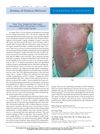
May 2008 in “Journal of Clinical Oncology” A cancer patient died from a severe skin reaction after taking the drug cetuximab.
December 2025 in “The Journal of Nutritional Biochemistry” This study found that kaempferol may stimulate hair growth in androgenetic alopecia by enhancing dermal papilla cell function and reducing dihydrotestosterone-induced damage, showing comparable efficacy to finasteride in a mouse model.
109 citations
,
February 2018 in “CB/Current biology” This study concluded that the receptor-like kinase ERULUS, regulated by auxin, is crucial for modulating cell wall composition and pectin dynamics during root hair growth in Arabidopsis.
1 citations
,
February 2021 in “Animal biotechnology” This study found that specific variants of the KAP6-1 gene in cashmere-producing goats were associated with changes in fiber diameter and length, suggesting potential as genetic markers for fiber improvement.