2 citations
,
September 2019 in “Neurology Neuroimmunology & Neuroinflammation” This case report describes a patient with autoimmune autonomic neuropathy associated with high-titer gAChR antibodies who developed selective pigmented hair loss during IV immunoglobulin treatment.
 1 citations
,
June 2025 in “Journal of Allergy and Clinical Immunology Global”
1 citations
,
June 2025 in “Journal of Allergy and Clinical Immunology Global” This study describes the case of a young boy with Netherton syndrome who showed significant improvements in skin inflammation, quality of life, and hair growth after receiving dupilumab, with a marked decrease in serum IgE levels observed following treatment.
 1 citations
,
April 2017 in “Journal of Dermatology and Dermatologic Surgery”
1 citations
,
April 2017 in “Journal of Dermatology and Dermatologic Surgery” This case report describes two patients who experienced significant hair growth after receiving intravenous immunoglobulin treatments, but it provides no new findings on using this treatment for androgenic alopecia.
In this case report, a 7-month-old boy with Netherton syndrome experienced significant improvement in symptoms, including reduced pruritus and increased hair growth, through a combination of intravenous immunoglobulin and dupilumab treatment, which also decreased high serum IgE levels and food-specific IgE antibodies.
 January 2025 in “Frontiers in Immunology”
 This case report details a rare instance of a young male with coexisting autoimmune polyendocrine syndrome type 2 and anti-GAD65 antibody-associated stiff person syndrome, where symptoms improved by adding intravenous immunoglobulin therapy, emphasizing the importance of awareness for early diagnosis and treatment.
 129 citations
,
November 2005 in “Internal Medicine Journal”
129 citations
,
November 2005 in “Internal Medicine Journal” This article reviews the recognition and management of Staphylococcus aureus toxin-mediated diseases, but it does not present new research findings.
 46 citations
,
June 2018 in “American Journal of Clinical Dermatology”
46 citations
,
June 2018 in “American Journal of Clinical Dermatology” This review summarizes the clinical, trichoscopic, and histopathological features of alopecia types associated with cutaneous and systemic lupus erythematosus and explores their links to disease activity, but it reports no new clinical results.
 35 citations
,
May 2008 in “Journal of Clinical Oncology”
35 citations
,
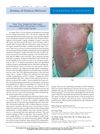
May 2008 in “Journal of Clinical Oncology” A cancer patient died from a severe skin reaction after taking the drug cetuximab.
13 citations
,
September 2009 in “Heart & Lung” This case study reports the first known instance of adult Kawasaki's disease presenting with highly elevated serum ferritin levels and splenomegaly, emphasizing its consideration in differential diagnoses for adults with persistent rash, fever, and specific clinical features.
13 citations
,
October 2003 in “Clinical pediatrics” In this case report, a 14-year-old boy with Satoyoshi syndrome did not improve with intravenous immunoglobulin but responded dramatically to steroid treatment.
 9 citations
,
August 2002 in “Current Opinion in Pediatrics”
9 citations
,
August 2002 in “Current Opinion in Pediatrics” This article discusses the roles of pediatrics and dermatology departments at Yale University School of Medicine, but reports no specific clinical results.
7 citations
,
September 2021 in “Dermatologic Therapy” This review summarizes treatments for scalp involvement in dermatomyositis and suggests that therapies like low-dose naltrexone and platelet-rich plasma may warrant further investigation, although evidence remains limited.
 5 citations
,
July 1991 in “Irish Journal of Medical Science (1971 -)”
5 citations
,
July 1991 in “Irish Journal of Medical Science (1971 -)” Immunosuppressive therapy helps manage autoimmune diseases but carries risks like infection and potential for malignancy.
3 citations
,
November 2022 in “The Egyptian Rheumatologist” This case report describes a rare instance where a young woman initially presented with macrophage activation syndrome as the first sign of systemic lupus erythematosus, and ultimately experienced multiorgan failure and death.
3 citations
,
April 2019 in “Journal of the Endocrine Society” This case report describes a rare instance of Satoyoshi syndrome in a 27-year-old Asian American woman, notable for her normal ovarian function despite typical syndrome features.
 2 citations
,
September 2011 in “Pediatric Dermatology”
2 citations
,
September 2011 in “Pediatric Dermatology” This case report describes the first observed association between alopecia areata and Kawasaki disease in a 10-year-old boy, suggesting a possible link that merits further investigation.
1 citations
,
April 2024 in “Indian Journal of Pharmacy Practice” This source discusses autoimmune disorders, noting that the presence of autoantibodies can precede disease development, especially in genetically predisposed individuals, with various triggers like vitamin D deficiency and UV exposure potentially influencing onset and severity.
 1 citations
,
January 2014 in “Rinsho Shinkeigaku”
1 citations
,
January 2014 in “Rinsho Shinkeigaku” This case report suggests an immunological link between multifocal acquired demyelinating sensory and motor neuropathy and alopecia, with both conditions improving after treatment with intravenous immunoglobulin.
 1 citations
,
June 2001 in “Annals of Internal Medicine”
1 citations
,
June 2001 in “Annals of Internal Medicine” This letter critiques a review of distant healing studies, highlighting significant methodological issues and limited evidence for its efficacy.
November 2025 in “Practical Neurology” In this case report, a 31-year-old woman with severe multisystem lupus vasculitis initially presented with generalized pain and rapidly worsening neuropathy, ultimately improving with cyclophosphamide and prednisolone treatment. The authors highlight diagnostic challenges, particularly in interpreting autoantibody results after IVIG therapy.
August 2025 in “Romanian Journal of Rheumatology” In this case report, researchers described a 16-year-old girl with severe systemic lupus erythematosus whose symptoms improved following treatment with steroids, intravenous immunoglobulin, and rituximab, highlighting that early diagnosis and treatment may lead to better outcomes in managing SLE.
 October 2024 in “Journal of the Endocrine Society”
 In this case report, a 40-year-old woman with systemic lupus erythematosus developed Type B Insulin Resistance Syndrome, characterized by severe hyperglycemia despite high insulin doses, requiring immunosuppressive therapy to manage refractory symptoms.
 August 2023 in “Rheumatology”
 In this case report, researchers describe a 17-year-old African male with an overlapping condition of juvenile dermatomyositis and systemic scleroderma, highlighting the importance of thorough history-taking and physical examination for accurate diagnosis and suggesting early referral to a pediatric rheumatologist to prevent severe outcomes.
March 2023 in “International Journal of Dermatology” This case report identifies a 51-year-old woman whose nonpruritic urticated rash was an initial presentation of systemic lupus erythematosus, highlighting the importance of comprehensive serological evaluation and biopsy for accurate diagnosis.
 January 2023 in “Indian dermatology online journal”
 This case study describes a previously unknown association of the PIBIDS complex with autoimmune thyroiditis and autoimmune hemolytic anemia in a five-year-old Indian child.
August 2022 in “Brain and Development” In this case report, a nine-year-old girl with both chronic inflammatory demyelinating polyneuropathy and alopecia universalis showed improvement in muscle weakness and hair loss after treatment with intravenous immunoglobulin and corticosteroids.
May 2022 in “CRC Press eBooks” This narrative review discusses various impacts and management strategies for skin disease but reports no new clinical findings.
 May 2021 in “Journal of the American College of Cardiology”
 This case report suggests that Kawasaki disease should be considered in the differential diagnosis for children presenting with alopecia following a febrile illness with mucositis and conjunctivitis.
 March 2020 in “Poster presentations”
 This case report describes a patient with unrecognized systemic lupus erythematosus, who experienced myocarditis, polyneuropathy, and pericarditis, and recovered following cardiac support and medication.
November 2019 in “Harper's Textbook of Pediatric Dermatology” This article reviews Netherton syndrome, focusing on its genetic basis, clinical presentation, and treatment options, and reports no clinical results; the authors mention potential benefits of targeted therapies and gene therapy.