8 citations
,
December 2024 in “Frontiers in Medicine” In this study, different treatments on ex vivo skin models effectively simulated varying levels of skin damage, demonstrating the value of these models in testing skin repair products and studying how a compromised skin barrier affects viral penetration.
8 citations
,
June 2024 in “Pharmaceutics” This study found that using elastic nano-liposomes to deliver palmitoylethanolamide improved its transdermal delivery and enhanced its skincare effects, with minimal cytotoxicity and no allergic reactions observed.
 6 citations
,
May 2020 in “Nutrients”
6 citations
,
May 2020 in “Nutrients” This review discusses the effects of calorie restriction on skin aging, highlighting its potential to benefit skin health by reducing age-related and photo-induced changes, although the impact of certain diets remains unexplored.
1 citations
,
October 2025 in “Beni-Suef University Journal of Basic and Applied Sciences” This study reviews lipid-based nanocosmeceuticals and reports that they enhance therapeutic effectiveness in dermatological applications by improving skin hydration, reducing wrinkles, and effectively managing conditions like psoriasis and eczema, though further large-scale trials and regulatory alignment are needed for clinical use.
 June 2026 in “Preprints.org”
 This review examines the mechanisms behind pathological scarring like hypertrophic scars and keloids, highlights the limitations of current treatments, and suggests that biomaterial-enabled delivery of anti-fibrotic statins, such as atorvastatin, may offer a promising therapeutic avenue for managing these scars.
 April 2026 in “Cosmetics”
 In this review, several studies on Astragalus species, particularly Astragalus membranaceus, highlight their skin rejuvenating, photoprotective, antimicrobial, and wound-healing properties, though the authors note limitations due to reliance on non-human studies and short trial durations.
January 2026 in “Pharmaceutics” This review highlighted recent advances in nanocarrier-based topical delivery systems for skincare, emphasizing their potential to enhance ingredient stability, penetration, and targeted release while addressing specific pathophysiological skin concerns.
January 2026 in “Dermatologic Therapy” In this prospective study, individuals with androgenetic alopecia using a home-use low-level laser therapy helmet for 48 weeks experienced significant increases in hair density and thickness, with reported improvements consistent across sexes and no device-related adverse events.
88 citations
,
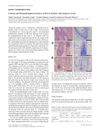
April 2012 in “Journal of Investigative Dermatology” This study suggests that TRPV3 may play a key role in dry skin-related itch, indicating potential for TRPV3 antagonists in treating pruritus resistant to histamine H1R antagonists.
 4 citations
,
January 2013 in “Acta dermato-venereologica”
4 citations
,
January 2013 in “Acta dermato-venereologica” Some patients with Alopecia Areata experience itch due to immune cells and enzymes that cause itching.
1 citations
,
October 2019 This study found that skin-infiltrating neutrophils play a crucial role in triggering chronic itch in atopic dermatitis by promoting skin hyperinnervation and enhanced expression of itch signaling molecules in a mouse model.
1 citations
,
June 2017 in “The journal of investigative dermatology/Journal of investigative dermatology” This symposium discussed recent advances in understanding skin as a sensory organ, emphasizing the interactions between itch, pain, and touch pathways and highlighting potential therapeutic targets.
December 2025 in “Molecular Pain” This study identified that the MC-5-HT-HTR2A axis plays a role in chronic pruritus in a mouse model of SADBE-induced allergic contact dermatitis, suggesting potential for therapeutic targeting.
November 2025 in “Journal of Investigative Dermatology” Keloid fibroblasts cause itch and pain by releasing more histamine.
 April 2023 in “The journal of investigative dermatology/Journal of investigative dermatology”
 This study suggests that structural changes in the TRPV3 channel are linked to severe skin conditions like Olmsted syndrome, with differences observed between heat-activated and resting states.
This study found that neutrophils are crucial for initiating chronic itch in atopic dermatitis and suggest that targeting neutrophils may help alleviate symptoms in this condition.
 April 2019 in “The journal of investigative dermatology/Journal of investigative dermatology”
 This study found that keloids significantly impair quality of life, with pain and itch being major contributors to this impact, comparable to other chronic dermatologic conditions.
 April 2017 in “The journal of investigative dermatology/Journal of investigative dermatology”
 This study observed that mice lacking epidermal HSD11b1 had increased non-histaminergic itch and changes in skin nerve fibers, potentially linked to higher TSLP expression.
 May 2011 in “Value in Health”
 This study found that the oral Janus kinase inhibitor CP-690,550 has a direct effect on reducing pruritus in patients with psoriasis, independent of clinician-assessed improvements in psoriasis severity.
This study found that subcutaneous administration of Botulinum toxin type A significantly reduced histamine-induced itch intensity and neurogenic inflammation in human skin compared to saline.
 March 2005 in “Journal of The American Academy of Dermatology”
 Itch is a common symptom in patients with chronic venous insufficiency, often accompanied by burning and pain.
September 2024 in “Journal of the American Academy of Dermatology” Dermocosmetics significantly reduce itch and skin sensitivity in atopic dermatitis patients.
November 2025 in “Journal of Investigative Dermatology” 1 citations
,
November 2023 in “Indian Dermatology Online Journal” This case report describes post herpetic itch leading to frictional alopecia of the eyebrows and scalp due to frequent rubbing caused by neuropathic itch.
 April 2026 in “bioRxiv (Cold Spring Harbor Laboratory)”
 This study found that distinct neurons in the nucleus accumbens lateral shell regulate scratching behavior differently; D1R neurons promote scratching while D2R neurons help stop it, with elevated dopamine levels during chronic itch potentially enhancing persistent scratching.
February 2016 in “Journal of Allergy and Clinical Immunology” This report highlights a case of disseminated and recurrent infundibulofolliculitis in a 45-year-old African American male and underscores the importance of performing a skin biopsy for diagnosis.
 2 citations
,
January 2017 in “PubMed”
2 citations
,
January 2017 in “PubMed” This case report describes a 22-year-old male with hair casts on scalp and body hair, associated with androgenetic alopecia, also affecting his sister as pseudonits.
September 2023 in “Journal of the American Academy of Dermatology” This study found that in participants with notalgia paresthetica, 8 weeks of treatment with difelikefalin significantly improved itch intensity and increased the rate of strict complete response compared to placebo, starting as early as week 3.
 July 2022 in “Dermatology practical & conceptual”
 This study found that a topical henna formulation may improve symptoms like itching, burning, and redness in patients with recessive dystrophic epidermolysis bullosa, but larger controlled studies are needed.
 January 1978 in “Yukagaku”
 This study found that using a zinc pyrithione-containing hair rinse significantly reduced dandruff and itching, with effects linked to the amount of zinc pyrithione residue on the hair.