October 2025 in “Journal of the Endocrine Society” This case study reported that a 40-year-old woman with Graves' disease developed severe thrombocytopenia after starting methimazole, suggesting a rare but serious risk of methimazole-induced immune thrombocytopenia and underscoring the need for close monitoring.
April 2025 in “Cermin Dunia Kedokteran” This review on Graves' disease explains its major role in causing hyperthyroidism, details genetic, environmental, and immunological risk factors, diagnoses, treatment options like anti-thyroid medications, and highlights potential complications such as ophthalmopathy and cardiovascular issues, noting prognosis varies by age.
 October 2024 in “Journal of the Endocrine Society”
 This case report discusses a Korean woman who experienced recurrent episodes of painless thyroiditis over 22 years, highlighting the challenges in management due to a lack of established guidelines.
October 2024 in “Journal of the Endocrine Society” This case report highlights that a patient with resistance to thyroid hormone was misdiagnosed as having Graves’ disease, leading to unnecessary radioactive iodine treatment.
 January 2024 in “Journal of cutaneous and aesthetic surgery”
 In this clinical case report, a 10-year-old girl developed acute hair matting three weeks after scalp trauma and frequent povidone-iodine use, suggesting that scalp injuries and antiseptic overuse can be risk factors for this condition, especially when hair care is poor.
 May 2023 in “bioRxiv (Cold Spring Harbor Laboratory)”
 This study found that Cannabidivarin (CBDV) promotes neuronal survival, proliferation, and differentiation via TRPV1 activation but inhibits oligodendrocyte differentiation in postnatal neurogenesis.
 January 2021 in “Journal of Entomology and Zoology Studies”
 This case report describes the effective treatment of psoroptic mange in Large White Yorkshire piglets using ivermectin, cefpodoxime, chlorpheniramine, povidone iodine, and Ascabiol lotion, resulting in full recovery and absence of mites.
This article discusses the health care process for patients with hyperthyroidism, emphasizing the critical role of nurses in educating patients and their families, but reports no new clinical findings.
 April 2020 in “Journal of the Endocrine Society”
 This case report describes the first known instance of a patient with myotonic dystrophy presenting with type I diabetes, Hashimoto’s thyroiditis, and follicular variant papillary thyroid cancer, suggesting a potential link between these conditions.
 April 2016 in “Journal of Investigative Dermatology”
 This study found that administering botulinum toxin A via Flex-PADs to mouse footpads inhibited sweating similarly to traditional injections, suggesting a promising patient-friendly delivery method for hyperhidrosis treatment.
 March 2016 in “Indian Journal Of Applied Research”
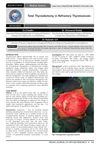
 This report presents a case of refractory thyrotoxicosis where the patient required a total thyroidectomy after resistance to conventional treatments including antithyroid drugs and radioactive iodine.
January 2016 in “Elsevier eBooks” This article discusses dermatophycosis, a fungal infection affecting various animals, and outlines its transmission, diagnosis, treatment, and prevention methods, but reports no new research findings.
 January 2016 in “Frontiers in Bioengineering and Biotechnology”
 This study observed that in a mouse wound model, honey significantly accelerated wound healing when compared to povidone-iodine treatment, suggesting its potential regenerative benefits.
This chapter reviews various fungal zoonoses, including dermatophytoses and trichophytosis, and reports no new empirical findings.
This review reports no new results and discusses various topical treatments, noting that fluocortin butyl ester offers anti-inflammatory effects without systemic side effects, while combinations outperform single-agent therapies in managing hyperpigmentation.
November 2022 in “Journal of the Endocrine Society” This case study suggests that marijuana use may be associated with low TSH levels without causing thyroid dysfunction in humans.
 January 2022 in “Current Enzyme Inhibition”
 This study found that two novel nonsteroidal derivatives inhibited specific enzymes in vitro and in vivo, leading to dihydrotestosterone accumulation in androgen-dependent glands, suggesting potential therapeutic use for mood improvement in the elderly.
17 citations
,
September 1953 in “Journal of Cell Science” This study found that the tetrazolium salt INT is the most effective for revealing dehydrogenase activity and certain histological structures in sheep and other mammals' skin.
15 citations
,
July 1968 in “JAMA” This letter describes a case where severe pruritus without visible skin disease was a presenting symptom of hyperthyroidism in a 43-year-old woman, highlighting a less common association with the condition.
11 citations
,
July 1968 in “JAMA” This letter describes a case where a 43-year-old woman experienced severe itching as the presenting symptom of hyperthyroidism, alongside hair loss and other hyperthyroid features.
 October 2024 in “Journal of the Endocrine Society”
 This case report describes a rare conversion from Hashimoto's thyroiditis to Graves' disease in a 23-year-old male, requiring a shift from levothyroxine to methimazole and eventually radioactive iodine therapy.
 January 2012 in “Yearbook of Dermatology and Dermatologic Surgery”
 Electric current quickly reduces hand sweating but the effect doesn't last long.
December 1951 in “Journal of the American Medical Association” This article reports a case of hair loss and pigmentation changes in a man after using propylthiouracil alongside iodine solution for thyroid and diabetic conditions, providing clinical observations without broader conclusions.
11 citations
,
July 1984 in “Australian Veterinary Journal” This study found that povidone iodine, thiabendazole ointment, captan ointment, and Burroughs Wellcome Ringworm Ointment were effective against Trichophyton equinum var. autotrophicum in horses, but large-scale use may be limited by practicality and cost.
January 2005 in “Zhonghua xingwei yixue yu naokexue zazhi” This study found that long-term selenium and iodine deficiencies in rats led to growth delays and abnormal neural behavior by the fourth generation.
April 1946 in “Archives of Dermatology” This report describes two cases of tinea capitis: one resistant to local iodine treatment after partial improvement, and another cured with the same treatment, in African American and Caucasian children, respectively.
January 2026 in “Advances in health and disease” This collection of research papers details a range of health topics, including iodine's essential role across biological kingdoms, holistic health factors, advances in pediatric practice, the complexity of sinus septa in medical procedures, and innovative delivery methods for treating hair loss with nanostructured lipid carriers.
August 2011 in “Journal of the Chinese Medical Association” This paper discusses radiation exposure management following the Fukushima nuclear disaster, emphasizing stable iodine prophylaxis for high-risk populations and the need for public education, without presenting new clinical findings.
13 citations
,
January 2014 in “Journal of Veterinary Internal Medicine” This case study reports an instance of adult-onset primary hypothyroidism with goiter in a cat, suggesting potential causes such as dietary iodine imbalance, chronic exposure to thyrotoxic substances, or a congenital form with late manifestation.
2 citations
,
April 2023 in “PubMed” In this study, researchers in Basrah, Iraq, observed that iodine deficiency in cross-breed goat kids led to goiter, slow growth, and various biochemical changes, including increased TSH and hypercholesterolemia, suggesting the need for improved maternal diet to reduce these issues and associated mortality risks.