 1 citations
,
December 2022 in “Parasitologists United Journal”
1 citations
,
December 2022 in “Parasitologists United Journal” This study observed that M. domestica larva-derived chitosan and gut extracts enhanced wound healing and collagen deposition in both immunocompetent and immunosuppressed mice, indicating potential benefits for combined therapy.
 1 citations
,
July 2020 in “bioRxiv (Cold Spring Harbor Laboratory)”
1 citations
,
July 2020 in “bioRxiv (Cold Spring Harbor Laboratory)” This study found that centrosome ablation in developing epidermis triggers cell surveillance pathways, resulting in thinner skin and halted hair follicle growth, while later stages of epidermal growth may operate independently of basal progenitor division orientation.
 1 citations
,
October 2018 in “Bioscience reports”
1 citations
,
October 2018 in “Bioscience reports” This study suggests that Annexin A2 isoform 2 might play a role in regulating the proliferation and growth of dermal papilla cells, potentially impacting the hair follicle growth cycle.
 1 citations
,
November 2015
1 citations
,
November 2015 This study observed that human dental pulp stem cells can differentiate into adipocytes and osteocytes, but their potential for neural differentiation remains uncertain due to similar responses seen in undifferentiated cells.
 March 2026 in “Dermatology and Therapy”
 This study identified distinct plasma miRNA profiles in alopecia areata that may aid in diagnosis and therapy, but further validation is needed to confirm these exploratory findings.
 December 2025 in “Italian Journal of Anatomy and Embryology”
 This narrative literature review examined how linking embryonic development with non-genetic skin anomalies can improve diagnostic accuracy, guide prenatal counseling, and enrich dermatology education by revealing specific vulnerabilities in skin morphogenesis and supporting advances in regenerative medicine.

In this study, researchers developed a mathematical model of outer hair cell hair bundles that replicates experimental responses to mechanical stimuli, providing insights into the stimulus-dependent adaptation mechanisms and the functional significance of their three-row stereocilia configuration in mammalian hearing.

This study found that direct co-culture of human bone marrow-derived mesenchymal stromal cells with regulatory T cells enhanced osteogenic gene expression, alkaline phosphatase activity, and matrix mineralization, suggesting Treg's potential in promoting bone regeneration by modulating BMSC mechanobiology through the ROCK-myosin signaling pathway.
 January 2026 in “Journal of Biomedical Research”
 This review discusses the potential of small extracellular vesicles (sEVs) as next-generation therapeutics, noting their ability to overcome biological barriers and modulate cellular environments for various diseases.
 November 2025 in “Journal of Pharmaceutical Research International”
 This study reviewed 18 studies on the effects of ustekinumab and vedolizumab on alopecia in ulcerative colitis patients, finding varied outcomes ranging from significant hair regrowth to increased hair loss, with 65.5% experiencing regrowth and potential therapy benefits needing further exploration in larger trials.

In this study assessing post-menopausal Asian women, distinct shifts in Malassezia species prevalence on the skin were linked to increased inflammation and impaired skin barrier function, potentially driving disorders like psoriasis and seborrheic dermatitis.

This study found that culturing fibroblasts on stiffer substrates mimicking fibrotic wounds led to an aligned EDA fibronectin matrix with thinner fibers and decreased YAP activity, suggesting disrupted signaling that might be restored to promote regenerative wound repair.
 January 2024 in “bioRxiv (Cold Spring Harbor Laboratory)”
 In this study, the researchers found that deleting ceramide synthase 4 in the skin's epidermis alters stem cell differentiation, disrupting hair follicle structure and barrier function, potentially leading to immune responses similar to atopic dermatitis.
 November 2023 in “bioRxiv (Cold Spring Harbor Laboratory)”
 This study used a novel fluorescent tagging method in mice to observe collagen IV dynamics during hair follicle development, revealing that alterations in basement membrane turnover can influence epithelial progenitor cell behavior and organ morphology by affecting cell proliferation and movement.
 September 2023 in “bioRxiv (Cold Spring Harbor Laboratory)”
 This study describes the use of a genetically engineered mouse model, mTurquoise2-Col4a1, to fluorescently label collagen IV and observe basement membrane dynamics during skin development, revealing its stability and pliability during rapid growth phases.
 November 2022 in “bioRxiv (Cold Spring Harbor Laboratory)”
 This study found that conditional deletion of Mof in mice resulted in severe defects in skin development, including compromised epidermal differentiation and hair growth, leading to perinatal lethality.
 June 2021 in “Research Square (Research Square)”
 This article reviews current research on epidermal stem cells and differentiation, presenting models of basal layer composition, but reports no new experimental findings.
 June 2021 in “bioRxiv (Cold Spring Harbor Laboratory)”
 This research found that the microtubule catastrophe factor KIF18B plays a crucial role in promoting spindle orientation in keratinocytes, linking this process to cell fate decisions during hair follicle morphogenesis.
 February 2019 in “bioRxiv (Cold Spring Harbor Laboratory)”
 This study found that Prss53-mutated rabbits exhibited curved hair and skeletal dyskinesia, suggesting a link between Prss53 loss and these traits, potentially involving disrupted calcium metabolism.

This research found that keratin hydrogels derived from human hair may support cell viability and proliferation, indicating potential as 2D and 3D soft tissue culture scaffolds.
 January 2012 in “Durham e-Theses (Durham University)”
 This study found that knock-down of keratin 15 in various cell lines affected cell spreading, morphology, migration, differentiation, and proliferation, suggesting its role in maintaining the stem cell nature of keratinocytes.
 165 citations
,
January 2014 in “Dermatology Research and Practice”
165 citations
,
January 2014 in “Dermatology Research and Practice” This review discusses the various dermatological applications of zinc, including its use in treating infections, inflammatory dermatoses, pigmentary disorders, and neoplasias, and reports no new clinical findings.
 38 citations
,
January 2016 in “Cell Death and Disease”
38 citations
,
January 2016 in “Cell Death and Disease” This review discusses the role of the TCL1 transgenic mouse model in understanding chronic lymphocytic leukemia biology and highlights the importance of exploring new pathogenetic and therapeutic targets.
 9 citations
,
July 2002 in “Journal of the European Academy of Dermatology and Venereology”
9 citations
,
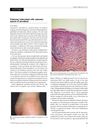
July 2002 in “Journal of the European Academy of Dermatology and Venereology” This article discusses multiple minute digitate hyperkeratosis in a dermatological context and reports no new clinical findings; the authors focus on a descriptive review.
 5 citations
,
January 2012 in “Journal of Tissue Science & Engineering”
5 citations
,
January 2012 in “Journal of Tissue Science & Engineering” In this study, collagen I decellularized scaffolds enhanced the growth and melanotic properties of hair follicle melanocytes, suggesting their potential as effective carriers for transplantation in vitiligo treatment.
 4 citations
,
April 2002 in “Medical Hypotheses”
4 citations
,
April 2002 in “Medical Hypotheses” Hormones cause hair loss by affecting cell growth and weakening cell attraction.
 3 citations
,
March 2017 in “International journal of women’s dermatology”
3 citations
,
March 2017 in “International journal of women’s dermatology” This review discusses genetic skin diseases in humans and animals, offering a resource for memorization and exploring animal models' role in understanding human disease mechanisms; it reports no new clinical results.
 1 citations
,
April 2026 in “Cancer Nanotechnology”
1 citations
,
April 2026 in “Cancer Nanotechnology” This review examines nanozymes as promising tools for cancer diagnosis and therapy due to their enzyme-mimicking catalytic properties and highlights their challenges, including biosafety and clinical translation, alongside potential improvements through biomimetic designs, particularly utilizing exosome-based strategies for targeted delivery to tumors.
 1 citations
,
January 2009 in “Elsevier eBooks”
1 citations
,
January 2009 in “Elsevier eBooks” This chapter provides an overview of skin physiology, aging effects, and how environmental factors like UV damage impact skin health, without presenting new research findings.

This study found that certain dietary changes, such as a low glycemic load diet for men and specific supplements for women, may improve acne, while chocolate, whey proteins, and dairy products are linked to worsened symptoms in both genders.