May 2025 in “OPAL (Open@LaTrobe) (La Trobe University)” This study found that tofacitinib may inhibit CD8+ T cell infiltration in alopecia areata by affecting the linoleic acid metabolism-Mg2+ pathway in a sodium sulfide-induced mouse model, highlighting new insights for clinical diagnosis and treatment strategies.
24 citations
,
June 2015 in “Journal of Investigative Dermatology” This study observed that epidermal-specific deletion of aPKCλ in mice disrupts hair follicle stem cell quiescence, leading to altered hair follicle cycling and skin anomalies.
July 2021 in “Plastic and reconstructive surgery. Global open” This study identified specific genes involved in radiation-induced fibrosis in skin, capsule, and muscle tissues of breast cancer patients, offering insights that may help improve mitigation strategies for these side effects.
 November 2022 in “The journal of investigative dermatology/Journal of investigative dermatology”
 This study found that Imaging Mass Cytometry effectively visualizes multiple biomarkers in alopecia areata, enhancing analysis of immune cell and tissue interactions in hair pathology.
 44 citations
,
October 2017 in “Scientific Reports”
44 citations
,
October 2017 in “Scientific Reports” This study found that far-infrared radiation preconditioning significantly enhanced the proliferation, survival, and migration of bone marrow-derived stem cells in vitro, indicating potential therapeutic benefits for cardiac ischemia treatment.
December 2012 in “http://isrctn.org/>” 3 citations
,
July 2025 in “Acta Biomaterialia” In this study, AFM-based indentation was used to assess mechanical properties of murine skin wounds at two healing stages, revealing that early wounds exhibit stiffer hyperproliferative epithelium compared to granulation tissue, and highlighting significant influences of surface roughness on tissue stiffness measurements.
 5 citations
,
January 2021 in “iScience”
5 citations
,
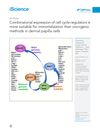
January 2021 in “iScience” Using a combination of specific cell cycle regulators is better for safely keeping hair root cells alive indefinitely compared to cancer-related methods.
 April 2023 in “The journal of investigative dermatology/Journal of investigative dermatology”
 This study reported that in mouse models, deletion of EGFR resulted in stem cell hyper-proliferation followed by apoptosis, leading to scarring alopecia, and implicated EGFR's role in maintaining hair follicle quiescence and immune privilege during inflammation.
April 2019 in “Journal of Investigative Dermatology” This study found that blocking LFA-1 signaling completely prevented the development of alopecia areata in C3H/HeJ mice, suggesting that LFA-1 plays a crucial role in the disease's pathogenesis and could be a target for new therapies.
April 2019 in “Journal of Investigative Dermatology” Targeting immune pathways like JAK/STAT may help treat frontal fibrosing alopecia.
86 citations
,
December 2002 in “Tissue Antigens” In this study, researchers found that the AIRE G961C variant is a significant risk factor for severe alopecia areata and early-onset cases, particularly in patients with alopecia universalis.
 28 citations
,
December 2017 in “Journal of Investigative Dermatology Symposium Proceedings”
28 citations
,
December 2017 in “Journal of Investigative Dermatology Symposium Proceedings” This review summarizes findings on the long-term use of tofacitinib for severe alopecia areata, reporting its potential as a promising treatment option.
May 2025 in “OPAL (Open@LaTrobe) (La Trobe University)” The researchers reported that in a mouse model of alopecia areata, tofacitinib treatment influenced disease progression by modulating CD8+ T cell infiltration through the linoleic acid metabolism and magnesium ion pathway, offering insights into potential treatment approaches.
July 2026 in “Journal of the American Academy of Dermatology”  December 2023 in “Journal of Ayub Medical College Abbottabad”
 In this study, Ritlecitinib was reported as a newly approved treatment for alopecia areata that can be used in patients aged 12 and older; after 24 weeks, it resulted in 80% or more scalp hair coverage in treated patients compared to a placebo.
April 2021 in “Journal of Investigative Dermatology”  September 2019 in “The journal of investigative dermatology/Journal of investigative dermatology”
 In this study, the researchers observed that post-radiation hair follicle repair in 3D architecture occurs through independent, long-range cell movements along the basal surface, resembling 2D healing processes.
83 citations
,
June 2017 in “Journal of the American Academy of Dermatology” This study observed that most pediatric patients with alopecia areata experienced some hair regrowth after treatment with topical JAK inhibitors, and the formulations were generally well-tolerated with mild lab abnormalities in some cases.
12 citations
,
May 2010 in “Journal of Clinical Oncology” This study found that MK-5108 is well tolerated at high doses as monotherapy in cancer patients, showing stable disease and some antitumor activity, particularly in combination with docetaxel.
 April 2023 in “The journal of investigative dermatology/Journal of investigative dermatology”
 This study found that HPV8-induced actinic keratoses may mechanistically involve Lrig1+ hair follicle keratinocyte stem cells, with the E6 gene promoting downstream STAT3 activity in a mouse model.
 January 2025 in “bioRxiv (Cold Spring Harbor Laboratory)”
 This study identifies Armadillo Repeat Only proteins as crucial regulators of plant CNGC channels, influencing various plant functions and showcasing a unique plant-specific role in Ca2+ signaling.
 April 2026 in “Inflammation and Regeneration”
 This study found that androgen inactivation pathways in scalp sebaceous glands change with age, specifically noting that AKR1C expression, including AKR1C4 previously thought liver-specific, declines with age and is sex dependent, which could impact hair follicle health during aging.
3 citations
,
January 2011 in “Yearbook of Dermatology and Dermatologic Surgery” 11 citations
,
October 2024 in “Cell Death Discovery” In this study on mice with severe thermal skin burns, researchers found that administering 4-aminopyridine (4-AP) helped reduce inflammation and apoptosis, promoted angiogenesis, and accelerated wound healing by enhancing specific cellular behaviors and signaling pathways.
 April 2016 in “Journal of Investigative Dermatology”
 This study found that disrupting Sdf1-Cxcr4 signaling promoted tissue regeneration in wild-type mice, hinting at potential strategies to induce such regeneration in mammals.
43 citations
,
December 2006 in “The American journal of pathology” This study found that Edar signaling plays a role in regulating the hair cycle and apoptosis in hair follicle keratinocytes during the catagen phase in mice.
August 2021 in “Journal of Investigative Dermatology” This study found that ILC1-like cells can induce alopecia areata in healthy human hair follicles, suggesting that these cells might be a therapeutic target in AA management.

This study found that sFRP4 inhibits but does not block hair follicle regeneration in mice, suggesting a potential role in treating hair follicle regeneration disorders.
April 2016 in “The journal of investigative dermatology/Journal of investigative dermatology” This study demonstrated that the Alopecia Areata Disease Activity Index (ALADIN), a new biomarker, strongly correlates with treatment response in patients using JAK inhibitors for alopecia areata.