 70 citations
,
February 2017 in “Dermatologic Surgery”
70 citations
,
February 2017 in “Dermatologic Surgery” This study reports that plasma rich in growth factors appeared to improve hair follicle regeneration and patient satisfaction in individuals with androgenetic alopecia, though further trials are needed.
31 citations
,
December 2023 in “Middle East Fertility Society Journal” This review discusses the relationship between polycystic ovary syndrome and inflammation, highlighting various inflammatory markers, but reports no new clinical results.
 3 citations
,
August 2024
3 citations
,
August 2024 In this study, researchers using single nuclei RNA-sequencing found that fibroblasts in deeper layers of mouse skin expressed higher levels of pro-inflammatory genes post-wounding compared to other cells, highlighting their significant role in early inflammation and tissue repair processes.
2 citations
,
June 2023 in “PeerJ” This review discusses how chronic inflammation can lead to persistent stem cell activation and DNA damage, ultimately promoting cancer development and metastasis, but reports no new results.
1 citations
,
August 2025 in “Frontiers in Bioengineering and Biotechnology” This study found that a 3D wound model, the 3DWoundSE, showed improved responsiveness to injury and cytotoxic stimuli compared to an intact 3D skin equivalent, offering a reproducible and ethical alternative to animal models for early wound response assessment in dermatological research and drug development.
In this review, the authors discuss various skin conditions linked to hyperandrogenism, such as acne and alopecia, with a focus on androgen-targeted therapies, suggesting these are generally more effective than non-androgen-targeted options.
 March 2026 in “Frontiers in Immunology”
 This review discusses the multifaceted roles of regulatory T cells in cutaneous wound healing and highlights potential therapeutic strategies targeting these cells to enhance wound repair in chronic and diabetic wounds, but reports no new clinical results.
 June 2024 in “Research Square (Research Square)”
 This study demonstrated that in mice, the absence of Jagged-1 expression in skin-resident regulatory T cells significantly delays wound healing by reducing the accumulation of neutrophils, highlighting the role of Jagged-1 in coordinating immune cell recruitment during injury.
15 citations
,
December 2018 in “International journal of environmental research and public health/International journal of environmental research and public health” This study observed that Epigallocatechin-3-gallate (EGCG) can inhibit phosphorylation of STAT1 and reduce a specific subset of immune cells in vitro and ex vivo, suggesting a potential role in maintaining immune privilege in alopecia areata.
 May 2018 in “White Rose eTheses Online (University of Leeds, The University of Sheffield, University of York)”
 In this study, researchers found that alopecia areata patients show a significant reduction in suppressive regulatory T-cells and an increase in inflammatory T-cell populations, suggesting an immunological imbalance contributing to the disease.
 September 2016 in “Annals of occupational and environmental medicine”
 In this study, cleanroom workers in a secondary battery factory reported worse dermatologic life quality compared to non-cleanroom workers, as measured by the Skindex-29 questionnaire.
 290 citations
,
December 2017 in “Journal of The American Academy of Dermatology”
290 citations
,
December 2017 in “Journal of The American Academy of Dermatology” This article reviews the epidemiology, clinical evaluation, and pathogenesis of alopecia areata and highlights recent advancements, but it does not report new clinical findings.
249 citations
,
November 2018 in “Cell” TNFα helps grow and maintain liver cells in 3D culture for a long time.
 211 citations
,
May 2018 in “Trends in cell biology”
211 citations
,
May 2018 in “Trends in cell biology” This review explores recent insights into the diverse cell populations involved in skin development, homeostasis, wound healing, and cancer progression but reports no new results.
 182 citations
,
June 2017 in “Biomaterials”
182 citations
,
June 2017 in “Biomaterials” This study found that adipose-derived mesenchymal stem cells produced more anti-inflammatory and pro-angiogenic cytokines on electrospun scaffolds, which enhanced wound healing and macrophage activity in a rat model.
 150 citations
,
June 2014 in “Biomaterials”
150 citations
,
June 2014 in “Biomaterials” This study found that 'smart' peptide hydrogels improved wound healing in a rat model of partial thickness burns, achieving greater wound closure and faster debridement compared to a standard treatment.
 128 citations
,
September 2011 in “British Journal of Dermatology”
128 citations
,
September 2011 in “British Journal of Dermatology” Obesity is linked to various skin problems and may increase the risk of skin cancer.
 124 citations
,
June 2020 in “Cell Stem Cell”
124 citations
,
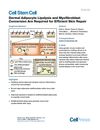
June 2020 in “Cell Stem Cell” This study found that in mice, dermal adipocytes initiate inflammation and aid repair after skin injury by releasing lipids, suggesting a role in managing inflammatory diseases and impaired wound healing.
 120 citations
,
October 2007 in “Clinical Interventions in Aging”
120 citations
,
October 2007 in “Clinical Interventions in Aging” This review discusses the effects of estrogens on skin aging and highlights the potential benefits of estrogen replacement therapy and selective estrogen receptor modulators for improving skin health in postmenopausal women, but reports no new clinical findings.
 115 citations
,
March 2019 in “Nature Communications”
115 citations
,
March 2019 in “Nature Communications” This study identified significant genetic associations with frontal fibrosing alopecia at four genomic loci, suggesting it is a genetically predisposed immuno-inflammatory disorder influenced by the HLA-B*07: 02 allele.
 115 citations
,
November 2015 in “The journal of allergy and clinical immunology/Journal of allergy and clinical immunology/The journal of allergy and clinical immunology”
115 citations
,
November 2015 in “The journal of allergy and clinical immunology/Journal of allergy and clinical immunology/The journal of allergy and clinical immunology” This review discusses the impact of sleep cycles and circadian rhythms on nighttime exacerbation of atopic dermatitis in children and presents potential treatment options for related sleep disturbances, but reports no new clinical results.
 109 citations
,
December 2003 in “American Journal of Pathology”
109 citations
,
December 2003 in “American Journal of Pathology” This study observed that the ontogenetic transition from scarless repair in early fetal rat wounds to scar-forming repair in late gestation is associated with differential TGF-β ligand and receptor expression patterns.
 106 citations
,
July 2013 in “Advances in wound care”
106 citations
,
July 2013 in “Advances in wound care” This review discusses the potential of ultraviolet (UV) radiation technologies in wound care, highlighting their antimicrobial properties and risks of DNA damage, but reports no new clinical findings.
 88 citations
,
August 2019 in “Nature communications”
88 citations
,
August 2019 in “Nature communications” In this study, researchers identified a specific T cell receptor associated with carbamazepine-induced severe cutaneous adverse reactions, demonstrating its potential for therapeutic development in patients with the HLA-B*15:02 genotype.
 86 citations
,
January 2008 in “Journal of nutritional & environmental medicine”
86 citations
,
January 2008 in “Journal of nutritional & environmental medicine” This review examines the health benefits of green tea, focusing on catechins, but reports no new findings; the authors emphasize potential benefits for conditions like cancer, heart disease, and diabetes.
 78 citations
,
October 2020 in “Experimental Dermatology”
78 citations
,
October 2020 in “Experimental Dermatology” This review summarizes 15 years of clinical and experimental research advancements in hidradenitis suppurativa, highlighting its recognition as a uniquely healable inflammatory skin disease but reports no new clinical results.
 68 citations
,
September 2018 in “International Journal of Molecular Sciences”
68 citations
,
September 2018 in “International Journal of Molecular Sciences” In this study, researchers found that exposure to PM10 significantly increased inflammation and impaired collagen synthesis in human dermal fibroblasts, suggesting PM10 contributes to skin aging through these mechanisms.
 65 citations
,
April 2021 in “Natural Products and Bioprospecting”
65 citations
,
April 2021 in “Natural Products and Bioprospecting” This review discusses the traditional uses and pharmacologically active compounds of 22 Dendrobium species for dermatological disorders but reports no new results, highlighting the need for further research.
 61 citations
,
January 2018 in “Cosmetics”
61 citations
,
January 2018 in “Cosmetics” This review highlights the potential of coffee silverskin's bioactive compounds in combating skin aging and related conditions, suggesting it as a promising natural ingredient for cosmetics due to its antioxidant, anti-inflammatory, and anti-aging properties.
 56 citations
,
May 2017 in “Nature Cell Biology”
56 citations
,
May 2017 in “Nature Cell Biology” Hair can regrow after certain stem cells are lost because other stem cells can take over their role.