 20 citations
,
May 2016 in “Journal of Cutaneous Pathology”
20 citations
,
May 2016 in “Journal of Cutaneous Pathology” This study suggests that the presence and arrangement of plasmacytoid dendritic cells can help distinguish chronic cutaneous lupus erythematosus from other types of scarring alopecia.
 3 citations
,
September 2005 in “Experimental dermatology”
3 citations
,
September 2005 in “Experimental dermatology” This review discusses the formation and structure of the cornified cell envelope in the epidermis, highlighting biochemical pathways and genetic factors, but presents no new experimental results.
 April 2023 in “Journal of Investigative Dermatology”
 This study found that an automated tumor-infiltrating lymphocyte classification algorithm identified thin melanomas with less immune response, which were associated with higher mortality compared to other cases in the study.
 9 citations
,
July 2022 in “EMBO molecular medicine”
9 citations
,
July 2022 in “EMBO molecular medicine” This study found that targeting IL-6, IL-1, and CCR6 signaling pathways may effectively reduce irradiation-induced alopecia and dermatitis in radiotherapy patients.
 June 2023 in “British Journal of Dermatology”
 This study reports a unique case of coinheritance of BRCA2 and CYLD pathogenic variants in a man with metastatic malignant cylindroma, suggesting that recognizing such genetic profiles in rare conditions can provide new treatment options, including the potential use of therapies targeting BRCA deficiency.
October 2014 in “Archivio Istituzionale della Ricerca (Universita Degli Studi Di Milano)” This study identified a new subset of Ret-positive sensory neurons involved in itch perception, characterized by their unique expression profile and response to specific itch-inducing molecules.
11 citations
,
July 2022 in “Frontiers in Immunology” This study identified four immune-related signaling molecules (LGR5, PTN, JAG1, and DKK1) associated with keloid, suggesting their potential role in its pathogenesis and as targets for new treatments.
5 citations
,
May 2022 in “Diagnostics” This study found that certain lncRNA gene polymorphisms in HOTAIR and MALAT1 are associated with increased susceptibility to systemic lupus erythematosus, potentially informing clinical applications.
 April 2017 in “Journal of Investigative Dermatology”
 In this pilot study, researchers observed a correlation between clinical severity and histologic severity of lichen planopilaris, suggesting that an immunohistochemical scoring system could aid in grading disease activity.
2 citations
,
May 2020 in “Journal of the American Academy of Dermatology” Hair shaft changes may be linked to CCCA, but their role is unclear.
June 2026 in “Advanced Healthcare Materials” In this study, a taurine-based ionic liquid was developed to effectively penetrate the skin barrier and deliver antioxidants to hair follicles, reducing oxidative stress and promoting hair regrowth in an androgenic alopecia animal model.
June 2009 in “Faculty Opinions – Post-Publication Peer Review of the Biomedical Literature” This study found that Lrig1-positive cells in mouse epidermis are a previously unidentified source of adult interfollicular epidermal stem cells, which can contribute to sebaceous gland and epidermal lineage formation.
5 citations
,
April 2020 in “Journal of Mind and Medical Sciences” This paper presents a new device for navigational surgery utilizing the fluorescent properties of Indocyanine Green, offering enhanced intra-operative imaging capabilities by identifying tissues with an infrared CMOS camera.

This study investigated dual TCR Treg cells in mouse tissues, revealing a high proportion and diverse pairing patterns compared to single TCR Tregs, providing insights into their origins and characteristics across different tissue locations.
477 citations
,
March 2004 in “Proceedings of the National Academy of Sciences” This study reports that the DMI3 gene, essential for nodule formation in legume-rhizobial symbiosis, encodes a calcium/calmodulin-dependent protein kinase, highlighting its role in multiple plant symbioses.
 1 citations
,
April 2018 in “Journal of Investigative Dermatology”
1 citations
,
April 2018 in “Journal of Investigative Dermatology” This study found that Polycomb repressive complex 1 is crucial for skin development and stem cell specification, influencing gene activity beyond its known repressor functions.
 May 2026 in “Scientific Reports”
 In this study, researchers overexpressed Lrig3 in mouse skin and observed hair loss linked to changes in skin protein profiles and signaling pathways, suggesting a potential role for Lrig3 in maintaining skin homeostasis.
January 2025 in “Analytical Methods” This study reports the development of a fluorescent ionic liquid that shows high sensitivity and selectivity for detecting dextran sulfate sodium, with potential applications in clinical diagnostics and environmental monitoring.
 146 citations
,
May 2002 in “The American journal of pathology”
146 citations
,
May 2002 in “The American journal of pathology” This study found that cathepsin L deficiency in mice led to significant abnormalities in hair follicle development and cycling, including disrupted hair shaft outgrowth and premature hair growth phase entry.
6 citations
,
October 2024 in “International Journal of Dermatology” In this study, researchers conducted single-cell RNA sequencing to reveal that proinflammatory fibroblasts and vascular endothelial cells play significant roles in the immune microenvironment of keloids, suggesting potential targets for new therapeutic approaches.
 2 citations
,
December 2021 in “Journal of Veterinary Medical Science”
2 citations
,
December 2021 in “Journal of Veterinary Medical Science” This case report found that adding lokivetmab to prednisolone treatment improved and maintained remission of pruritus in a dog with cutaneous epitheliotropic lymphoma.
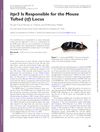 6 citations
,
October 2012 in “Journal of Heredity”
6 citations
,
October 2012 in “Journal of Heredity” This study identified the Itpr3 gene as responsible for the tufted hair loss phenotype in the BTBR mouse strain.
 24 citations
,
February 2015 in “Experimental Cell Research”
24 citations
,
February 2015 in “Experimental Cell Research” This study found that overexpression of the transcription factor NFIC may enhance the proliferation and differentiation of stem cells from the apical papilla, suggesting its potential role in dentin/root regeneration.
101 citations
,
June 2003 in “The EMBO Journal” Phospholipase Cδ1 is crucial for normal skin and hair development.
16 citations
,
April 2024 in “Proceedings of the National Academy of Sciences” This study found that selectively targeting HDAC4 and HDAC7 in mice can reduce Th17 cell-mediated intestinal inflammation, suggesting a potential treatment approach for Th17-related inflammatory diseases like ulcerative colitis.
 April 2016 in “The journal of investigative dermatology/Journal of investigative dermatology”
 The researchers reported that disrupting the RPGRIP1L gene in mice impaired desmosome function, causing skin blistering, and their findings suggest that PKCβII inhibition could help treat pemphigus.
 7 citations
,
July 2019 in “The Journal of Dermatology”
7 citations
,
July 2019 in “The Journal of Dermatology” This case report describes an 18-year-old male with kerion celsi from Trichophyton tonsurans infection whose condition improved with terbinafine treatment, and highlights that although IL-17A expression increased in skin lesions, it was associated with disrupted antimicrobial peptide expression and severe inflammation, causing tissue damage.
4 citations
,
December 2020 in “Tissue Barriers” This review explores the immunological aspects of epidermal differentiation in loricrin knockout mice, offering insights into keratinization and potential intrinsic factors affecting immune function, but provides no new clinical findings.
August 2026 in “eScholarship (California Digital Library)” This study explored IL-17D's role in skin biology and found no significant difference in disease progression between IL-17D KO and WT mice in skin inflammation models, but IL-17D did promote cell migration and modestly accelerated wound healing, suggesting it may influence tissue repair processes.
43 citations
,
January 2016 in “Development” This study identified a critical NF-κB-LHX2-TGFβ2 signaling pathway essential for primary hair follicle development in mice, revealing new insights into the underlying mechanisms of morphogenesis.