93 citations
,
July 2006 in “Journal of Investigative Dermatology” This study describes the expression patterns of type I inner root sheath keratin proteins K25–K28 in human hair follicles, highlighting their distinct distribution within different layers.
23 citations
,
January 2016 in “Frontiers in immunology” This review discusses the potential of combining low-dose IL-2 with islet antigens to enhance antigen-specific Treg function in type 1 diabetes, but reports no new clinical results.
10 citations
,
January 2024 in “Heliyon” This study found that dexpanthenol treatment reduced inflammation, oxidative stress, and apoptosis in rats, providing a protective effect against lipopolysaccharide-induced cardiac and endothelial damage.
January 1992 in “Filosofia oggi” This article discusses the affordability and safety of platelet-rich plasma gel production but presents no new research findings.
In this study, researchers found that during late pregnancy, neuroactive steroid fluctuations increase the number of extrasynaptic GABAA receptors in rat hippocampal cells.
January 2008 in “Padua Research Archive (University of Padua)” This study observed that hereditary factors were associated with acne duration but not severity, and found a potential role of CYP450 1A1 polymorphisms in acne pathogenesis.
717 citations
,
June 2010 in “Nature” This study identified key genetic regions associated with alopecia areata, highlighting both acquired and innate immune involvement, with a novel link to the upregulation of ULBP ligands in autoimmune disease.
701 citations
,
August 2014 in “Nature medicine” This study found that JAK inhibitors promote hair regrowth in both mice and human alopecia areata cases by blocking key immune pathways involved in disease development.
290 citations
,
August 2021 in “Clinical Reviews in Allergy & Immunology” JAK inhibitors show promise for treating alopecia areata, but more research is needed.
245 citations
,
April 2009 in “Circulation Research” This study found that human fetal CD133+ progenitor cells and their conditioned medium accelerated wound healing and promoted angiogenesis in a mouse model of ischemic diabetic ulcers through paracrine mechanisms involving Wnt signaling.
232 citations
,
December 2011 in “Journal of the American Academy of Dermatology” Understanding and targeting specific molecules can help reduce scarring and promote scar-free healing.
221 citations
,
June 1992 in “Proceedings of the National Academy of Sciences” In this study, IL-6 expression in transgenic mice thickened the stratum corneum without causing increased epidermal proliferation or inflammation, suggesting it may enhance skin protection rather than directly induce inflammation.
 185 citations
,
August 2020 in “Mayo Clinic Proceedings”
185 citations
,
August 2020 in “Mayo Clinic Proceedings” This review discusses biological sex differences in COVID-19 outcomes and reports no new clinical results; it identifies a need for studies to clarify how sex influences disease progression.
181 citations
,
January 2019 in “Cell” In this research, authors found that skin-resident ILCs regulate sebaceous gland function and microbial balance, emphasizing an immune-epithelia system that supports host-microbe symbiosis.
 130 citations
,
November 2017 in “Frontiers in Immunology”
130 citations
,
November 2017 in “Frontiers in Immunology” This review explores recent findings on regulatory T cells, focusing on their unique functions in non-lymphoid tissues and new mechanisms of action, but presents no original clinical results.
 128 citations
,
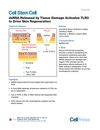
August 2015 in “Cell Stem Cell”
128 citations
,
August 2015 in “Cell Stem Cell” The researchers reported that dsRNA from damaged skin activates TLR3, promoting hair follicle regeneration, while TLR3-deficient animals fail to initiate this process, suggesting potential therapeutic approaches for hair neogenesis.
 127 citations
,
January 2013 in “PLOS ONE”
127 citations
,
January 2013 in “PLOS ONE” This study found that feeding aged mice a probiotic yogurt induced changes leading to thicker, healthier fur, suggesting a bacteria-triggered interleukin-10-dependent mechanism that mimics signs of youth and reproductive fitness.
127 citations
,
January 2000 in “Journal of Investigative Dermatology” This study found that pro-inflammatory cytokines and apoptotic mechanisms, specifically involving granzyme B and Fas pathways, are associated with chronic alopecia areata, indicating their potential role in the disease's persistence.
 125 citations
,
September 2019 in “Journal of Clinical Immunology”
125 citations
,
September 2019 in “Journal of Clinical Immunology” This review summarizes recent advances in Treg cell biology, focusing on Foxp3's role in immune regulation and therapeutic reprogramming for immune dysregulatory disorders, but reports no new clinical results.
 123 citations
,
May 2009 in “Journal of Neuroscience”
123 citations
,
May 2009 in “Journal of Neuroscience” In this study, researchers found that in late pregnancy, the neuroactive progesterone metabolite allopregnanolone inhibits HPA axis responses to immune challenges via an opioid-mediated mechanism.
 123 citations
,
September 1987 in “JAMA”
123 citations
,
September 1987 in “JAMA” This study observed that patients receiving IL-2 immunotherapy developed a skin eruption characterized by burning and pruritus, which resolved shortly after stopping the infusion, suggesting that IL-2 mediated these effects.
 114 citations
,
January 2021 in “medRxiv (Cold Spring Harbor Laboratory)”
114 citations
,
January 2021 in “medRxiv (Cold Spring Harbor Laboratory)” This meta-analysis estimated that around 80% of patients who had COVID-19 experienced at least one long-term symptom, with fatigue being the most common reported effect.
112 citations
,
January 2013 in “Experimental dermatology” This article offers a viewpoint on hidradenitis suppurativa pathogenesis, suggesting that impaired Notch signalling from γ-secretase mutations may drive inflammation and link the condition to other Th17-driven diseases.
91 citations
,
March 1996 in “Archives of Dermatological Research” This study concluded that cytokines and growth factors significantly regulate hair growth in vitro, with some completely inhibiting growth, such as EGF and TNFα.
90 citations
,
February 2001 in “The journal of investigative dermatology/Journal of investigative dermatology” This study found that interleukin-1 directly induces the expression of keratin 6 in keratinocytes, which is a marker of activation and involved in inflammatory skin responses.
 87 citations
,
July 2007 in “British Journal Of Nutrition”
87 citations
,
July 2007 in “British Journal Of Nutrition” In this study, oral administration of Lactococcus lactis strain H61 to senescence-accelerated mice was linked to reduced bone density loss, less skin ulcer incidence, and reduced hair loss, along with altered immune responses.
85 citations
,
January 1996 in “International Journal of Cancer” In this study, AS101 combined with chemotherapy significantly reduced the severity of chemotherapy-induced alopecia in non-small-cell-lung-cancer patients and may involve immune mechanisms related to IL-1 and PGE2.
 82 citations
,
March 2016 in “Autoimmunity reviews”
82 citations
,
March 2016 in “Autoimmunity reviews” This review explores animal models of alopecia areata, particularly focusing on the insights they've provided into the disease's immune mechanisms and potential treatment approaches, without reporting new experimental data.
81 citations
,
May 2019 in “Frontiers in Endocrinology” This study found that administering melatonin for 12 weeks to women with PCOS significantly reduced hirsutism, testosterone, and inflammation markers, while enhancing antioxidant levels compared to a placebo.
 78 citations
,
June 2021 in “Dermatology and Therapy”
78 citations
,
June 2021 in “Dermatology and Therapy” This study highlights the evolving understanding of acne's pathophysiology and suggests that targeting pro-inflammatory cytokines such as IL-1β, IL-17, IL-23, and TNFα with biological antibodies may offer new treatment strategies for severe acne and its scars.