 April 2016 in “Journal of the American Academy of Dermatology”
 This study found that in a tertiary academic institution, nearly 1 in 5 dermatology consults were for drug-related skin reactions, with antibiotics frequently identified as the culprits.
2 citations
,
January 2023 in “Anais Brasileiros de Dermatologia” 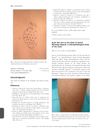 31 citations
,
April 2010 in “British journal of dermatology/British journal of dermatology, Supplement”
31 citations
,
April 2010 in “British journal of dermatology/British journal of dermatology, Supplement” This report describes two patients with frontal fibrosing alopecia who developed acute hair loss on their limbs, revealing that the limb alopecia had similar histological features to scalp alopecia.
 January 2024 in “Skin Research and Technology”
 This case report found that oral tofacitinib treatment resulted in more than 90% hair regrowth in a 6-year-old with severe alopecia areata, with no relapse after dose reduction.
 July 2025 in “Russian Journal of Clinical Dermatology and Venereology”
 In this case report, researchers observed that two sisters with congenital immune disorders experienced partial hair regrowth while receiving tofacitinib for severe alopecia areata, highlighting the need for careful clinical and laboratory monitoring due to potential infection risks associated with JAK inhibitor therapy.
 18 citations
,
October 2017 in “Drug Design Development and Therapy”
18 citations
,
October 2017 in “Drug Design Development and Therapy” The study found that finasteride increased endoplasmic reticulum stress and reduced fertility in rats, effects that were alleviated by the administration of DA-9401.
May 2026 in “Acta Dermato Venereologica” This study observed that patients with acute alopecia areata treated with Janus kinase inhibitors achieved a higher rate of complete hair regrowth by week 24 compared to those with non-acute disease, highlighting the benefits of early intervention.
 1 citations
,
July 2019 in “Medicina Clínica (English Edition)”
1 citations
,
July 2019 in “Medicina Clínica (English Edition)” Tofacitinib partially improved hair regrowth in a patient with severe hair loss.
July 2026 in “Cosmoderma” This study highlights that alopecia areata, an autoimmune condition often starting in childhood, poses a higher risk of becoming chronic with an early onset and can result in poor therapy response.
This study found that P144 (Disitertide) significantly reduced collagen deposition and improved muscle organization in a rabbit model of post-radiotherapy fibrosis, suggesting potential antifibrotic effects.
In this in vitro study, Yifa Compound Prescription was reported to enhance human hair follicle growth and increase VEGF mRNA expression compared to blank serum.
 January 2025 in “Indian Journal of Dermatology”
 This review discusses the various factors implicated in the etiology of frontal fibrosing alopecia and notes the need for effective treatments, reporting no new clinical findings.
October 2020 in “Der Hautarzt” This case study demonstrated that off-label tofacitinib treatment led to full regrowth of scalp hair after 18 months in a patient with alopecia areata universalis, following unsuccessful therapies.
June 2026 in “British Journal of Dermatology” This case study suggests that intense inflammation after photodynamic therapy may trigger or worsen fibrosing alopecia in susceptible individuals.
 February 2024 in “Skin research and technology”
 The researchers in this study identified molecular mechanisms involved in frontal fibrosis alopecia, highlighting immune response and fatty acid metabolism, and developed a four-gene diagnostic model showing high accuracy in distinguishing affected individuals from controls.
 3 citations
,
May 2023 in “International Journal of Molecular Sciences”
3 citations
,
May 2023 in “International Journal of Molecular Sciences” In this study, researchers observed that phospholipid-calcium carbonate hybrid nanoparticles effectively delivered Tofacitinib citrate topically, which significantly inhibited hair follicle apoptosis and promoted hair growth in a mouse model of chemotherapy-induced alopecia, compared to a traditional Tofacitinib solution.
July 2025 in “International Journal of Trichology” This study reported that six out of seven pediatric patients with refractory patchy alopecia areata experienced significant hair regrowth after one month of oral tofacitinib treatment, suggesting it may be an effective and safe option, although larger studies are needed to evaluate long-term safety.
 August 2021 in “Revista Colombiana de Reumatología/Revista Colombiana de Reumatologia”
 This case study reported that a 24-year-old patient with severe, treatment-resistant alopecia areata experienced excellent clinical improvement after one month of treatment with tofacitinib, a JAK inhibitor.
 January 2023 in “Indian Dermatology Online Journal”
 This review discusses the role of the JAK/STAT pathway in managing alopecia areata and emphasizes the need for further research to determine the ideal JAK inhibitor, as it reports no new clinical results.
 222 citations
,
September 2016 in “JCI insight”
222 citations
,
September 2016 in “JCI insight” This research overview highlights that although JAK inhibitors show promise as potential treatments for alopecia areata based on recent insights into the disease mechanism, their efficacy has not yet been thoroughly evaluated in a systematic manner.
13 citations
,
August 2013 in “International Journal of Dermatology” Frontal fibrosing alopecia can affect African men and may be underdiagnosed.
 2 citations
,
September 2022 in “Dermatologic Therapy”
2 citations
,
September 2022 in “Dermatologic Therapy” In this study, tofacitinib showed a mixed response in treating refractory alopecia areata, with some patients experiencing complete or partial hair regrowth and others showing no response, particularly those with alopecia universalis.
 11 citations
,
August 2019 in “Journal of Molecular Histology”
11 citations
,
August 2019 in “Journal of Molecular Histology” This study found that upregulation of NFIC may enhance proliferation and osteogenic/cementogenic differentiation in rat dental follicle cells.
April 2025 in “Australasian Journal of Dermatology” This report presents the first Australian case of familial frontal fibrosing alopecia involving a mother and daughter and seeks to differentiate clinical features between familial and sporadic cases.
December 2016 in “Anales del sistema sanitario de Navarra” This case study reports successful treatment of frontal fibrosing alopecia with daily 2.5mg finasteride in a 77-year-old woman.
 July 2023 in “Research Square (Research Square)”
 In an in-vitro study, researchers found that a specific concentration of Aloe Vera combined with injectable platelet-rich fibrin (i-PRF) significantly increased hair follicle stem cell proliferation compared to Aloe Vera or i-PRF alone, indicating potential benefits for alopecia treatment.
 January 2026 in “DOAJ (DOAJ: Directory of Open Access Journals)”
 This study evaluated 129 patients with androgenetic alopecia and identified an inflammatory pattern of perifollicular infiltration linked to treatment resistance. Targeting both hormonal and immune pathways improved outcomes for 67% of patients, suggesting inflammation may play a role in some cases of stubborn hair loss.
October 2024 in “Journal of Pakistan Association of Dermatologists” This study reports that a 21-year-old male with alopecia totalis responded positively to the JAK inhibitor tofacitinib, achieving complete hair regrowth after six months of treatment without significant side effects, though further research is needed to evaluate long-term efficacy.
 November 2023 in “The journal of investigative dermatology/Journal of investigative dermatology”
 In this case series, researchers reported on the clinical characteristics and treatment approaches for Frontal Fibrosing Alopecia in four cases, emphasizing the importance of early identification and intervention to manage this scarring hair loss disorder that primarily affects the frontal hairline and eyebrows.
December 2025 in “International Journal of Cosmetic Science” A new tool helps better assess and treat hair loss in Chinese men.