 February 2026 in “Indian Journal of Skin Allergy”
 This article reviews the clinical efficacy of Ruxolitinib cream for skin conditions, reporting significant improvements in atopic dermatitis and vitiligo, with minimal systemic absorption and a favorable safety profile, compared to placebo.
7 citations
,
March 2025 in “Cytotechnology”  September 2023 in “Journal of The American Academy of Dermatology”
 In this study, baricitinib was evaluated for its effectiveness in promoting concurrent regrowth of scalp hair, eyebrows, and eyelashes in patients with severe alopecia areata, showing clinically meaningful responses compared to placebo.
 3 citations
,
January 2002 in “Hair transplant forum international”
3 citations
,
January 2002 in “Hair transplant forum international” This article discusses the challenges facing the ISHRS as hair restoration evolves but reports no new results.
 10 citations
,
June 2024 in “American Journal of Clinical Dermatology”
10 citations
,
June 2024 in “American Journal of Clinical Dermatology” This review highlights that while sonidegib and vismodegib offer promising treatment options for advanced basal cell carcinoma, their use is often limited by treatment-emergent adverse events, which can be managed through protocol modifications and supportive interventions.
April 2026 in “Dermatologic Clinics” 
In a human genetic study on hidradenitis suppurativa, researchers identified 12 genetic risk loci and found that CXCR4-CD74 signaling may play a key role in hair follicle inflammation, suggesting CXCR4 blockade as a potential therapeutic approach for this condition.
158 citations
,
December 2002 in “Development” In this study, Msx2-deficient mice showed progressive hair loss due to shortened anagen phase and prolonged catagen and telogen phases, resulting in cyclic alopecia with structurally abnormal hair shafts.
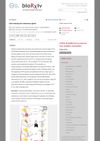 August 2023 in “bioRxiv (Cold Spring Harbor Laboratory)”
 This study identified a novel skin site called the follicular epidermis that is prone to cancer, with unique Axin2+ stem cells regulating its homeostasis. The findings suggest current therapeutic approaches may need reconsideration due to new insights into obstruction mechanisms at this site.

Baricitinib helps regrow hair in teens with severe alopecia areata.
October 2025 in “Australasian Journal of Dermatology” In this case report, a 31-year-old male with refractory sycosis barbae achieved complete remission after 4 months of treatment with bimekizumab, suggesting this dual inhibitor of interleukin-17A and IL-17F may be a promising therapy for this condition.
July 2025 in “Carbohydrate Polymers” This study investigated the extracellular polysaccharides from the edible green alga Parachlorella sp. BX1.5, finding that they have potential applications in cosmetics and health products due to their stability, antioxidant properties, and effects on hair growth in mice.
 1 citations
,
September 2019 in “Journal of Investigative Dermatology”
1 citations
,
September 2019 in “Journal of Investigative Dermatology” This study found that combining human dermal papilla fibroblasts with hair matrix cells formed organoids capable of limited hair follicle development in ex vivo skin, but not fully formed hair follicles.
11 citations
,
November 2002 in “Dermatologic Surgery” This study found that IPL treatment in females with facial hirsutism can trigger hair growth in untreated areas near those that undergo photoepilation, especially in patients with polycystic ovarian syndrome.
 November 2025 in “SKIN The Journal of Cutaneous Medicine”
 In this study on adolescents with severe alopecia areata, baricitinib treatment showed effective scalp, eyebrow, and eyelash regrowth after 52 weeks, benefiting both responders and partial or non-responders, potentially reducing the psychosocial impact of the disease.
 10 citations
,
September 1997 in “Molecular carcinogenesis”
10 citations
,
September 1997 in “Molecular carcinogenesis” This study found that mirex and TPA promote papilloma formation in CD-1 mouse skin through distinct populations of mutant Ha-ras cells, resulting in additive tumor yields.
January 2026 in “Advanced Science” This study found that gastrodin promotes the XIAP-DDRGK1 pathway in noise-exposed mice, reducing hearing loss by enhancing ER-phagy and cochlear cell survival.
1 citations
,
August 2021 in “Journal of Investigative Dermatology” ASLAN004 was safe and well-tolerated, supporting further development for treating certain diseases.
 June 2025 in “BMJ Case Reports”
 In this case report, researchers observed hair repigmentation in a man with metastatic renal cell carcinoma during treatment with axitinib, marking the first documented instance of this effect with axitinib without the use of hair dyes or other medications.
6 citations
,
January 2010 in “Journal of Biochemical and Molecular Toxicology” This study found that the ID2 gene was highly expressed in bulge-derived keratinocytes when exposed to contact sensitizers and may serve as a marker to distinguish sensitizers from irritants during in vitro testing.
September 2024 in “Journal of the American Academy of Dermatology” Eyebrow and eyelash regrowth usually matches scalp hair response in alopecia areata patients treated with baricitinib.
124 citations
,
April 2000 in “Nature biotechnology” December 2014 in “Actas dermo-sifiliográficas/Actas dermo-sifiliográficas” Hair removal with intense pulsed light can cause rare skin lesions that are hard to fully treat.
15 citations
,
June 2020 in “Processes” This study suggests that the emulsion extract of brevilin A from Centipeda minima may stimulate hair regrowth in individuals with mild to moderate vertex balding by inhibiting JAK3.
 January 2025 in “Biomedical Engineering Letters”
 This study reported that a new polymeric formulation for topical minoxidil delivery in an animal model improved hair growth and hair follicle formation more effectively than minoxidil in PBS, suggesting potential as a future hair loss treatment.
In these randomized, placebo-controlled trials, patients with alopecia areata who received baricitinib showed significantly higher eyebrow and eyelash hair regrowth rates compared to placebo, with greater responses observed at the 4 mg dose and in those achieving overall scalp hair improvement by Week 52.
5 citations
,
January 2024 in “Aesthetic Surgery Journal Open Forum” This review notes that while ATX-101 showed a favorable safety profile for reducing submental fat in clinical trials, serious adverse events related to procedures have been reported in real-world use, prompting recommendations for improved management and prevention strategies.
 2 citations
,
August 2025 in “Scientific Reports”
2 citations
,
August 2025 in “Scientific Reports” This study analyzed pexidartinib-associated adverse events from FDA data and reported common events such as hepatic issues and systemic reactions. It highlighted sex-specific susceptibilities and reinforced the need for risk mitigation and long-term monitoring in tenosynovial giant cell tumor management.
 November 2025 in “International Journal of Advanced Biochemistry Research”
 This study found that intercropping Bhringraj with Psidium guajava benefited from organic nutrient sources, with the best growth parameters achieved using 100% Mahua cake, enhancing plant height, leaf count, branch number, and collar diameter by releasing nutrients effectively.
 June 2026 in “IP Indian Journal of Clinical and Experimental Dermatology”
 This bibliometric analysis of the IP Indian Journal of Clinical and Experimental Dermatology reveals a steady annual publication growth rate of 5.49% from 2019 to 2025, moderate citation impact, and limited international collaboration.