TLDR Blocking CXCR4 may help treat hidradenitis suppurativa.
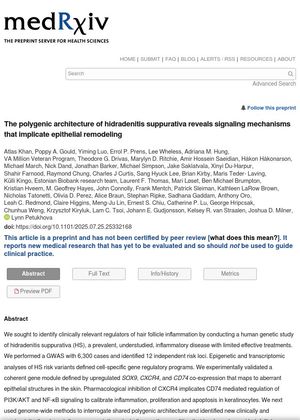
The study investigates the genetic basis of hidradenitis suppurativa (HS), an inflammatory skin disease, by conducting a genome-wide association study (GWAS) with 6,300 cases, identifying 12 independent risk loci. The research highlights the role of a gene module involving SOX9, CXCR4, and CD74 in epithelial remodeling and inflammation. Pharmacological inhibition of CXCR4 suggests a regulatory mechanism involving CD74 in PI3K/AKT and NF-κB signaling pathways, affecting keratinocyte behavior. The study also finds a connection between HS and male pattern hair loss, suggesting that CXCR4 blockade could be a potential therapeutic strategy for HS.

47 citations
,
July 2023 in “Nature Genetics”
6 citations
,
July 2023 in “Nature cell biology” SOX9 helps determine stem cell roles by interacting with DNA and proteins that control gene activity.
19 citations
,
January 2021 in “Experimental dermatology” Acne inversa is an epithelial-driven disease where inflammation is caused by cyst rupture, and treatments should focus on preventing tendril growth for better results.
30 citations
,
April 2020 in “Stem Cell Research & Therapy” PI3K/Akt pathway is crucial for hair growth and regeneration.
57 citations
,
November 2017 in “Nature Communications” Researchers found 71 genetic regions linked to male pattern baldness, which account for 38% of its genetic risk.
141 citations
,
August 2017 in “Developmental Dynamics” The document concludes that a better understanding of cell changes during wound healing could improve treatments for chronic wounds and other conditions.
43 citations
,
January 2016 in “Development” LHX2 is essential for hair follicle development, controlled by NF-κB and TGFβ2 signaling.
15 citations
,
February 2014 in “Journal of Investigative Dermatology” NF-κB activity is crucial for keeping hair in the growth phase.
829 citations
,
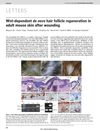
May 2007 in “Nature” Hair follicles can regrow in wounded adult mouse skin using a process like embryo development.
13 citations
,
September 2022 in “Biomolecules” The research confirms that Hidradenitis Suppurativa is characterized by increased inflammation, disrupted skin cell organization, and abnormal metabolic processes.
3 citations
,
January 2025 in “JID Innovations” Hidradenitis suppurativa tunnels worsen the disease and often need surgery because current treatments are not very effective.
3 citations
,
December 2022 in “Cells” Cannabinoids like CBD and THC may help treat non-cancer skin diseases, but more research is needed.
56 citations
,
November 2022 in “Biomolecules” Targeting macrophages may improve wound healing.
January 2025 in “Health engineering.” Combining stem cells and organoids could improve skin regeneration treatments.