January 2024 in “Journal of Applied Health Sciences and Medicine” In this study, Nephrolepis biserrata extract significantly improved fertility indices in male Wistar rats with testosterone propionate-induced benign prostatic hyperplasia, showing increased sperm count and reduced prostate weight, suggesting potential pro-fertility benefits for BPH-related infertility.
 October 2023 in “Journal of the Endocrine Society”
 This case report highlights the potential benefits of unilateral adrenalectomy in treating primary bilateral macronodular adrenal hyperplasia, noting a high rate of remission and low risk of recurrence.
 August 2023 in “Malaysian Journal of Medicine and Health Sciences/Malaysian journal of medicine and health sciences”
 This study found that aqueous extract of Pueraria mirifica, when administered to a rat model, significantly reduced prostate weight, prostatic index, and serum dihydrotestosterone levels, while also improving prostate histomorphology, suggesting its potential as an anti-BPH treatment.
July 2023 in “International Journal of Molecular Sciences” In this study, Trapa bispinosa Roxb. pericarp extract demonstrated inhibitory effects on 5α-reductase activity both in vitro using LNCaP cells and in vivo in a mouse model of benign prostatic hyperplasia, suggesting its potential role in managing the condition.
 June 2023 in “Medicine and Pharmacy Reports”
 A woman with a specific mutation causing adrenal gland issues faced fertility problems, but careful hormone therapy helped her manage it successfully.
 June 2023 in “Research Square (Research Square)”
 This study found that among male Han Chinese, a higher polygenic risk score was linked to increased risk and poorer treatment outcomes for benign prostatic hyperplasia.
 April 2023 in “Journal of Investigative Dermatology”
 In this study, researchers found that the protein eIF4E is crucial for keratinocyte proliferation in psoriasis, suggesting it as a potential treatment target for the condition.
 April 2023 in “Jordan Medical Journal”
 This study found no significant association between male pattern baldness and benign prostatic hyperplasia.
 August 2022 in “IntechOpen eBooks”
 This article reviews congenital adrenal hyperplasia, a group of rare genetic disorders affecting steroid synthesis, and highlights the need for specific therapy and ongoing monitoring, but reports no new clinical findings.
 December 2021 in “Aegean journal of obstetrics and gynecology”
 This case report highlights a rare instance of postmenopausal virilization in a 71-year-old woman due to coexisting ovarian hilus cell hyperplasia and a Sertoli-Leydig cell tumor.
October 2020 in “Journal of the American Society of Nephrology” In this case study, drospirenone use masked the diagnosis of a rare form of congenital adrenal hyperplasia, suggesting a possible delay in detecting underlying endocrinopathies.

This study found that men with benign prostate hyperplasia showed increased meibomian gland dysfunction and tear film instability compared to age-matched controls, and were also more likely to have androgenic alopecia.
 April 2020 in “Journal of the Endocrine Society”
 This case report describes a rare occurrence of giant bilateral adrenal myelolipomas in a 28-year-old female with CAH, emphasizing that large, hormonally active, or painful myelolipomas should be surgically removed.
 April 2020 in “Journal of the Endocrine Society”
 This case report highlights Leydig cell hyperplasia as a rare cause of increased testosterone and postmenopausal hirsutism, resolved after bilateral salpingo-oophorectomy in a 64-year-old woman.
 February 2020 in “Open Access Macedonian Journal of Medical Sciences”
 In this case report, treatment with corticosteroids improved both clinical symptoms and hormonal imbalances in a 27-year-old woman diagnosed with non-classic congenital adrenal hyperplasia.
January 2020 in “Journal of Men s Health” In this study of BPH patients with testosterone deficiency, the combination of TU and dutasteride reduced prostate volume and improved testosterone-related symptoms but was less effective for sexual function compared to TU alone, indicating caution in using dutasteride for those with sexual dysfunction concerns.
 April 2019 in “Journal of Investigative Dermatology”
 This study found that induced COX-2 expression in adult transgenic mice led to hair follicle miniaturization and enlargement of sebaceous glands, and suggests that targeting the PGD2 pathway might reverse these effects.
 October 2018 in “Journal of Clinical Research in Pediatric Endocrinology”
 This study found that children with classic congenital adrenal hyperplasia had elevated epicardial fat thickness, which was associated with increased carotid intima media thickness, left ventricular mass, and mitral deceleration time.
August 2018 in “Australasian journal of dermatology” This article is a letter discussing a case of cutaneous lymphoid hyperplasia following hyaluronic acid filler injection and fat grafting, reporting no new results.
 July 2017 in “Contemporary Endocrinology”
 This article discusses the ongoing care needs for individuals with 21-hydroxylase deficiency due to mutations in the CYP21A2 gene but does not present new clinical findings.
April 2017 in “Journal of dermatological science” This study found that while epidermal PLCγ1 is not necessary for keratinocyte differentiation in interfollicular epidermis, it is crucial for normal hair and sebaceous gland formation in mice.
January 2017 in “Elsevier eBooks” Congenital Adrenal Hyperplasia is mainly caused by enzyme deficiencies, leading to varying symptoms like hormone imbalances and physical changes.
December 2016 in “Journal of Pakistan Association of Dermatologists” This case study describes a 22-year-old woman with hirsutism who experienced symptom reversal through addressing nonclassical adrenal hyperplasia and polycystic ovaries alongside laser hair removal.
January 2015 in “Faculty of 1000 Research Ltd” BPH treatment improved with personalized medicine, new drugs, and less invasive surgeries.
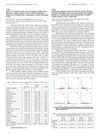 April 2013 in “The Journal of Urology”
 Higher CRP levels suggest chronic inflammation is linked to bladder-related urinary symptoms in men with enlarged prostates.
 August 2012 in “Expert Review of Dermatology”
 Men with early hair loss may have a higher risk of enlarged prostate and possibly prostate cancer due to shared hormonal factors.
 September 2011 in “Urology”
 This study aimed to estimate the value of urine prostate specific antigen (uPSA) as a marker for benign prostatic hyperplasia (BPH) but reported no new clinical findings.
May 2011 in “Journal of pediatric nursing” This case report of a 17-year-old with salt-wasting congenital adrenal hyperplasia due to 21-hydroxylase deficiency found that increasing the mineralocorticoid dose relieved daily headaches and reduced salt cravings.
 November 2009 in “Journal of Pediatric Nursing”
 This case report describes a 6 1/2-year-old girl with significant height growth and early pubic hair development.
June 2008 in “Drugs & therapy perspectives” Dutasteride effectively treats benign prostatic hyperplasia, improving symptoms and quality of life.