June 2026 in “Morphology” This study found that IBA-1-immunopositive macrophages in rat skin during wound healing show varied morphometric characteristics and peak in numbers at 2, 6, and 15 days post-injury.
August 2026 in “Cell Biomaterials” D-chiral biomaterial scaffolds enhance tissue and hair regeneration by activating the body's immune system.
 August 2022 in “JAAD case reports”
 This case report describes a 36-year-old woman with hidradenitis suppurativa whose condition progressed to rapidly fatal squamous cell carcinoma, highlighting the potential for aggressive tumor development linked to specific protein markers.
12 citations
,
September 2023 in “Polymers” This study reported that a newly developed hydrogel composed of recombinant type I collagen and chitosan, incorporating a metal–polyphenol structure, demonstrated strong mechanical and healing properties, effectively promoting wound healing in a full-thickness skin defect model.
 4 citations
,
May 2012 in “Tissue Engineering and Regenerative Medicine”
4 citations
,
May 2012 in “Tissue Engineering and Regenerative Medicine” This study demonstrated the potential of epithelial cell scaffolds fabricated with various materials for effective hair regeneration, highlighting their promising application in tissue engineering for alopecia treatment.
 16 citations
,
January 2011 in “Archives of Dermatological Research”
16 citations
,
January 2011 in “Archives of Dermatological Research” This study identified 77 genes with significant expression changes in expanded human skin, suggesting possible mechanisms for skin regeneration during tissue expansion, including previously unreported genes like HOXA5, HOXB2, and AP1.
9 citations
,
January 2011 in “American Journal of Dermatopathology” This study investigated pilomatrixoma, a benign skin tumor, and found that irregular expression of β-catenin and Lef-1 in transitional cells may contribute to amorphous debris and cyst formation.
 96 citations
,
April 2007 in “Journal of Investigative Dermatology”
96 citations
,
April 2007 in “Journal of Investigative Dermatology” In this study, co-grafting human keratinocytes with murine dermal papilla-enriched cells produced hair follicle-like structures, but without regular hair formation, suggesting anomalous folliculogenesis.
 38 citations
,
July 1998 in “Journal of surgical oncology”
38 citations
,
July 1998 in “Journal of surgical oncology” This review discusses acquired hypertrichosis lanuginosa, a rare disorder often linked to internal malignancy, and reports no new clinical findings; the authors highlight proposed pathogenic mechanisms for lanugo hair overgrowth.
2 citations
,
July 2024 in “Materials Today Communications” In this study, an injectable alginate hydrogel with Fibronectin3 was developed, demonstrating high biocompatibility and ability to enhance wound healing in mice, suggesting promise for clinical application in treating irregular wounds.
 4 citations
,
January 2015 in “Dermatology”
4 citations
,
January 2015 in “Dermatology” This study concluded that using an erbium:YAG laser for calvarium trepanation and granulation tissue induction is comparable to the rose head burr, offering a beneficial alternative method.
January 2026 in “Advanced Science” In this study, a chronotherapeutic bilayer dressing system showed enhanced diabetic wound healing in a model by reducing inflammation through polyphenols and promoting repair with sustained PDGF-BB delivery, leading to faster re-epithelialization and hair follicle regeneration.
7 citations
,
June 2020 in “npj regenerative medicine” This study found that GDNF promotes hair formation and skin wound repair by enhancing the self-renewal and differentiation of bulge stem cells in mice.
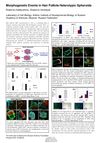
This study found that hyaluronic acid increased the size of hair follicle germ-like aggregates and the number of proliferative cells but did not maintain specific markers during the process.
 November 2024 in “Journal of Investigative Dermatology”
 TGF-β signaling is essential for new hair growth after wounds.
12 citations
,
August 1988 in “Histopathology” This case report describes a giant pigmented tumor of the scalp in a 47-year-old woman and suggests a possible dual origin involving neural crest differentiation.
 26 citations
,
December 2021 in “Regenerative Biomaterials”
26 citations
,
December 2021 in “Regenerative Biomaterials” This study found that an injectable ceria-based nanocomposite hydrogel improved wound healing and epithelium regeneration, including hair follicle and adipocyte tissue formation, in full-thickness skin wound models.
 July 2025 in “Scientific Reports”
 In this study, peptide nanofiber gels RG and RJ significantly accelerated the healing of deep second-degree burn wounds in vivo, with greater wound closure rates and enhanced tissue regeneration compared to controls, attributed to increased angiogenesis and reduced systemic inflammation.
July 2025 in “Burns & Trauma” In this study, researchers developed a new SFL-3D system to produce extracellular vesicles from rejuvenated dermal papilla cell spheroids, which demonstrated significant antifibrotic effects in reducing hypertrophic scarring, highlighting their potential for precision-targeted scar management.
This study found that encapsulating dermal papilla spheroids in alginate hydrogel with extracellular matrix proteins increased alkaline phosphatase activity, suggesting an enhanced manipulation of dermal papilla activity.
 140 citations
,
August 2011 in “Biomaterials”
140 citations
,
August 2011 in “Biomaterials” This study observed that keratose, derived from human hair, integrated well in mouse tissue and remodeled with collagen, suggesting potential as a non-toxic biomaterial for regenerative applications.
47 citations
,
January 1998 in “Molecular Carcinogenesis” This study observed that targeted expression of the neu oncogene in transgenic mice led to significant epidermal hyperplasia and a carcinoma-like appearance, suggesting a crucial role for erbB2 signaling in epidermal proliferation and carcinogenesis.

This study found that a mesenchymal stromal cell-derived regenerative extracellular matrix (rECM) significantly accelerated wound closure and improved healing in diabetic mice, also enhancing nerve and blood vessel formation compared to controls.
 January 2012 in “Institutional Repositories DataBase (IRDB)”
 This study found that transplanting cell aggregates from mouse skin and lung mesenchymal cells can regenerate hair follicles in immunodeficient mice with skin wounds.
 April 2025 in “Journal of Investigative Dermatology”
 This study found that fibronectin supports hair follicle regeneration by influencing stem cell behavior through integrin-dependent mechanotransduction, highlighting its potential role in epidermal renewal.
January 2016 in “Frontiers in Bioengineering and Biotechnology” In this study, a porous keratin hydrogel derived from wool hair demonstrated strong mechanical properties and supported the growth of various animal cells, indicating potential as a scaffold in tissue engineering.
4 citations
,
August 2014 in “International Wound Journal” This case report suggests that topical EGF may stimulate new hair growth around healing wounds, observed in a 29-year-old woman treated for a linear abrasion.
 25 citations
,
January 2018 in “Acta Clinica Croatica”
25 citations
,
January 2018 in “Acta Clinica Croatica” This study found that allogeneic platelet gel significantly improved healing in non-healing chronic lower leg ulcers compared to hydrogel treatment.
 October 2022 in “JAAD case reports”
 This case report identifies necrolytic migratory erythema associated with a glucagonoma in a 40-year-old man, presenting with distinct skin lesions, weight loss, and diarrhea.
5 citations
,
October 2020 in “Bioengineering & translational medicine” This study demonstrates the use of microscopy-guided laser ablation to create a highly structured 3D hydrogel-based organotypic skin model with folliculoid structures, potentially useful for studying hair follicle development or bioactive substance screening.