 6 citations
,
July 2007 in “Organic Process Research & Development”
6 citations
,
July 2007 in “Organic Process Research & Development” This study optimized the reaction conditions for the stereoselective hydrogenation of a compound used in manufacturing finasteride and dutasteride, improving the selectivity for the desired isomer.
![Synthesis of Spiro[cyclohexane-1,2'-[2H]indene] Derivatives as Inhibitors of Steroid 5α-Reductase](/images/assets/d91300a7-4d66-4d2c-90ac-293b0dbc5ff5/small/21048.jpg) 8 citations
,
June 1995 in “Helvetica Chimica Acta”
8 citations
,
June 1995 in “Helvetica Chimica Acta” This article outlines the synthesis of spiro[cyclohexane‐1,2′‐[2 H ]indene] derivatives similar to known steroid 5α‐reductase inhibitors, but it does not report experimental findings.
1 citations
,
January 2003 in “Chinese Journal of Pharmaceuticals” This study developed a new synthetic route for finasteride that omits the costly reagent 2,2′ dipyridyl disulfide, achieving an overall yield of 16%.
January 2005 in “Zhongguo yaowu huaxue zazhi” This study successfully developed a synthetic route for finasteride that achieves a 30.6% yield and is suitable for industrial production, avoiding the use of expensive or poisonous reagents.
January 2004 in “Zhōnghuá yàoxué zázhì” This study successfully synthesized finasteride using a method that avoids expensive reagents and column chromatography, achieving a higher yield than previously reported.
January 2003 in “Natural Science Journal of Xiangtan University” In this study, researchers improved the synthesis process for finasteride, reducing impurity levels and making it suitable for industrial production.
 4 citations
,
January 1998 in “Heterocycles”
4 citations
,
January 1998 in “Heterocycles” Researchers made two new compounds that could be used for medicine.
 441 citations
,
May 2008 in “British Journal of Pharmacology”
441 citations
,
May 2008 in “British Journal of Pharmacology” This article reviews the potential clinical use of anabolic steroids in treating muscle loss from chronic diseases and aging and highlights both the benefits and risks of these substances in sports.
 112 citations
,
November 2023 in “Nano-Micro Letters”
112 citations
,
November 2023 in “Nano-Micro Letters” This review discusses the developments over the past five years in nanozyme-based theranostics for tumor therapy, including their classification, design, and synergistic strategies. It also outlines the challenges and prospects of using nanozymes to enhance selectivity, biosafety, repeatability, and stability in therapeutic applications.
 111 citations
,
August 2002 in “Journal of Medicinal Chemistry”
111 citations
,
August 2002 in “Journal of Medicinal Chemistry” This study reports that 2-(1-Adamantyl)-4H-thiochromen-4-on-6-O-sulfamate is the most potent steroid sulfatase inhibitor identified so far, exhibiting 170-fold higher activity than the lead compound estrone sulfamate.
 85 citations
,
July 2025 in “Nature Communications”
85 citations
,
July 2025 in “Nature Communications” This review examines the evolving field of nanozymes, highlighting their unique properties and biocatalytic capabilities that challenge traditional concepts of biocatalysis, with implications for sustainable applications and potential roles in physiological processes and disease pathogenesis.
 75 citations
,
June 2019 in “International Journal of Molecular Sciences”
75 citations
,
June 2019 in “International Journal of Molecular Sciences” This review discusses the therapeutic potential of costunolide for various diseases, highlighting its bioactivity and mechanisms, but it reports no new experimental results.
 75 citations
,
November 2016 in “Medicines”
75 citations
,
November 2016 in “Medicines” This review discusses the properties and therapeutic potentials of beta-sitosterol, highlighting a need for more detailed studies on its mechanisms and long-term effects in humans; it reports no new results.
 47 citations
,
May 2021 in “Polymers”
47 citations
,
May 2021 in “Polymers” This review surveys the chemical composition and various uses of jojoba oil in medicine and industry but presents no new clinical results.
 41 citations
,
March 2007 in “Steroids”
41 citations
,
March 2007 in “Steroids” This article reviews recent advances in the synthesis of oxasteroids and reports no new experimental results.
 37 citations
,
October 2006 in “Steroids”
37 citations
,
October 2006 in “Steroids” This paper describes recent advancements in the synthesis of thiasteroids but reports no new experimental results, noting that introducing heteroatoms in steroidal structures has potential biological effects.
 20 citations
,
February 2002 in “Expert Opinion on Therapeutic Patents”
20 citations
,
February 2002 in “Expert Opinion on Therapeutic Patents” This review discusses the potential uses of 5α-reductase inhibitors for conditions ranging from benign prostatic hyperplasia to skin disorders like acne and male pattern baldness, but it reports no new clinical results.
 17 citations
,
August 2007 in “Bioorganic & Medicinal Chemistry Letters”
17 citations
,
August 2007 in “Bioorganic & Medicinal Chemistry Letters” This study found that a specific amino-pyridine compound showed potent androgen receptor antagonist activity, stimulating hair growth in mice and reducing sebum production in a hamster model.
 16 citations
,
September 2018 in “Journal of Ethnopharmacology”
16 citations
,
September 2018 in “Journal of Ethnopharmacology” This review discusses the role of inheritance, androgens, and microinflammation in androgenetic alopecia and suggests some plant-based folk remedies may help address these factors but reports no new clinical results.
 16 citations
,
August 2004 in “Tetrahedron”
16 citations
,
August 2004 in “Tetrahedron” In this study, all stereoisomers of cyoctol were synthesized and tested, revealing that contrary to initial patent claims, cyoctol does not function as an anti-androgen.
 15 citations
,
November 2019 in “Cutaneous and Ocular Toxicology”
15 citations
,
November 2019 in “Cutaneous and Ocular Toxicology” This study investigated a liposomal hydrogel system for delivering minoxidil and tretinoin to treat androgenic alopecia, finding that the system enhanced skin permeation of minoxidil while retaining tretinoin on the skin and was non-irritating in animal tests, suggesting its potential effectiveness.
![Synthesis and 5α-Reductase Inhibitory Activity of 8-Substituted Benzo[ƒ]Quinolinones Derived from Palladium Mediated Coupling Reactions](/images/assets/2aedba8c-b0ac-4fa3-9ac7-9f375a016bba/small/15581.jpg) 14 citations
,
February 1998 in “Bioorganic & Medicinal Chemistry Letters”
14 citations
,
February 1998 in “Bioorganic & Medicinal Chemistry Letters” This study explored how modifying the 8-substituent of 8-bromobenzoquinolinone affects its selectivity in inhibiting both 5 alpha-reductase isozymes in the scalp.
![Effect of C-Ring Modifications in Benzo[c]quinolizin-3-ones, New Selective Inhibitors of Human 5α-Reductase 1](/images/assets/c687900f-ea40-4de1-8f0b-a5b818951b1c/small/15452.jpg) 12 citations
,
June 2001 in “Bioorganic & Medicinal Chemistry”
12 citations
,
June 2001 in “Bioorganic & Medicinal Chemistry” This study found that octahydrobenzo[c]quinolizin-3-one derivatives, particularly compound 3, were potent and selective inhibitors of the enzyme 5α-reductase type 1.
 6 citations
,
April 2014 in “European journal of medicinal chemistry”
6 citations
,
April 2014 in “European journal of medicinal chemistry” This study found that several newly synthesized dihydrobenzopyran compounds inhibited insulin secretion and had vasorelaxant activity, with some more potent than reference KATP channel activators, though compound 21 functioned as a Ca2+ entry blocker.
 6 citations
,
March 2003 in “Archiv Der Pharmazie”
6 citations
,
March 2003 in “Archiv Der Pharmazie” This study reported that newly synthesized nonsteroidal compounds were effective at inhibiting prostatic 5 alpha reductase isozyme 2, especially the compound with an N, N-diisopropylcarbamoyl substituent, suggesting potential for treating benign prostatic hyperplasia.
 4 citations
,
January 2014 in “RSC Advances”
4 citations
,
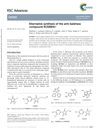
January 2014 in “RSC Advances” A new, less toxic and more efficient method to create the anti-baldness compound RU58841 was developed in 2014.
 3 citations
,
January 2016 in “Elsevier eBooks”
3 citations
,
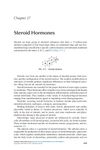
January 2016 in “Elsevier eBooks” This article discusses the various roles of steroids in vertebrate organ systems and notes several glucocorticoids that were among the Top 200 Drugs by sales in the 2010s, but it reports no new clinical findings.
 3 citations
,
October 2010 in “Wiley-VCH Verlag GmbH & Co. KGaA eBooks”
3 citations
,
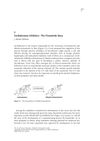
October 2010 in “Wiley-VCH Verlag GmbH & Co. KGaA eBooks” Finasteride safely treats enlarged prostate and male-pattern baldness.
 2 citations
,
July 2020 in “International Journal for Research in Applied Science and Engineering Technology”
2 citations
,
July 2020 in “International Journal for Research in Applied Science and Engineering Technology” This study found that Pseudomonas DL7 completely degraded 600 mg/L of Sunset Yellow FCF in 48 hours at pH 9, indicating potential for biomineralization of this dye.
 2 citations
,
August 2019 in “Turkish Journal of Chemistry”
2 citations
,
August 2019 in “Turkish Journal of Chemistry” This study reported that CoFe2O4 magnetic nanoparticles efficiently catalyzed the synthesis of minoxidil from 2,6-diamino-4-chloro-pyrimidine N-oxide, achieving a 95% yield with sustained reusability.