13 citations
,
October 2003 in “Clinical pediatrics” In this case report, a 14-year-old boy with Satoyoshi syndrome did not improve with intravenous immunoglobulin but responded dramatically to steroid treatment.
10 citations
,
September 2021 in “American Journal of Medical Genetics Part A” This study on Qatari patients with Woodhouse-Sakati syndrome highlights the high incidence and diverse clinical presentation due to a specific genetic variant, emphasizing early diagnosis for effective management.
September 2019 in “The journal of investigative dermatology/Journal of investigative dermatology” This study found that in hidradenitis suppurativa, the proteins SERPINB3/B4 and S100A7/A8/A9 were significantly overexpressed in lesional skin compared to nonlesional skin, suggesting new pathways in the disease's pathogenesis.
 5 citations
,
November 2021 in “Saudi medical journal”
5 citations
,
November 2021 in “Saudi medical journal” This report describes three Saudi sisters with Woodhouse-Sakati syndrome, who exhibited typical features of the condition along with unusual gynecological anomalies.
20 citations
,
December 2019 in “International Journal of Molecular Sciences” This study found that preconditioning adipose-derived stem cells with HB-EGF enhanced their ability to promote hair growth in vivo by increasing their motility, paracrine effects, and survival.
 4 citations
,
March 2012 in “Our Dermatology Online”
4 citations
,
March 2012 in “Our Dermatology Online” This study conducted physical examinations on fifty women with hirsutism, focusing on virilization signs, but reports no new clinical findings.
June 2026 in “Quality in Sport” This study reviewed the current understanding of congenital adrenal hyperplasia from 21-hydroxylase deficiency, highlighting the impact of universal newborn screening in reducing mortality and discussing ongoing treatment challenges and future therapeutic prospects.
3 citations
,
January 2011 in “International journal of trichology” Low DHEA-S levels might be linked to alopecia areata and could be a potential treatment target.
1 citations
,
July 2024 in “JCEM Case Reports” This report highlights a new genetic variant of Woodhouse-Sakati syndrome in two sisters from the first identified family case in Russia, emphasizing the varied manifestations of the disorder and the importance of genetic testing for diagnosis and patient-specific treatment planning.
May 2024 in “Asian Journal of Medicine and Health” This study explored the relationship between BMI percentiles and clinical severity in pediatric patients with different hemoglobin genotypes, finding significant BMI differences and associations with pain frequency, particularly noting that patients with HbSS experienced more pain than those with HbSC.
 January 2026 in “In Vivo”
 This study found that hidradenitis suppurativa is associated with an elevated risk of developing urolithiasis, suggesting shared inflammatory pathways and the need for vigilant kidney monitoring in affected individuals.
 35 citations
,
April 2014 in “American Journal of Medical Genetics”
35 citations
,
April 2014 in “American Journal of Medical Genetics” The study reported a significant genotype–phenotype correlation in prepubescent males with XLHED, particularly in the severity of skin and hair manifestations between those with different EDA mutations.
10 citations
,
October 2018 in “JDDG Journal der Deutschen Dermatologischen Gesellschaft” This review discusses the skin and systemic conditions associated with Down syndrome and reports no new clinical results, emphasizing the need for awareness of these manifestations in diagnosis.
 January 2023 in “Archives of Disease in Childhood Education & Practice”
 This article describes the causes of hirsutism, introduces a novel assessment tool, and suggests strategies for investigation and management, but provides no new experimental results.
 1 citations
,
November 2025 in “Clinical Chemistry and Laboratory Medicine (CCLM)”
1 citations
,
November 2025 in “Clinical Chemistry and Laboratory Medicine (CCLM)” This study developed a new measurement procedure using isotope dilution-liquid chromatography-tandem mass spectrometry for accurate quantification of DHEAS in human serum or plasma, demonstrating high selectivity, sensitivity, and low measurement uncertainty, making it suitable for routine standardization and clinical evaluation.
January 2017 in “PRISM (University of Calgary)” This study identifies unique gene expression patterns in specialized fibroblasts within adult hair follicles, which advances understanding of their role in tissue regeneration.
18 citations
,
June 2016 in “British Journal of Dermatology” This study found that bacterial biofilms were present in only two out of ten acute hidradenitis suppurativa lesions examined, suggesting a limited primary role for biofilms in early-stage lesions.
1 citations
,
September 2024 in “Journal of the American Academy of Dermatology” Farudodstat may effectively treat alopecia areata without harmful side effects.
November 2014 in “International Society of Hair Restoration Surgery” This announcement explains the Fellow designation for hair restoration surgeons meeting specific educational criteria, without reporting new research findings.
 2 citations
,
September 2016 in “Drug and therapeutics bulletin”
2 citations
,
September 2016 in “Drug and therapeutics bulletin” This review discusses the diagnosis and management of hidradenitis suppurativa and reports no new clinical findings, highlighting a need for better evidence and treatment guidance.
8 citations
,
July 2015 in “International Journal of Dermatology” This study reports that a homozygous A1103G mutation in DSG 4 is responsible for localized autosomal recessive hypotrichosis in a 2-year-old Chinese girl, resulting in reduced DSG 4 expression and hair defects.
 14 citations
,
January 2015 in “Acta dermato-venereologica”
14 citations
,
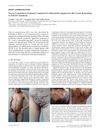
January 2015 in “Acta dermato-venereologica” Acitretin significantly reduced inflammatory attacks in a woman with Naevus Comedonicus Syndrome but caused side effects.
 1 citations
,
January 2003 in “Expert Opinion on Therapeutic Patents”
1 citations
,
January 2003 in “Expert Opinion on Therapeutic Patents” This review discusses the development and potential therapeutic applications of steroid sulfatase inhibitors for hormone-dependent disorders and cognitive dysfunction, reporting no new clinical results.
December 2024 in “European journal of medical research” This study suggests that the NCSTN knockout mouse could serve as an HS animal model, with tamoxifen potentially used for gene deletion in mice.
This case report describes a novel mutation in the CDH3 gene in an 11-year-old Iranian boy with sparse scalp hair and macular dystrophy, leading to altered P-cadherin synthesis.
 April 2017 in “The journal of investigative dermatology/Journal of investigative dermatology”
 This study observed that mice lacking epidermal HSD11b1 had increased non-histaminergic itch and changes in skin nerve fibers, potentially linked to higher TSLP expression.
This study evaluated interleukin-26's antimicrobial activity in Hidradenitis Suppurativa and explored its potential role in chronic skin inflammation.
33 citations
,
October 2018 in “BMJ Case Reports” This case report describes a 6-year-old who developed autoimmune conditions including type III polyglandular autoimmune syndrome following drug-induced hypersensitivity syndrome, prompting an investigation into associated triggering factors.
 1 citations
,
January 2023 in “Journal of Clinical Medicine”
1 citations
,
January 2023 in “Journal of Clinical Medicine” This study reported that Tomorrowlabs HIF strengthening factor [HSF] hair restoration technology significantly improved hair thickness, density, shine, and elasticity, while reducing hair loss by an average of 66.8% and enhancing hair growth by up to 32.5% in subjects with androgenic alopecia over nine months.
April 2020 in “Journal of the Endocrine Society” This case report describes a 34-year-old woman with pituitary stalk interruption syndrome, highlighting the need for long-term follow-up due to potential progression from isolated hormonal deficiencies to pan-hypopituitarism.