38 citations
,
February 1988 in “Molecular and Cellular Biology” This study found that among the two highly homologous K16 genes on chromosome 17, only one produced a functional protein due to stronger promoter activity.
32 citations
,
April 2020 in “PLoS Biology” This study found that Rab5c is crucial for proper HSPC development in zebrafish embryos by regulating Notch and AKT signaling through endocytic trafficking, with both deficiency and overactivation leading to production defects.
5 citations
,
June 2008 in “British Journal of Dermatology” 26 citations
,
May 2024 in “Molecular Neurodegeneration” This review assesses existing knowledge about the 17q21.31 inversion polymorphism, highlighting its genetic structure differences across ancestries, associations with various diseases, and implications for precision medicine and drug discovery.
 April 2023 in “Cancer research”
 This study suggests that KRTAP2-3 may serve as a novel biomarker to identify cells in the polyaneuploid cancer cell state, which is linked to therapy resistance and poor prognosis in prostate cancer.
22 citations
,
January 1990 13 citations
,
July 1994 in “PubMed” This study found that TPA treatment induced expression of keratins K6 and K16 in mouse epidermis, with K6 expressed across all cell layers and K16 only in post-mitotic cells.
12 citations
,
January 2000 in “Biochemical and Biophysical Research Communications” This study characterized the intron-exon organization of human keratin 15 and keratin 19 genes to aid future mutation detection analyses related to potential genetic disorders of keratinization.
 42 citations
,
October 2009 in “The journal of investigative dermatology/Journal of investigative dermatology”
42 citations
,
October 2009 in “The journal of investigative dermatology/Journal of investigative dermatology” In this study, researchers identified two distinct homozygous mutations in the KRT85 gene among consanguineous Pakistani families with pure hair and nail ectodermal dysplasia, highlighting variations in severity and potential impacts on the K85 protein function.
35 citations
,
June 2012 in “PloS one” This study suggests that Keratin 15 expression in stratified epithelia may be regulated by two distinct mechanisms involving PKC/AP-1 pathway for differentiation and FOXM1 for basal cells, challenging its reliability as a sole stem cell marker.
18 citations
,
September 2018 in “The Journal of Agricultural Science” In this study, the presence of certain KAP15-1 gene variants in sheep was associated with differences in wool yield and fiber characteristics.
235 citations
,
July 1999 in “Journal of biological chemistry/The Journal of biological chemistry” This study establishes a catalog of human type I hair keratins and identifies their specific roles and expression patterns during hair differentiation and growth in scalp follicles.
31 citations
,
April 2004 in “Journal of Investigative Dermatology” This study found that a newly identified gene, mK17n, may explain the lack of nail issues in mK17 null mice by compensating for mK17's function in the nail bed.
3 citations
,
January 2013 in “Dermatology” This study identified novel compound heterozygous mutations in the hairless gene among a non-consanguineous Chinese family with congenital atrichia, illustrating phenotypic variations due to founder or modifier genes.
46 citations
,
September 2007 in “Journal of Investigative Dermatology” 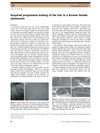 1 citations
,
October 2012 in “The Journal of Dermatology”
1 citations
,
October 2012 in “The Journal of Dermatology” This letter to the editor describes a case of acquired progressive kinking of the hair in a Korean female adolescent, but no new research findings are reported.
 February 2020 in “Definitions”
 This abstract reviews the role of the human KRT 16 wild-type allele in skin and hair development and its association with certain genetic skin disorders, without presenting new findings.
58 citations
,
July 2005 in “Molecular and Cellular Biology” This study showed that a 2-kilobase upstream region of the mouse keratin 17 gene enables targeted GFP expression in major epithelial appendages of transgenic mice, indicating sonic hedgehog's involvement in its regulation.
 April 2023 in “The journal of investigative dermatology/Journal of investigative dermatology”
 In this study, researchers found that the loss of SETDB1 in epidermal keratinocytes led to altered chromatin states, increased ERV expression, and activation of immune responses, while inhibiting these effects with certain antiviral drugs reduced skin inflammation and hair loss in a mouse model.
65 citations
,
November 2013 in “The EMBO Journal” HDAC1 is crucial for skin development and preventing tumors.
 23 citations
,
June 2010 in “Journal of Investigative Dermatology”
23 citations
,
June 2010 in “Journal of Investigative Dermatology” This study found that the hair interior defect in AKR/J mice is linked to a mutation in the Soat1 gene, which disrupts SOAT1 protein expression and affects lipid metabolism critical for normal hair formation.
38 citations
,
October 2001 in “British Journal of Dermatology” This study identified a new keratin, K6irs, as a potential histological marker for the inner root sheath of hair follicles in mice and humans, and as a candidate gene for hereditary hair defects.
70 citations
,
August 2006 in “Cancer Research” This study found that inhibiting AP-1 activity in mice modified tumor development, leading to transdifferentiation between squamous and sebaceous tumors, with molecular analysis suggesting AP-1's role in maintaining tumor cell identity.
 42 citations
,
July 2007 in “Journal of Biological Chemistry”
42 citations
,
July 2007 in “Journal of Biological Chemistry” This study found that most pathogenic HR mutants associated with atrichia with papular lesions had abolished corepressor activity due to defective interactions with histone deacetylases.
 7 citations
,
March 2020 in “PloS one”
7 citations
,
March 2020 in “PloS one” This study demonstrates that α-parvin is crucial for epidermal morphogenesis and hair follicle development by mediating integrin-dependent adhesion and actin organization in keratinocytes.
 July 2023 in “British journal of dermatology/British journal of dermatology, Supplement”
 This study found that the E6 gene, but not E7, was responsible for HPV8-induced expansion of keratinocyte stem cells in hair follicle junctional zones in mice.
47 citations
,
April 2000 in “Experimental Dermatology” This study identified a novel missense mutation in the hairless gene in a Polish family, which may contribute to congenital atrichia with papular lesions by affecting the gene's function.
60 citations
,
December 2003 in “Journal of Investigative Dermatology” This study found that keratin 6hf, a type II keratin, is expressed in specific regions of mouse and human hair and suggests potential interactions with keratin 17, impacting hair development and associated disorders.
 60 citations
,
August 2008 in “Human molecular genetics online/Human molecular genetics”
60 citations
,
August 2008 in “Human molecular genetics online/Human molecular genetics” This study suggests that a position effect disrupting TRPS1 expression may be linked to hypertrichosis in both Ambras syndrome in humans and a similar phenotype in Koa mice.
11 citations
,
November 2019 in “The FASEB Journal” In this study, a missense mutation in the MAP2 gene was found to be associated with reduced hair follicle density, leading to the hairless phenotype in pigs.