1 citations
,
July 2025 in “Frontiers in Veterinary Science” This study examined genetic adaptations in Tibetan sheep through whole-genome resequencing, identifying key genes related to hypoxia tolerance, wool color, and body size. These findings provide a foundation for future molecular breeding strategies to enhance wool quality and adaptive traits in these high-altitude environments.
December 2024 in “Institutional Repositories DataBase (IRDB)” In this study, the authors found that the shoulder guard hair of captive sika deer most accurately reflects dietary information during winter coat growth, useful for analyzing wild deer hair samples.
 18 citations
,
January 2020 in “Ecology and evolution”
18 citations
,
January 2020 in “Ecology and evolution” This study analyzed gene expression changes during the autumn coat color change in mountain hares and found conserved gene regulation with snowshoe hares, highlighting its role in seasonal camouflage adaptation.
June 2025 in “Australasian Journal of Dermatology” This study introduced and evaluated a new dermoscopic feature, pigmented rings with central clearing, for improving the diagnosis of melasma and differentiating it from similar conditions.
6 citations
,
December 2017 in “Journal of Drug Delivery and Therapeutics” This article proposes the development of a non-sticky Arnica Hydrogel for hair growth, noting that current hair loss treatments do not provide satisfactory results.
 11 citations
,
September 1992 in “Journal of pineal research”
11 citations
,
September 1992 in “Journal of pineal research” This study found that repeated immunization against melatonin in Australian feral goats temporarily increased cashmere production and altered growth cycles, but these effects diminished after the first year.

In this study, researchers observed a high degree of plasticity in somatosensory axons innervating Merkel cells in adult mouse skin, with both epithelial and neural components exhibiting dynamic remodeling, highlighting intricate epithelial-neural interactions in maintaining homeostasis.
6 citations
,
October 1998 in “PubMed” This case study reports a new variant of chronic dermatophytosis with giant cutaneous horns, suggesting a possible genetic link and highlighting successful treatment with antifungal medications.
July 2026 in “Journal of the American Academy of Dermatology”  1 citations
,
January 2020 in “Qucosa (Saxon State and University Library Dresden)”
1 citations
,
January 2020 in “Qucosa (Saxon State and University Library Dresden)” This paper conducts a scientific evaluation of fine hair issues in American bovine hides and suggests measures to minimize this seasonal problem, particularly in winter production.
 July 2025 in “International Journal of Dermatology Venereology and Leprosy Sciences”
 This review explores the potential of microneedling as a drug delivery system for treating melasma, focusing on its mechanisms, safety, efficacy, and clinical advantages over conventional therapies like hydroquinone and lasers.
15 citations
,
July 2010 in “Journal of Allergy and Clinical Immunology” This study found that in mouse models, the novel NF-κB inhibitor DHMEQ improved symptoms of atopic dermatitis as effectively as tacrolimus or betamethasone.
 September 2023 in “Stem cell reviews and reports”
 This study introduces a new method to isolate stem cells from the hair follicle outer root sheath of equine skin, demonstrating that these cells, named eMSCORS, proliferate efficiently and can differentiate similarly to adipose tissue-derived MSCs, offering a promising alternative for equine veterinary applications.
12 citations
,
November 2018 in “Archives of Dermatological Research” April 2024 in “Journal of the European Academy of Dermatology and Venereology” This autobiographical account does not report new research findings but outlines the career and reflections of a dermatologist on the evolution of dermatological science, treatment challenges, and personal experiences in the field.
 2 citations
,
April 2024 in “Advanced Materials”
2 citations
,
April 2024 in “Advanced Materials” This study tested a hydrogel microneedle patch delivering T reg attractants in mice with alopecia, finding it boosted regulatory T cell numbers at the site, leading to hair regrowth without causing peripheral immunosuppression, suggesting a potential new approach for autoimmune skin disease treatment.
 December 2025 in “Journal of Pharma Insights and Research.”
 This paper reviews the state of knowledge on injectable cryogels, highlighting their unique properties such as shape-memory and mechanical integrity, which allow for minimally invasive delivery via needles and potential applications in oncology and regenerative medicine.
85 citations
,
January 1991 in “Journal of Investigative Dermatology” 9 citations
,
September 2012 in “Journal of Cosmetic Dermatology” This study introduced hair capacitance mapping as a promising technique for assessing hair surface moisture dynamics, revealing that weathered hair loses moisture more quickly than intact hair.
 September 2003 in “Hair transplant forum international”
 This congress review reports on the 6th Annual Congress and Live Surgery Workshop of the ESHRS in Berlin and presents no new findings.
 48 citations
,
May 1991 in “The journal of investigative dermatology/Journal of investigative dermatology”
48 citations
,
May 1991 in “The journal of investigative dermatology/Journal of investigative dermatology” This study found that trichohyalin, a protein previously thought to be restricted to hair and tongue, is also present in isolated cells within the granular layer and stratum corneum of normal human epidermis.
 10 citations
,
April 2017 in “PLoS ONE”
10 citations
,
April 2017 in “PLoS ONE” This study reports that the white rhinoceros has a unique integumentary structure among large herbivores, characterized by thick epidermis, organized collagen bundles, and the presence of coiled sweat glands.
 November 2023 in “The journal of investigative dermatology/Journal of investigative dermatology”
 This study suggests that hemoglobin α expression in the epidermis is induced by oxidative stress and may function as an antioxidant, contributing to skin barrier function.
 84 citations
,
April 2013 in “Applied Microbiology and Biotechnology”
84 citations
,
April 2013 in “Applied Microbiology and Biotechnology” This review discusses the current research and development of mannosylerythritol lipids, particularly focusing on their potential commercial applications in cosmetics; it reports no new results.
 July 2016 in “Dermatologie pro praxi”
 This article discusses the use of Espumil foam base in pharmacies for preparing dermatological medications and reports no new clinical results.
 February 2023 in “bioRxiv (Cold Spring Harbor Laboratory)”
 This study found that in adult mouse skin, somatosensory axon plasticity is highly dynamic and influenced by epithelial-neural crosstalk and intrinsic neural mechanisms.
 8 citations
,
November 2024 in “Scientific Reports”
8 citations
,
November 2024 in “Scientific Reports” In this study, different drying methods for Hedychium spicatum rhizomes significantly affected the essential oil yield, antioxidant potential, and compound composition, with the HSOV30 method yielding the highest oil content, antioxidant activity, and specific compound levels such as 1,8-cineole and elemol.
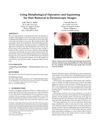
This study presents a new approach to automatically remove hair artifacts from dermoscopic images, which reportedly performed well compared to existing methods like DullRazor using the PH2 datasets.
This report presents a rare case of lichen spinulosus in a 52-year-old woman, featuring hyperkeratotic follicular papules and a dense lymphohistiocytic infiltrate in affected skin areas.

This study demonstrated that cryogelation of human hair keratin allows the development of 3D scaffolds with tunable properties, supporting cell adhesion and proliferation for potential biomedical applications.