1 citations
,
October 2019 in “International Journal of Dermatology and Venereology” This review discusses the role of zebrafish as a model for studying human hereditary pigmentary disorders and reports no new experimental results, emphasizing their genetic similarities and the genetic tools available.
August 2024 in “International Journal of Women’s Dermatology” This study characterizes alopecia in ARCI, highlighting its prevalence among patients with severe forms and revealing new associated trichoscopic features.
 October 2021 in “Cosmoderma”
 This review summarizes existing knowledge on diffuse and patterned alopecia, emphasizing recent advancements in treatment beyond FDA-approved options, but it reports no new clinical findings.
 April 2012 in “Informa Healthcare eBooks”
 The document concludes that diagnosing hair loss requires evaluating multiple histological features, as no single feature is definitive on its own.
 147 citations
,
April 1990 in “The Journal of Clinical Endocrinology and Metabolism”
147 citations
,
April 1990 in “The Journal of Clinical Endocrinology and Metabolism” This study found that finasteride significantly suppresses serum dihydrotestosterone levels at all tested doses in normal male volunteers without significant adverse effects.
 42 citations
,
September 2000 in “British Journal of Dermatology”
42 citations
,
September 2000 in “British Journal of Dermatology” This report describes two children with congenital hypotrichosis and found their short hair is due to a shortened anagen phase, with the condition resolving spontaneously during puberty.
 39 citations
,
March 2018 in “Archives of Dermatological Research”
39 citations
,
March 2018 in “Archives of Dermatological Research” This review describes the molecular interactions between androgens and Wnt/ß-catenin signaling in androgenetic alopecia but reports no new experimental or clinical findings; the authors discuss potential Wnt/ß-catenin-targeted treatments for hair growth.
 29 citations
,
May 2011 in “Journal of Cataract and Refractive Surgery”
29 citations
,
May 2011 in “Journal of Cataract and Refractive Surgery” This case report suggests a possible association between long-term finasteride use for male pattern baldness and the development of cataracts and intraoperative floppy-iris syndrome in a patient.
27 citations
,
January 2017 in “Indian Dermatology Online Journal” This study found no significant benefit from PRP injections for treating androgenetic alopecia in men, highlighting the need for larger, well-designed trials to assess its effectiveness and safety.
 22 citations
,
October 2014 in “International Journal of Trichology”
22 citations
,
October 2014 in “International Journal of Trichology” This retrospective analysis of male patients undergoing hair restoration surgery for androgenetic alopecia found that postoperative edema was the most common complication, occurring in 42.47% of cases.
 14 citations
,
April 2020 in “Journal of Cosmetic Dermatology”
14 citations
,
April 2020 in “Journal of Cosmetic Dermatology” In this study, intradermal injections of QR678 were found to significantly reduce hair fall in men with androgenetic alopecia over 6 months, with superior improvements in hair density and thickness compared to PRP.
 14 citations
,
October 2019 in “Journal of Cellular Physiology”
14 citations
,
October 2019 in “Journal of Cellular Physiology” This study found that dermis micrografting improved hair growth and density in patients with androgenetic alopecia over 4, 6, and 12 months, suggesting it could be a novel treatment option.
12 citations
,
May 1988 in “Journal of the American Academy of Dermatology” Both 2% minoxidil gel and solution effectively increase hair growth in men with early baldness.
 10 citations
,
November 1997 in “British Journal of Dermatology”
10 citations
,
November 1997 in “British Journal of Dermatology” This case report documents acquired progressive kinking of the hair in a prepubertal boy but does not provide new clinical results.
 9 citations
,
January 2018 in “International Journal of Trichology”
9 citations
,
January 2018 in “International Journal of Trichology” This case report discusses cutaneous graft versus host disease presenting as fibrosing alopecia, suggesting a mechanistic model for understanding cicatricial pattern hair loss.
 6 citations
,
October 2012 in “Journal of Heredity”
6 citations
,
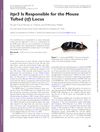
October 2012 in “Journal of Heredity” This study identified the Itpr3 gene as responsible for the tufted hair loss phenotype in the BTBR mouse strain.
5 citations
,
July 2017 in “International journal of endocrinology and metabolism/International journal of endocrinology and metabolism.” This study described the clinical and genetic features of two Iranian siblings with hereditary vitamin D resistant rickets, identifying a specific VDR gene mutation contributing to their symptoms.
 5 citations
,
July 2016 in “Journal of Clinical Hypertension”
5 citations
,
July 2016 in “Journal of Clinical Hypertension” This study found that hypertensive patients with severe androgenic alopecia exhibited impaired coronary microcirculation, suggesting they may face increased cardiovascular risk.
 4 citations
,
May 2005 in “Seminars in Plastic Surgery”
4 citations
,
May 2005 in “Seminars in Plastic Surgery” This article discusses the development and refinement of the hair-micrografting technique in cosmetic surgery and reports no new clinical results.
 2 citations
,
July 2015 in “Archives of Dermatological Research”
2 citations
,
July 2015 in “Archives of Dermatological Research” This study reports the first familial case of alopecia linked to a novel homozygous variant in the DSP gene, which did not coincide with heart abnormalities despite prior associations.
 2 citations
,
January 2012 in “Hair therapy & transplantation”
2 citations
,
January 2012 in “Hair therapy & transplantation” This study observed that DDAIP-HCl enhanced the permeation of minoxidil through human cadaver skin, suggesting potential for improved treatment efficacy in male pattern hair loss.
 2 citations
,
January 2008 in “Journal of Pakistan Association of Dermatology”
2 citations
,
January 2008 in “Journal of Pakistan Association of Dermatology” This study found that among men with male pattern hair loss, taking 1mg of finasteride daily for two years slowed hair loss progression and increased hair growth.
November 2025 in “Clinical and Translational Allergy” This study developed a consensus document to guide danazol discontinuation in hereditary angioedema patients, enhancing the standardization and safety of treatment protocols.
 January 2017 in “Journal of traditional medicine & clinical naturopathy”
 This paper discusses using homoeopathic treatments combined with trichology techniques to diagnose and treat various types of hair loss, including those linked to conditions like anemia and stress, but does not report specific results.
 November 2025 in “International Journal of Clinical Obstetrics and Gynaecology”
 This study found evidence for a genetic basis of polycystic ovary syndrome, indicating an autosomal dominant pattern of inheritance among first-degree relatives.
 February 2025 in “East African Scholars Journal of Medical Sciences”
 In this study conducted at Bangabandhu Sheikh Mujib Medical University, researchers reported that males with androgenetic alopecia had significantly higher levels of serum LH, prolactin, testosterone, DHEA-S, and free androgen index, and lower levels of serum FSH and SHBG compared to those without hair loss.

In this study, 13 men with male pattern baldness were rated significantly more attractive and somewhat healthier when wearing a custom-made toupee, with higher attractiveness ratings coming from male judges than female judges.
 March 2011 in “European Urology Supplements”
 CEC levels may be a useful marker for predicting prostate cancer progression.
February 2023 in “Cureus” This study found a significant association between the severity of male pattern baldness and increased levels of depression, loneliness, and internet addiction among male medical students with androgenetic alopecia.
 March 2018 in “Nepal journal of dermatology, venereology & leprology”
 This study observed no association between androgenetic alopecia and benign prostatic hyperplasia in men aged 20 and older, although a positive family history was linked to early onset of hair loss.