 2 citations
,
July 2021 in “Biochemical and Biophysical Research Communications”
2 citations
,
July 2021 in “Biochemical and Biophysical Research Communications” This study found that plantar dermis matrix homogenate can partially restore the regenerative capacity of hair follicles impaired in culture, with CTHRC1 playing a critical role in this process.
 November 2022 in “The journal of investigative dermatology/Journal of investigative dermatology”
 This study found that hemoglobin α is upregulated in epidermal keratinocytes after UV exposure and may function as an antioxidant, particularly for hair follicle stem cells.
 January 2025 in “Cell Communication and Signaling”
 This study reviews the role of the zinc finger protein CXXC5 in cellular signaling and its implications for cancer, discussing how its dysregulation is linked to various physiological and pathological processes, as well as potential therapies targeting CXXC5.

In a case report, this study identified a new genetic variant in a six-year-old girl from Saudi Arabia with hypotrichosis and juvenile macular dystrophy, expanding the understanding of the genetic spectrum of this rare condition in the region.
6 citations
,
August 2016 in “Journal of Visualized Experiments” This article describes a method using the CUBIC protocol to clarify and visualize molecular and cellular interactions in mouse skin biopsies at single cell resolution, but does not provide new biological findings.
November 2011 in “Molecular Cancer Therapeutics” This study discusses the involvement of Hedgehog signaling in various human cancers, detailing different mechanisms of pathway activation and highlighting the potential for therapeutic targeting through pathway inhibition.
 32 citations
,
February 1998 in “The journal of investigative dermatology/Journal of investigative dermatology”
32 citations
,
February 1998 in “The journal of investigative dermatology/Journal of investigative dermatology” This study reports the cloning and sequencing of two type II hair-specific keratin genes, ghHb1 and ghHb6, located on chromosome 12q13, which are expressed during hair growth.
 56 citations
,
December 2011 in “Steroids”
56 citations
,
December 2011 in “Steroids” This review discusses the genetics and variable phenotypic expression of nonclassic congenital adrenal hyperplasia, and reports no new clinical results; the authors call for further research on long-term health impacts and treatment strategies.
56 citations
,
April 2019 in “The Plant Journal” This study found that CNGC 6, CNGC 9, and CNGC 14 are crucial for maintaining calcium oscillations necessary for normal root hair growth in plants, with mutations leading to defects like swelling and bursting.
 December 2020 in “bioRxiv (Cold Spring Harbor Laboratory)”
 In this study, 25% of CCHCR1-deficient mice exposed to stress developed hair loss similar to human alopecia areata, suggesting CCHCR1 is a susceptibility gene for the disease.
 6 citations
,
July 2017 in “Biochemical and Biophysical Research Communications”
6 citations
,
July 2017 in “Biochemical and Biophysical Research Communications” This study found that mutations in the hairless gene disrupt normal hair follicle development by impairing Wnt/β-catenin signaling, affecting hair keratinocyte differentiation in both mice and humans.
 June 2026 in “bioRxiv (Cold Spring Harbor Laboratory)”
 This study found that inhibiting the interaction between HOTAIR and EZH2 can block pro-fibrotic gene expression in fibroblasts and interfere with tissue remodeling in systemic sclerosis patient skin.
 April 2018 in “Journal of Investigative Dermatology”
 In this study, researchers identified CENPV as a new CYLD interacting partner that localizes to primary cilia and regulates acetylated tubulin levels, offering insights into the pathogenesis of skin appendage tumors.
7 citations
,
June 2018 in “Journal of the American Academy of Dermatology” This article reviews uncombable hair syndrome, highlighting its symptoms, potential diagnosis methods, and the suggestion for biotin supplements, but it reports no new empirical results.
22 citations
,
April 2010 in “Journal of Cellular Biochemistry” This study concluded that the hairless protein interacts with the vitamin D receptor to repress transcription crucial for hair cycling, employing multiple protein interfaces and modulating chromatin structure.
21 citations
,
September 2021 in “New Phytologist” This study found that the transcription factor HB24 plays a critical role in root hair elongation in Arabidopsis thaliana by promoting the conversion of indole-3-butyric acid to indole-3-acetic acid through regulation of IBR1 expression.
June 1996 in “Journal of Dermatological Science”  13 citations
,
January 2013 in “Applied and Environmental Microbiology”
13 citations
,
January 2013 in “Applied and Environmental Microbiology” This study found that regio-specific hydroxylation of cyclosporine A in Sebekia benihana is mediated by the cytochrome P450 hydroxylase CYP-sb21, suggesting potential biotechnological applications for hair growth promotion without immunosuppressive effects.
 25 citations
,
May 1994 in “Journal of Investigative Dermatology”
25 citations
,
May 1994 in “Journal of Investigative Dermatology” This study identified a novel gene, hacl-1, that is specifically expressed in the hair follicles of ICR mouse skin and is associated with their active state.
 10 citations
,
June 2024 in “American Journal of Clinical Dermatology”
10 citations
,
June 2024 in “American Journal of Clinical Dermatology” This review highlights that while sonidegib and vismodegib offer promising treatment options for advanced basal cell carcinoma, their use is often limited by treatment-emergent adverse events, which can be managed through protocol modifications and supportive interventions.
20 citations
,
October 1995 in “Biochimica et Biophysica Acta (BBA) - Gene Structure and Expression” hHb1, hHb3, and hHb6 mRNAs start expressing at the same time in hair follicles.
32 citations
,
July 2018 in “FEBS letters” In this study, researchers identified the CBL1-CIPK26 Ca 2+ sensor-kinase complexes as key modulators of the NADPH oxidase RBOHC crucial for root hair differentiation in plants.
29 citations
,
January 2021 in “G3 Genes Genomes Genetics” This study identified a 195 bp duplication in crested chickens that causes large crest feathers and can be associated with cerebral hernia in some breeds, but not all.
This study found that high-charge-density cassia HPTC improves deposition efficiency and conditioning benefits in shampoos compared to quaternized guar, suggesting its potential as an alternative or adjunct conditioning agent.
 June 2021 in “International Journal of Ayurvedic Medicine”
 This study found that humulen, a phytoconstituent of Cyperus Rotundus Linn., showed the highest binding affinity in molecular docking with the 5 α reductase enzyme, suggesting potential anti-androgenic effects for hirsutism treatment.
5 citations
,
January 2017 in “Arquivos Brasileiros de Oftalmologia” This report describes a novel mutation in the CDH3 gene in an 11-year-old Iranian boy with hypotrichosis and juvenile macular dystrophy, indicating a new genetic variant associated with the disorder.
 18 citations
,
February 2015 in “Acta Crystallographica Section D: Structural Biology”
18 citations
,
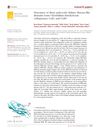
February 2015 in “Acta Crystallographica Section D: Structural Biology” This study reports that Ca 2+ binding alters the dynamics and surface properties of PKD-like domains in Clostridium histolyticum collagenases, enhancing their stability and potentially aiding in collagen-targeting vehicle development.
January 2002 in “Agritrop (Cirad)” This study found that mutations in exon 3 of the hr gene are strongly associated with congenital hypotrichosis in Valle del Belice sheep, suggesting a potential genetic link to the disorder.
10 citations
,
August 2010 in “Hereditas (Beijing)” This review summarizes the role of Hoxc13 in regulating hair follicle development and growth, noting its influence on keratin and keratin-associated proteins, and reports no new experimental findings.
5 citations
,
February 2005 in “Journal of the American Academy of Dermatology” Focal palmoplantar callosities may help diagnose non-Herlitz junctional epidermolysis bullosa.