 3 citations
,
January 2012 in “Elsevier eBooks”
3 citations
,
January 2012 in “Elsevier eBooks” Burn scars form abnormally due to changes in wound healing, and more research is needed to improve treatments.
 December 2023 in “Advances in economics, management and political sciences”
 This study found that consumers do not prefer anti-hair loss products over regular hair care products, suggesting that companies should focus on factors like purchase willingness instead of the specific causes of hair loss.
 2 citations
,
October 2003 in “Australian Prescriber”
2 citations
,
October 2003 in “Australian Prescriber” This article describes the Australian Medicines Handbook as a compact, readable, and comprehensive drug reference guide for Australian practitioners, but it does not present new research findings.
 39 citations
,
June 2017 in “Journal of Applied Research on Medicinal and Aromatic Plants”
39 citations
,
June 2017 in “Journal of Applied Research on Medicinal and Aromatic Plants” This review examines around 68 plant sources from six major plant families, assessing their scientific rationale and use by the cosmeceutical industry for applications like anti-ageing and sun protection.
 160 citations
,
January 2009 in “Clinical Drug Investigation”
160 citations
,
January 2009 in “Clinical Drug Investigation” This study found that the HairMax LaserComb® significantly increased hair density and was safe and well tolerated for treating androgenetic alopecia in men compared to a sham device.
 4 citations
,
September 2015 in “Bulletin of the Korean Chemical Society”
4 citations
,
September 2015 in “Bulletin of the Korean Chemical Society” This study presents a new method using UPLC-ESI-MS/MS for analyzing the constituents of a medicinal herbal complex extract, which includes herbs traditionally used to prevent hair loss and promote hair growth; no clinical results were reported.

This handbook of dermatology provides a comprehensive practical manual for dermatologists, but reports no new research findings.
 2 citations
,
July 2020 in “Journal of Drug Delivery Science and Technology”
2 citations
,
July 2020 in “Journal of Drug Delivery Science and Technology” In this study, forming inclusion complexes of Finasteride and poly (ethylene glycol) resulted in significantly improved solubility and dissolution rates, suggesting a promising new solid form for enhanced drug release.
This chapter discusses the benefits and limitations of FUE and FUT hair restoration techniques, the author's personal preferences in performing transplants, and potential breakthroughs in hair loss treatment, as compiled from recent literature.
 1 citations
,
July 2019 in “Journal of the American Academy of Dermatology”
1 citations
,
July 2019 in “Journal of the American Academy of Dermatology” This review argues that case reports remain crucial for identifying new conditions, adverse drug reactions, and medical associations, despite the anecdotal nature of their evidence.
 June 2025 in “International Journal for Research in Applied Science and Engineering Technology”
 This study evaluated the physicochemical properties of an herbal shampoo formulated with natural ingredients like hibiscus and henna and compared it to a common marketed shampoo, finding it effectively replaced some chemical components with safer alternatives while maintaining similar characteristics.
12 citations
,
December 2010 in “Journal of thoracic oncology” This article organizes and lists ongoing and completed clinical trials of novel agents for lung cancer, serving as a reference tool with no new research findings reported.
 100 citations
,
May 2003 in “Journal of Neuroscience”
100 citations
,
May 2003 in “Journal of Neuroscience” This study found that neuroactive steroids like DHEA and pregnenolone influence cocaine-induced appetence in mice through their interaction with the ς1 receptor, suggesting a role in individual vulnerability to addiction.
 34 citations
,
October 2017 in “Archivos Argentinos De Pediatria”
34 citations
,
October 2017 in “Archivos Argentinos De Pediatria” This review discusses the clinical characteristics, diagnosis, and treatment of alopecia areata, exploring potential environmental, immunological, and genetic factors involved in its development, but reports no new research findings.
 20 citations
,
December 2016 in “American Journal of Clinical Dermatology”
20 citations
,
December 2016 in “American Journal of Clinical Dermatology” This review discusses the most popular non-surgical cosmetic procedures for men and highlights the importance of considering sex-specific factors for optimal treatment, but reports no new clinical results.
8 citations
,
August 2012 in “Clinical, cosmetic and investigational dermatology” In this study, Doublebase gel was more effective in maintaining and increasing skin hydration compared to Aqueous cream BP, with higher patient satisfaction and preference for future use.
 5 citations
,
July 2020 in “Journal of Cosmetic Dermatology”
5 citations
,
July 2020 in “Journal of Cosmetic Dermatology” This study found that using a vibration anesthetic device during scalp mesotherapy significantly reduced pain in patients with androgenetic alopecia and alopecia areata compared to the non-vibration side.
 March 2018 in “Journal of Pakistan Association of Dermatology”
 This study found that using vibration during supraorbital/supratrochlear nerve blocks in hair restoration surgery significantly reduced pain levels compared to not using vibration, with patients reporting lower Wong-Baker Faces Pain scores when vibration was applied.
 January 2003 in “Steinkopff eBooks”
 This review discusses the incidence, demographics, and associated conditions of alopecia areata and provides no new clinical findings.
 July 2024 in “Journal of Bioscience and Bioengineering”
 This study identified 65 bacterial species from human hair with varying carbon metabolic capabilities and proposed a systematic way to evaluate their ease of isolation under different conditions.
 40 citations
,
July 2013 in “Skin Pharmacology and Physiology”
40 citations
,
July 2013 in “Skin Pharmacology and Physiology” This study reports that among men, skin surface hydration and pH change with age, but transepidermal water loss and sebum production show less variation.
 96 citations
,
September 2017 in “Analytica Chimica Acta”
96 citations
,
September 2017 in “Analytica Chimica Acta” This review discusses the growing use of scalp hair for elemental analysis in various fields and highlights advancements in analysis techniques, including the future potential of laser ablation ICP-MS, but reports no new clinical results.
 30 citations
,
February 2018 in “Journal of Pharmacy and Pharmacology”
30 citations
,
February 2018 in “Journal of Pharmacy and Pharmacology” This review discusses the traditional uses and pharmacological properties of Hedychium spicatum, noting that while some traditional uses are supported by scientific studies, further research on its applications is needed.
8 citations
,
November 2023 in “Frontiers in Bioengineering and Biotechnology” This article reviews recent developments in microneedles combining metallic elements and herbal compounds for wound healing, highlighting their benefits such as enhanced therapeutic efficacy and reduced toxicity, and offering a reference for future advancements in this technology.
 7 citations
,
June 2010 in “Bioorganic & medicinal chemistry letters”
7 citations
,
June 2010 in “Bioorganic & medicinal chemistry letters” This study found that aminomethylpyrazole compound 10l inhibited hair growth in a mouse model and showed a low risk for photo-irritation, though it was slightly less effective than eflornithine.
1 citations
,
June 2022 in “Pharmaceutics” This study found that paracellular transport significantly contributes to the intestinal permeability of minoxidil, suggesting its limited suitability as a Biopharmaceutics Classification System reference drug due to potential variability.
 1 citations
,
May 2016 in “Dermatologic Surgery”
1 citations
,
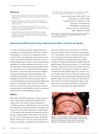
May 2016 in “Dermatologic Surgery” The document concludes that using a phototrichogram with a protractor and tapeline is a reliable and noninvasive way to measure hair loss.
This study explored Black Sea shark liver oil-based emulgels, finding that the addition of borage oil (Gel 2) enhanced the anti-inflammatory and wound healing properties compared to shark liver oil alone (Gel 1) and a reference diclofenac gel, suggesting promising eco-friendly applications in dermatocosmetics.
 September 2023 in “Clinical, Cosmetic and Investigational Dermatology”
 The researchers reported that one-third of women with female pattern hair loss in their study had occipital region involvement, which is important for diagnosing and planning treatment, including hair restoration surgery, as the occipital region is often used as a normal reference.
 November 2019 in “Harper's Textbook of Pediatric Dermatology”
 This index of Harper's Textbook of Pediatric Dermatology, Fourth Edition, provides no clinical results or new findings.