 152 citations
,
March 1988 in “Journal of The American Academy of Dermatology”
152 citations
,
March 1988 in “Journal of The American Academy of Dermatology” In this study, a unique form of chronic superficial pyoderma gangrenosum with verrucous and ulcerative lesions was reported to heal without systemic corticosteroids in most patients.
24 citations
,
June 1999 in “The Pediatric Infectious Disease Journal” In this case report, a 2-year-old boy initially diagnosed with Sweet syndrome was later found to have chronic granulomatous disease, highlighting the importance of considering CGD in unusual cases of Sweet syndrome.
 12 citations
,
March 2004 in “International Journal of Dermatology”
12 citations
,
March 2004 in “International Journal of Dermatology” A woman with X-linked chronic granulomatous disease developed lupus-like skin lesions, improved with treatment, suggesting a unique skin condition in carriers.
1 citations
,
October 2025 in “Journal of the American Society of Nephrology” In this case report, a 56-year-old man developed acute granulomatous interstitial nephritis following Moderna Covid-19 vaccination, with his kidney function improving after steroid treatment but declining upon cessation; the report suggests a vaccine-related cause given his atypical clinical course.
 May 2025 in “The Journal of Rheumatology”
 This report describes two cases where female patients with chronic granulomatous disease developed manifestations of systemic lupus erythematosus, highlighting a rare association that may influence clinical evaluation and treatment planning.
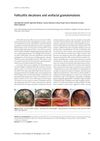 January 2018 in “Advances in Dermatology and Allergology”
 Treatment with dapsone, topical corticosteroids, and antibiotics improved the man's skin conditions.
 24 citations
,
November 1992 in “Journal of the American Academy of Dermatology”
24 citations
,
November 1992 in “Journal of the American Academy of Dermatology” This report on a case of cutaneous lymphomatoid granulomatosis underscores the pivotal role dermatologists have in its early diagnosis, which could potentially improve the otherwise poor prognosis.
 1 citations
,
October 2025 in “Frontiers in Immunology”
1 citations
,
October 2025 in “Frontiers in Immunology” In this study, researchers analyzed adverse events linked to avacopan using FDA data, finding no high-priority safety concerns but identifying five potential new adverse events, including alopecia, primarily among American patients, and noting a higher risk of liver dysfunction in Japanese patients.
 June 2018 in “Journal of Clinical Periodontology”
 A patient with "strawberry gingivitis" improved after correct treatment for Granulomatosis with polyangiitis, highlighting the need for early diagnosis.
 97 citations
,
May 2008 in “Journal of Cutaneous Pathology”
97 citations
,
May 2008 in “Journal of Cutaneous Pathology” This review highlights the challenges in identifying histological features of adverse reactions to soft tissue fillers and emphasizes the need for increased awareness due to product uncertainty and delayed reactions.
49 citations
,
July 2007 in “Ophthalmic Plastic and Reconstructive Surgery” This report describes a case of granulomatous reaction to injectable poly-L-lactic acid in the periorbital area and suggests surgical excision as an effective treatment for persistent nodules.
 36 citations
,
January 2006 in “Veterinary Dermatology”
36 citations
,
January 2006 in “Veterinary Dermatology” In this study, cyclosporin effectively controlled cases of granulomatous folliculitis, furunculosis, sebaceous adenitis in cats, and alopecia areata in a dog, positioning it as a promising alternative to glucocorticoids in veterinary dermatology.
33 citations
,
February 2011 in “International Journal of Dermatology” This study observed that orange spots and dystrophic hairs on trichoscopy may aid in diagnosing scalp sarcoidosis.
 27 citations
,
October 2017 in “British Journal of Dermatology”
27 citations
,
October 2017 in “British Journal of Dermatology” Patients with GATA2 deficiency show early skin symptoms that help diagnose the condition.
22 citations
,
August 2020 in “Actas Dermo-Sifiliográficas” This review discusses the properties and applications of doxycycline in dermatology and reports no new clinical results, emphasizing its potential for treating various dermatological conditions.
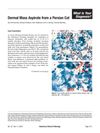 22 citations
,
December 2003 in “Veterinary clinical pathology”
22 citations
,
December 2003 in “Veterinary clinical pathology” This case study reported a diagnosis of dermatophytic pseudomycetoma in a Persian cat with dermal nodules, highlighting potential heritable predisposition and suggesting systemic antifungal therapy for fair prognosis.
20 citations
,
November 1989 in “PubMed” This case report highlights that diagnosing fungal skin infections in immunocompromised patients requires culture for accurate identification, as histologic findings alone can be misleading.
17 citations
,
August 2021 in “Dermatologic surgery” This review found that microneedling is generally safe, with most adverse effects being minor and resolving quickly, though there is increased risk in patients with active infections, darker skin, or metal allergies.
17 citations
,
August 2004 in “International Journal of Dermatology” This study reports a case of pressure alopecia in a 23-year-old man following prolonged head immobilization after a motorcycle accident, resulting in permanent cicatricial alopecia.
15 citations
,
January 1992 in “Dermatology” This study found severe cutaneous complications after artificial hair implantation were associated with acute inflammatory and granulomatous infiltrates, suggesting bacterial infections significantly contribute to these complications.
14 citations
,
September 1998 in “Journal of Pediatric Gastroenterology and Nutrition” This case study describes a 15-year-old girl with pulmonary Crohn's disease diagnosed via endoscopy, highlighting the potential for endobronchial changes in children with this condition.
 11 citations
,
September 2021 in “Anais Brasileiros de Dermatologia”
11 citations
,
September 2021 in “Anais Brasileiros de Dermatologia” This article reviews how skin manifestations can aid in diagnosing various systemic diseases, focusing primarily on their association with rheumatologic conditions while also addressing vascular, granulomatous, and other disease impacts, aiming to provide dermatologists with practical diagnostic insights.
10 citations
,
January 2017 in “Dermato-Endocrinology” This study found that the scarring folliculitis type of acne inversa in the Chinese population is associated with specific histopathological features and a higher prevalence of smoking and occupational exposure.
7 citations
,
June 2020 in “JAAD Case Reports” This article reviews the development of biocompatible artificial hair for treating hair loss and reports encouraging results from clinical trials, but it provides no new clinical findings.
7 citations
,
October 2013 in “International Journal of Dermatology” This study found that folliculitis after waxing is more common on the proximal extremities, with one-third of cases involving a foreign body reaction resembling pseudofolliculitis.
6 citations
,
March 2018 in “Proceedings - Baylor University. Medical Center” This case report describes a patient with sarcoidosis who experienced severe symptomatic hypercalcemia, scarring alopecia, and acute-on-chronic kidney failure.
 6 citations
,
November 1999 in “Mycoses”
6 citations
,
November 1999 in “Mycoses” This case study of a 75-year-old Japanese man with kerion Celsi found that terbinafine treatment was effective and safe, achieving a cure with minimal side effects.
 6 citations
,
September 1994 in “Veterinary Clinics of North America: Small Animal Practice”
6 citations
,
September 1994 in “Veterinary Clinics of North America: Small Animal Practice” This review examines skin diseases affecting the pinna of dogs and cats, highlighting those unique to this area and noting its role as a common initial site for several conditions; it reports no new results.
4 citations
,
October 2025 in “Journal of Cosmetic Dermatology” This study reported severe and persistent skin reactions, including inflammation and scarring, after intradermal injections of unregulated exosome-based products, highlighting potential risks in aesthetic dermatology.
 4 citations
,
February 2020 in “Journal of Cosmetic Dermatology”
4 citations
,
February 2020 in “Journal of Cosmetic Dermatology” This study reported significant moderate-to-severe complications in two patients following synthetic hair fiber implantation, including recurrent infections, scalp issues, and granulomatous reactions, which were only resolved once the fibers were removed despite initial treatment attempts with antibiotics.