 March 2026 in “Zenodo (CERN European Organization for Nuclear Research)”
 This source describes a collection of geometric medicine formulations aimed at comprehensive hair restoration and permanent hair removal, with claimed simulation results indicating complete baldness reversal and effective hair removal, but results are sourced from theoretical and simulation-based findings without reported clinical trials.
June 2023 in “Zenodo (CERN European Organization for Nuclear Research)” This review discusses Hutchinson-Gilford Progeria Syndrome, its symptomatology, and the progress in developing treatment strategies, emphasizing that while a cure remains elusive, advances in understanding the disease's molecular mechanisms show promise for future approaches.
This study found that the proteins Par3, mInsc, and Gαi3 cooperate to regulate LGN polarization and promote perpendicular cell divisions during murine epidermal morphogenesis.
2 citations
,
June 2013 in “Journal of Clinical Pathology” This article reviews the role of LMNA gene mutations, particularly in Hutchinson–Gilford progeria syndrome, but does not report new experimental findings.
13 citations
,
July 2019 in “PLoS ONE” This study found that deleting podoplanin in mouse keratinocytes promoted hair follicle growth during regeneration, suggesting it may regulate hair cycling pathways that could aid in treating hair loss conditions.
 April 2026 in “Human Genome Variation”
 In this study, researchers identified a recurrent MBTPS2 splice-site variant as a mutational hotspot in IFAP syndrome across diverse families, with phenotype severity suggesting the influence of additional modifiers.
18 citations
,
April 1998 in “MIT Press eBooks” This study found that topical application of N,N-dimethylglycine sodium salt increased dermal blood flow and velocity in human subjects, likely through its effects on endothelial cells and NO-dependent vasodilation.
 16 citations
,
September 2014 in “International Journal of Biological Markers”
16 citations
,
September 2014 in “International Journal of Biological Markers” This study found that the less common CAG-rs4045402 and GGN-rs3138869 polymorphisms were more frequent in patients with post-finasteride syndrome and androgenetic alopecia, suggesting a genetic predisposition to AGA development.
 18 citations
,
January 2008 in “Journal of The American Academy of Dermatology”
18 citations
,
January 2008 in “Journal of The American Academy of Dermatology” This study found that the proteins GDNF, NTN, GFRα-1, GFRα-2, and c-Ret are differentially expressed during various stages of the human hair follicle cycle, with potential implications for hair biology.
May 2005 in “Molecular Carcinogenesis” This study found that mrp/plf-mRNA expression in murine skin increases in response to different tumor promoters, suggesting its potential as a short-term biomarker for chemical carcinogenesis.
 March 2026 in “Zenodo (CERN European Organization for Nuclear Research)”
 This abstract describes a hair treatment series promising complete restoration of hair in cases of baldness and permanent hair removal, supported by theoretical formulations but without clinical result reports.
 December 2023 in “American journal of medical genetics. Part A”
 In this study, researchers identified compound heterozygous variants in the MBTPS1 gene associated with ectodermal dysplasia features in a 14-year-old female, broadening the known disorder spectrum linked to these genetic mutations.
 7 citations
,
July 2019 in “International Journal of Molecular Sciences”
7 citations
,
July 2019 in “International Journal of Molecular Sciences” This study found that PGA-4HGF nanoparticles enhanced hair growth in mice more effectively than 4HGF alone by increasing anagen phase duration and dermal papilla cell proliferation.
 December 2025 in “Journal of Nanobiotechnology”
 This study introduced a novel microneedle-based system for androgenetic alopecia treatment, which delivered Ginsenoside Compound K and S-nitrosoglutathione to enhance hair regeneration by improving the hair follicle microenvironment and promoting follicular cell proliferation.
 80 citations
,
April 2017 in “Frontiers in Pharmacology”
80 citations
,
April 2017 in “Frontiers in Pharmacology” This review examines experimental and clinical evidence on PDRN, a drug derived from salmon DNA that acts via the adenosine A2A receptor and shows promise for tissue repair and treatment of diabetic foot ulcers in regenerative medicine.
8 citations
,
April 2017 in “Journal of The Royal Society Interface” This study found that keratin intermediate filaments in the hair of GAN patients are altered, showing decreased diffraction signals and increased stiffness, strength, and extensibility.
October 2017 in “Institutional Repositories DataBase (IRDB)” Polyacetylene compounds from Panax ginseng may slow hair growth.
18 citations
,
January 2021 in “Theranostics” This study found that actively targeted AN2728-loaded nanocarriers reduced inflammation and improved skin condition in a mouse model of psoriasiform inflammation compared to free drug and non-targeted nanoparticles.
3 citations
,
June 2025 in “Gyemyeong uidae haksulji” This review suggests that PDRN shows promise as a safe and versatile regenerative agent for wound healing and other dermatological applications, based on its dual mechanisms and clinical evidence of efficacy.
23 citations
,
July 2020 in “BMC Genomics” This study identified a stable combination of house-keeping genes, NCBP3 + SDHA + PTPRA, for normalizing gene expression in goat skin tissues using RNA sequencing.
 September 2023 in “HAL (Le Centre pour la Communication Scientifique Directe)”
 In this study, peptide-based nanoparticles were successfully used to deliver the CRISPR-Cas9 system into cancer cells, effectively targeting and editing KRAS mutations, suggesting promising therapeutic potential for cancer treatment.
 January 2026 in “Biomaterials Science”
 This research outlines the characteristics and potential applications of a GMP-compliant sodium polyphosphate formulation (Na-polyP-GMP) in cellular energy storage and ATP-dependent processes like skin regeneration and wound healing.
 2 citations
,
March 2023 in “Research Square (Research Square)”
2 citations
,
March 2023 in “Research Square (Research Square)” This review discusses existing forensic DNA phenotyping panels for biogeographical ancestry and externally visible characteristics and highlights major technical limitations, including terminology issues, genetic knowledge gaps, and technological debates; it reports no new results.
 3 citations
,
March 2012 in “Actas Dermo-Sifiliográficas”
3 citations
,
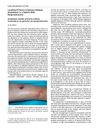
March 2012 in “Actas Dermo-Sifiliográficas” An elderly man with skin amyloidosis and abnormal blood proteins was monitored without finding widespread disease after 18 months.
 April 2017 in “Journal of Investigative Dermatology”
 This study found that the PON1 192 R allele was associated with an increased risk of psoriasis and altered lipid profiles in patients from Western Mexico.
This study found that GNAQQ209L expression in mouse melanocytes led to reduced survival in the interfollicular epidermis due to paracrine signaling, while GNAQQ209L boosted survival in a different microenvironment.
 July 2026 in “Dermatology and Therapy”
 In this study, women experiencing hair thinning who consumed tailored botanical-based nutraceuticals saw significant increases in linear hair growth rate and other hair health parameters over 90 and 180 days, supporting their effectiveness across different life stages.
 26 citations
,
November 2009 in “Journal of Endocrinological Investigation”
26 citations
,
November 2009 in “Journal of Endocrinological Investigation” This study found no significant difference in the CAG and GGN repeat lengths between infertile and fertile men in Nigeria, but identified a unique GGN allele distribution in the Nigerian population compared to Caucasians.
This study found that in mice, the epidermal microenvironment reverses the oncogenic effects of GNAQQ209L in melanocytes, inhibiting their survival and proliferation through paracrine signals.
32 citations
,
September 2013 in “Breast cancer research” This study identified a specific SNP in the CACNB4 gene associated with a higher risk of chemotherapy-induced alopecia in breast cancer patients, which may help develop interventions to improve their quality of life.