 9 citations
,
July 2018 in “European Journal of Dermatology”
9 citations
,
July 2018 in “European Journal of Dermatology” Brodalumab effectively treated a man's severe hand and foot psoriasis.
 8 citations
,
July 2019 in “Pure and Applied Chemistry”
8 citations
,
July 2019 in “Pure and Applied Chemistry” This study identified natural compounds from Iris plants that showed potential as inhibitors of urease and carbonic anhydrase-II enzymes, suggesting their possible use in treating related disorders.
 6 citations
,
March 2022 in “Nusantara Bioscience”
6 citations
,
March 2022 in “Nusantara Bioscience” This study evaluated the thrombolytic potential of Moringa oleifera leaves and flowers, finding significant in vitro clot lysis activity at a concentration of one mg/ml, which suggests possible use in preventing athero-thrombotic cardiovascular diseases, although further research is needed to identify the active components.
 6 citations
,
April 2017 in “Frontiers in Pharmacology”
6 citations
,
April 2017 in “Frontiers in Pharmacology” This study found that several compounds from Yangxue Shengfa capsule may promote hair growth by enhancing cell proliferation in vitro, suggesting potential use in treating androgenetic alopecia.
 5 citations
,
March 2024 in “Acta Scientiarum Polonorum Technologia Alimentaria”
5 citations
,
March 2024 in “Acta Scientiarum Polonorum Technologia Alimentaria” This study synthesized existing research on 11 tropical seed varieties, underscoring their potential in food, pharmaceutical, and agricultural industries due to their phytochemicals and nutrients, such as phenolics and vitamins, which could reduce waste and support sustainable practices.
 5 citations
,
January 2018
5 citations
,
January 2018 This study optimized a screening assay to identify molecules that inhibit or enhance TRPM5 ion channel activity, which may have implications for treating dysfunctions linked to cardiac arrhythmias and diabetes.
 4 citations
,
October 2022 in “Evidence-based complementary and alternative medicine”
4 citations
,
October 2022 in “Evidence-based complementary and alternative medicine” This study found that Ficus carica extract enhanced fertility markers, including hormone levels and reproductive organ activity, in rats of both sexes, suggesting potential benefits for managing fertility issues.
 4 citations
,
January 2008 in “Food Science and Technology Research”
4 citations
,
January 2008 in “Food Science and Technology Research” This study found that mature leaves of Japanese 'Saijo' persimmon have the highest ascorbic acid levels, whereas polyphenol levels were high in both mature leaves and adventitious shoots but low in young shoots.
 3 citations
,
November 2017 in “International Journal of Pharmacy and Pharmaceutical Sciences”
3 citations
,
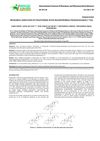
November 2017 in “International Journal of Pharmacy and Pharmaceutical Sciences” This study identified new oxidative derivatives of finasteride, including a newly discovered metabolite, by using the fungus Macrophomina phaseolina.
 3 citations
,
January 2016 in “Elsevier eBooks”
3 citations
,
January 2016 in “Elsevier eBooks” This article discusses the various roles of steroids in vertebrate organ systems and notes several glucocorticoids that were among the Top 200 Drugs by sales in the 2010s, but it reports no new clinical findings.
 2 citations
,
January 2023 in “International Journal of Dermatology Research”
2 citations
,
January 2023 in “International Journal of Dermatology Research” This study reported that C. procera leaf extracts showed antifungal activity against several dermatophytes, with ethanol extracts demonstrating slightly greater efficacy than aqueous extracts.
 2 citations
,
January 2022 in “Rasayan journal of Chemistry”
2 citations
,
January 2022 in “Rasayan journal of Chemistry” This study analyzed the affinity, stability, and pharmacokinetics of compounds from Sansevieria trifasciata, reporting that three compounds showed promising molecular docking results against the androgen receptor and satisfactory pharmacokinetic profiles, similar to minoxidil, in an in-silico setting.
 2 citations
,
January 2020 in “Journal of Pharmacognosy and Phytochemistry”
2 citations
,
January 2020 in “Journal of Pharmacognosy and Phytochemistry” This article reviews the medicinal significance of the Eclipta alba plant in India and its therapeutic properties, but reports no new clinical results.
 2 citations
,
April 2018 in “Natural Product Communications”
2 citations
,
April 2018 in “Natural Product Communications” This review summarizes the bioactive compounds and pharmacological functions of Cynomorium songaricum Rupr., emphasizing its potential in developing health-related products, and notes that further research is needed.
 1 citations
,
May 2025 in “Discover Chemistry.”
1 citations
,
May 2025 in “Discover Chemistry.” This review highlights that although mangiferin, a polyphenol from the mango tree, faces challenges like low solubility and bioavailability, delivery vehicles such as nanoparticles and complexes have the potential to enhance its therapeutic effectiveness in treating various diseases.
 1 citations
,
May 2025 in “International Journal of Advanced Biochemistry Research”
1 citations
,
May 2025 in “International Journal of Advanced Biochemistry Research” This review discusses the phytochemical, pharmacological, and medicinal properties of Hibiscus rosa sinensis Linn. and reports no new clinical findings.
 1 citations
,
January 2023 in “Journal of Pharmacognosy and Phytochemistry”
1 citations
,
January 2023 in “Journal of Pharmacognosy and Phytochemistry” This study provided detailed anatomical, physico-chemical, and chromatographic analyses to differentiate Dracaena trifasciata from potential adulterants in traditional medicine.
 1 citations
,
January 2022 in “Rasayan journal of Chemistry”
1 citations
,
January 2022 in “Rasayan journal of Chemistry” This study found that ethanol and water extracts of Albizia saponaria bark significantly stimulated hair growth in male rabbits over 24 days.
 1 citations
,
January 2020 in “International journal of research in pharmacy and chemistry”
1 citations
,
January 2020 in “International journal of research in pharmacy and chemistry” This review provides an overview of the ethnomedicinal uses, chemical composition, and pharmacological profile of Eclipta alba Hassk and presents no new clinical findings.
 1 citations
,
January 2019 in “International Journal of ChemTech Research”
1 citations
,
January 2019 in “International Journal of ChemTech Research” This study reviews the pharmacological properties of the plant Eclipta prostrata, highlighting its potential in treating various conditions including wound healing, diabetes, liver protection, alopecia, gum disease, cancer prevention, bone health, and antimicrobial effects, alongside its traditional use in tropical regions.
 1 citations
,
January 2018 in “AUSTRALIAN JOURNAL OF BASIC AND APPLIED SCIENCES”
1 citations
,
January 2018 in “AUSTRALIAN JOURNAL OF BASIC AND APPLIED SCIENCES” In this study, the ethanol extract of Zapoteca portoricensis stem significantly reduced markers of testosterone-induced benign prostate hyperplasia in male albino rats without harming liver and kidney function.
 1 citations
,
January 2017 in “Organic chemistry”
1 citations
,
January 2017 in “Organic chemistry” This article reviews the traditional uses and documented properties of Tridax procumbens in medicine but reports no original research findings, emphasizing its potential therapeutic applications.
 1 citations
,
January 2016 in “Springer briefs in molecular science”
1 citations
,
January 2016 in “Springer briefs in molecular science” This chapter reviews the chemistry and potential benefits of plant-based hair dyes in cosmetics, but it reports no new clinical results.
 1 citations
,
August 2012 in “Food Science and Biotechnology”
1 citations
,
August 2012 in “Food Science and Biotechnology” This study found that essence containing fermented Opuntia ficus-indica var. sarboten fruits and Lactobacillus rhamnosus promoted more significant hair growth in mice than minoxidil.
 July 2026 in “International Journal of Drug Delivery Technology”
 This study found that a combination of curcumin and piperine demonstrated moderate antioxidant activity, negligible cytotoxicity, and significant potential for promoting hair regrowth in rat models of alopecia, suggesting it could be a safe and effective natural alternative for managing hair loss.
 June 2026 in “Frontiers in Allergy”
 In this study, patients with scalp seborrheic dermatitis exhibited distinct patterns of allergen sensitization tied to symptoms, impaired skin barrier, and altered microbiota, emphasizing the need to consider allergen exposure, barrier status, and microbial balance when interpreting patch test results.
 June 2026 in “International Journal of Drug Delivery Technology”
 This review explores the potential of herbal therapies and modern delivery methods for managing premature hair greying, highlighting promising plant-based treatments and emphasizing the need for clinical trials to validate their effectiveness.
 May 2026 in “International Journal of Research Publication and Reviews”
 This study evaluated a polyherbal powder shampoo composed of natural ingredients like Neem and Amla, finding it to have good stability, cleansing ability, and no irritation, offering a safe alternative to synthetic shampoos for regular use in hair care.
 May 2026 in “International Journal of Versatile Research and Analysis”
 In this study, a polyherbal hair serum containing extracts of hibiscus petals and amla fruits showed significant antifungal activity against Candida albicans and exhibited satisfactory stability, physicochemical properties, and potential for improving hair health and reducing dandruff.
 April 2026 in “International Journal for Research in Applied Science and Engineering Technology”
 In this study, the developed polyherbal shampoo with Hibiscus rosa-sinensis exhibited good stability and cleansing properties, suggesting it may be an effective natural alternative to synthetic anti-hair fall products.